A father read the taunting letters aloud in court — but the killer's name was still a secret
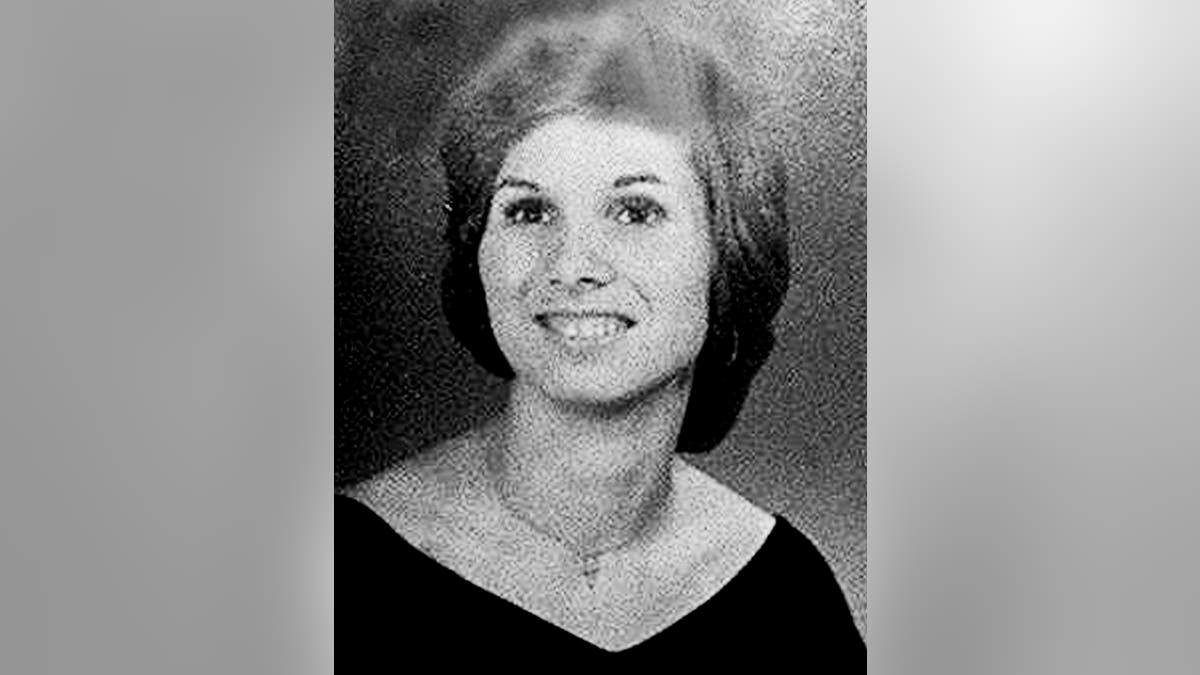
The father's voice filled the Bronx courtroom, reading words that were never meant for him.
They were letters addressed to a newspaper columnist, signed "Son of Sam."
Michael Lauria read them aloud, the taunts of a stranger who had killed his daughter.
Donna Lauria was the first victim, shot on July 29, 1976, in the Bronx.
Her companion was wounded that night; Donna did not survive.
The letters were evidence, a key piece linking the scattered shootings to one perpetrator.
They were proof that the attacks were not random, not separate, not the work of different hands.
They were also a voice, and the voice was still anonymous.
The letters did not name their author.
The public knew the fear — the name "Son of Sam" was already a headline, a terror, a nightly warning.
But the man behind the words was a secret.
Michael Lauria stood in that courtroom and read the mockery aloud.
He read the words of the person who had taken his daughter.
He read them so the court would hear, so the record would hold, so the taunt would not vanish.
At that moment, the killer's identity was not established.
It was not known to the public.
It was not known to the families.
The letters were documented. The voice was documented. The signature was documented.
The name was not.
That would require an arrest, a confession, a later date.
For now, there was only a father, a courtroom, and words that had been written to hurt.
She was gone. The letters remained.
THE FIRST SHOTS
July 29, 1976.
A car parked in the Bronx.
Donna Lauria was twenty years old, a nurse’s aide, sitting with a friend.
The gunman approached and fired through the window.
Donna Lauria was killed.
Her companion, Jody Valenti, was wounded.
That was the first attack.
It would be a year before the shots stopped.
The Lauria family did not know who had done this.
No one did.
Michael Lauria, Donna’s father, spoke publicly about his grief.
He spoke about the frustration.
His daughter was gone, and the police had nothing to give him.
Not a name.
Not a reason.
The attacks continued.
They spanned Queens, the Bronx, and Brooklyn.
The targets were young men and women, often sitting in parked cars.
Young people, stopped at night, in ordinary places.
The randomness was the terror.
Police initially struggled to connect the shootings.
The boroughs were separate.
The months stretched.
A killing in January, a killing in March, two killings in April.

Each scene was handled, logged, investigated.
But the connection was not made.
Not at first.
Not for a year.
The motive for the first attack was not established at the time.
The perpetrator’s identity was unknown.
That is what the record shows.
There was one daughter.
There was one father.
And there were letters that would not arrive for months.
THE LETTERS AND THE HUNT
The break came after the attack on July 31, 1977, when a witness reported seeing a man with a ticket on his car near the scene.
Police traced that ticket to a 1975 Ford Galaxy.
The car was owned by David Berkowitz.
On August 10, 1977, officers went to his apartment in Yonkers.
They found a rifle.
They arrested him.
Berkowitz confessed to all the shootings.
He said he acted on orders from a demon.
The demon, he said, spoke through his neighbor's dog.
He admitted to writing the letters to columnist Jimmy Breslin.
The letters were signed "Son of Sam."
The exact nature of his mental state at the time was not established in the record.
It is a confession.
It is also a claim about a dog and a demon.
The officers had the gun.
They had the ticket.
They had the letters.
They had a man who said he wrote them.
Months of fear collapsed into a single apartment on a single night.
The father in the Bronx had read the taunts aloud in court.
Now the name behind them was no longer a secret.
It was simply strange.
THE PLEA AND THE FAMILIES
On May 8, 1978, David Berkowitz pleaded guilty to all six murders and seven attempted murders.
The court record states the plea was entered that day.
He was sentenced to six consecutive life terms, 25 years to life for each murder, plus additional terms for the attempted murders.
The sentencing record lists those terms.
The plea avoided a trial.
Berkowitz was sent to Attica Correctional Facility, according to the prison record.
The defense attorney argued that Berkowitz was mentally ill.
The court accepted the guilty plea anyway.
The trial summary does not detail the court's reasoning for accepting the plea over the mental illness arguments.
That reasoning is not established in the source.
Michael Lauria, whose daughter was the first victim, spoke publicly about his grief.
He spoke about his frustration with the investigation, according to the case file.
He had already read the taunting letters aloud in court.
Now he watched the man who wrote them plead guilty.
There was no trial.
No witnesses were cross-examined.
No full airing of what happened in the parked cars, in the boroughs, across the year of shootings.
The families got a plea.
They got six consecutive life sentences.
They did not get a trial's full accounting.
What the court accepted was the plea.
What the families carried was the loss.
The father in the Bronx had read the taunts aloud.
The name behind them was no longer a secret.
It was simply a man in a courtroom, pleading guilty.
Justice was delivered.
The pain remained.
AND THE STORY STILL ISN'T OVER
David Berkowitz remains incarcerated in New York State, most recently at Shawangunk Correctional Facility.
He has been denied parole multiple times, most recently in 2023.
He has expressed remorse in later years.
His requests for release have been consistently rejected.
The victims’ families have continued to speak about the impact of the killings.
One mother has spoken publicly about her grief.
She has described the loss in interviews, the way a name can carry a weight for decades.
The case remains one of the most infamous serial murder cases in New York City history.
The term “Son of Sam” has become a cultural reference.
It appears in songs, in films, in headlines about other crimes.
It is a name that echoes.
But the name that matters more is the one read aloud in that Bronx courtroom.
Donna Lauria.
Her father, Michael Lauria, read the taunting letters in court.
He stood and spoke the killer’s words.
He gave them voice.
Not because he wanted to. But because the record required it.
The letters were documented evidence.
The killer’s identity was not revealed until his arrest and confession.
That is the line.
What is viral and what is documented.
The letters are real.
The confession is real.
The remorse is stated, but the parole decisions are recorded.
The specific details of Berkowitz’s current parole status or any pending hearings are not in the record.
That would require evidence.
The pain remains.
It is carried by families who still speak.
It is carried by a father who read letters aloud.
It is carried by a city that remembers the parked cars, the boroughs, the summer nights.
Justice was delivered.
The pain remained.
Advertisement
You may also like
Two girls freed, pillowcases on heads, one still gone
The slumber party was three girls in a bedroom, a Friday night in October. An intruder came through the house in Petaluma. He tied…
The basement bones that made Chicago search a castle
The basement smelled of lime and old earth. Chicago police were not looking for bodies that day in 1895. They were looking for evidence…
The 1974 cluster of missing women that drew police to Ted Bundy's trail
Her bed was made. Her nightgown was gone. In early 1974, a University of Washington student named Lynda Ann Healy vanished from her Seattle…
A mother's demand: an open casket for Emmett Till — and the ring that proved his identity
A ring with initials. That is what identified Emmett Till. He was 14 years old, a Black teenager from Chicago, visiting relatives in Money,…
The psychologist's mistress who heard a confession — and the brothers who went to a movie
On the evening of August 20, 1989, Lyle and Erik Menendez left their Beverly Hills mansion and drove to a movie theater. They had…
The desert graves that ended a three-year wait for a missing California family
A motorcyclist stopped in the Mojave Desert near Victorville in November 2013 and found what he first took to be scattered bones. The bones…