The basement bones that made Chicago search a castle
The basement smelled of lime and old earth.
Chicago police were not looking for bodies that day in 1895. They were looking for evidence of an insurance fraud.
The search warrant named a three-story building on the city's south side, a structure its owner called "The Castle." It had been built for the 1893 World's Columbian Exposition, a monument of glass and wonder for a fair that drew millions.
Inside, investigators found a different kind of architecture. Secret passages threaded between rooms. Chambers were fitted with soundproof walls.
Then they reached the basement.
Human bones lay in the dirt. Teeth scattered among them. Other remains, the investigation record says, were found in the same space.
The discovery did not come from a murder probe. It came from a paper chase, a fraud case that had led officers through the door and down the stairs.
The bones were later linked to multiple victims. The exact count was never confirmed.
That number is not established. Not in the record, not in the testimony, not in the confession that would come later.
What is established is the ordinary shape of the moment: a routine search, a warrant for fraud, a basement that gave up its secret without warning.
She was on the ground below.
THE FRAUD THAT OPENED THE DOOR
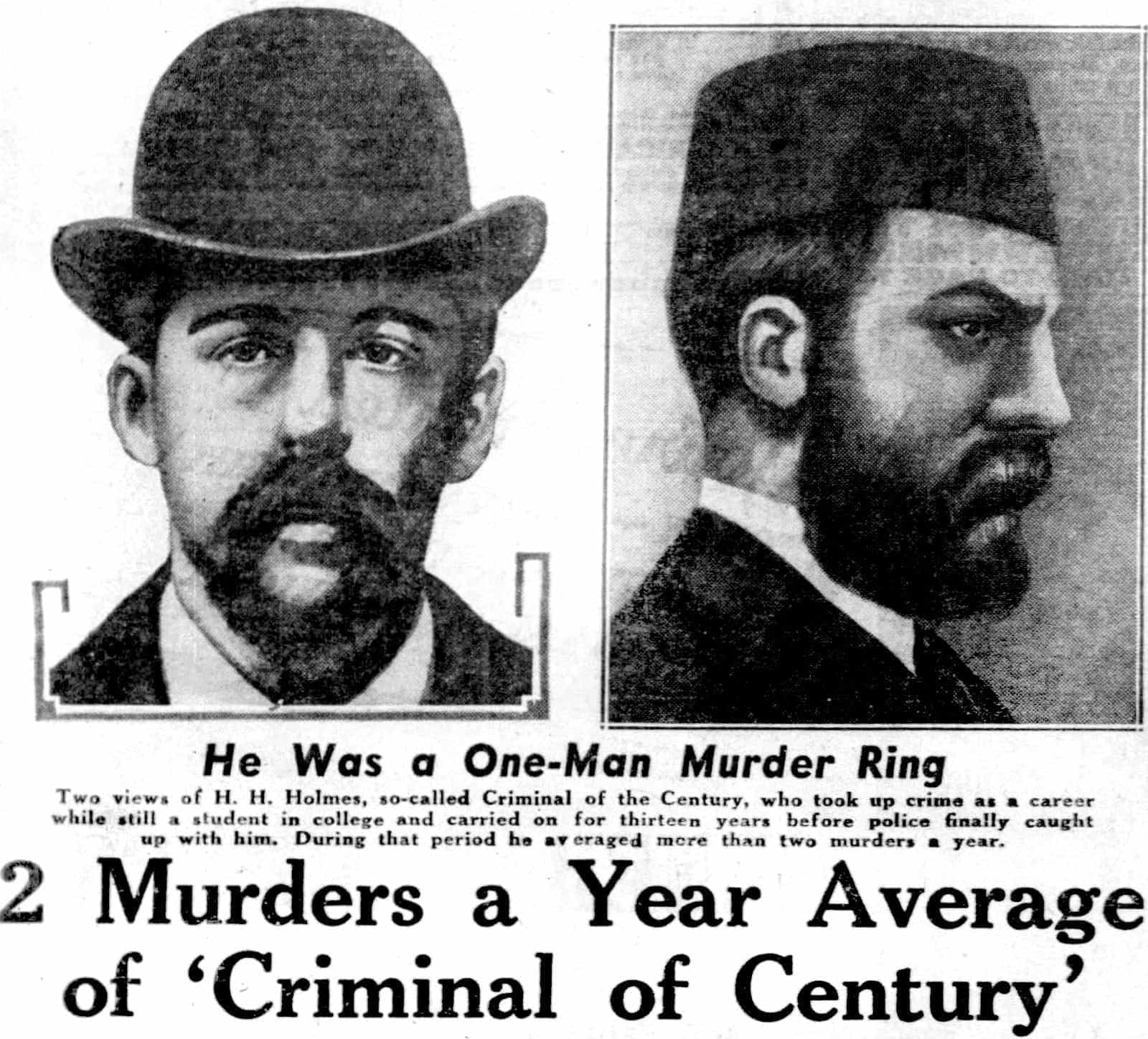
Holmes was arrested in Boston in 1895, on an outstanding warrant for insurance fraud.
The scheme involved an associate, a man Holmes claimed had died in an explosion.
The investigation record states that the associate was actually alive and in hiding.
That discovery turned the fraud charge into something else.
The exact nature of the fraud scheme, beyond the explosion claim, is not detailed in the record.
That is not established.
What is established is the task given to the lead detective during the investigation.
He was told to trace the whereabouts of the associate's three children, who had been in Holmes's care.
The detective found the children's bodies.
One in Toronto, one in Indianapolis, and a third in Indianapolis as well.
Murder charges followed from those findings.
A fraud warrant had opened the door, and what came through it was a body count.
How did a con man's scheme unravel into murder?
That was the question the detective carried from city to city.
He did not have to wonder long.
The children were not in hiding.
They were on the ground below.
THE CASTLE'S SECRETS
The police went in after the arrest, and the basement gave up its inventory.
Human bones, teeth, and other remains were pulled from the floor and the walls, according to the investigation record.
The building had been built for the 1893 World's Columbian Exposition, a showpiece of rooms and passages that twisted back on themselves.
Below it sat a kiln and acid vats, which the case summary says were used to dispose of bodies.
The physical evidence in that basement proved decisive in confirming multiple murders, the investigation record states.
Holmes lured victims—primarily young women—into the building, where he murdered them, according to the case summary.
The named victims included women who worked for or were associated with him.
There was Julia Conner.
There was Emeline Cigrand.
There was Minnie Williams.
Their names come from the case summary, and their bodies came out of the Castle's basement.
What the record does not establish is the method.
The case summary mentions gas, strangulation, and dismemberment, but no single weapon is named.
No one testified to a single way he killed.
That would require evidence the record does not provide.
The Castle held its secrets in plain sight, a three-story monument to the fair's promise, with a furnace built for what happened below.
She was on the ground below.
The bones were not a rumor.
They were in the basement, waiting for the police to open the door.
THE TRIAL AND THE CONFESSION
The trial was in Philadelphia.
Holmes was tried for the murder of his accomplice, not for the deaths of the children, not for the women whose bones were found in the Chicago basement.
The trial began in October 1895.
Prosecutors argued Holmes killed his accomplice as part of the insurance fraud scheme.
Holmes maintained the man had died accidentally.
The evidence was circumstantial, the record shows.
The discovery of the children's bodies and the physical evidence in the Castle proved decisive, according to the trial record.
The jury found Holmes guilty of first-degree murder.
He was sentenced to death.
He was executed by hanging on May 7, 1896, at Moyamensing Prison in Philadelphia.
Before the execution, Holmes confessed.
He confessed to 27 murders.
Authorities disputed the accuracy of his claims.
The confession raises more questions than it answers.
Did he confess to settle a score, to inflate his legend, to die with a number on his lips?
Did he confess to every death he caused, or only the ones he could remember?
Did he confess to the truth?
That would require evidence.
The true number of his victims has never been definitively established.
It is not established by the trial record.
It is not established by the confession.
It is not established by the bones in the basement.
What is established is this: one man was convicted, and one man was hanged.
The rest of the dead remain uncounted.
AND THE STORY STILL ISN'T OVER
The gallows did their work on May 7, 1896.
Holmes was hanged at Moyamensing Prison in Philadelphia.
The case, though, did not end there.
"The Castle" was sold.
It was damaged by fire in 1896.
It was demolished in 1938.
The building that held the basement bones is gone.
The story is not.
Erik Larson's 2003 bestseller *The Devil in the White City* brought the case back into the public eye.
Books and documentaries followed.
New readers learned the old details: the secret passages, the acid vats, the bones.
The victims' families received no formal compensation.
No payment. No apology. No official accounting.
The full number of victims has never been definitively established.
Holmes confessed to 27 murders before his execution.
Investigators believed the true number may have been higher.
The record does not resolve the count.
No further legal steps are pending.
The case is closed, and it is not closed.
It is a documented discovery.
It is also an open question.
How many people died in that basement?
How many were buried in the kiln?
How many were dissolved in the vats?
That would require evidence.
That would require a number the record does not provide.
The families were left with what the investigation produced: fragments, teeth, and a confession that may have been part of the con.
One man was convicted.
One man was hanged.
The rest of the dead remain uncounted.
Advertisement
You may also like
Caylee Anthony's grandmother reported her missing 31 days after she was last seen
Caylee Marie Anthony was two years old. Her family last saw her in mid-June 2008, in Orlando, Florida. On July 15, 2008, her maternal…
The radio and binoculars that led police to the Clutter killers
The Sunday bell did not ring for the Clutter family. On the morning of November 16, 1959, neighbors and friends came to River Valley…
Twelve-year-old Polly Klaas was at a slumber party. Then a stranger came through the window.
The pillowcases came down over their heads in the dark. It was 10:30 p.m. on October 1, 1993, in Petaluma, California. Three girls were…
The Amityville son who confessed to killing his family
The bar door swung open before the call was made. A neighbour reported that Ronald DeFeo Jr., then 23, had burst into a local…
The Green Beret doctor's pajama fibers that unraveled his story in 1979
The pajama fibers were under Colette MacDonald's body. They were in her wounds too. The fibers came from a pajama top belonging to her…

A video on Paul's phone at 8:44 p.m. — and the alibi that could not hold
The video was recorded on Paul Murdaugh's phone at 8:44 p.m. on June 7, 2021. It was recorded at the family's Moselle estate. The…