The Amityville son who confessed to killing his family
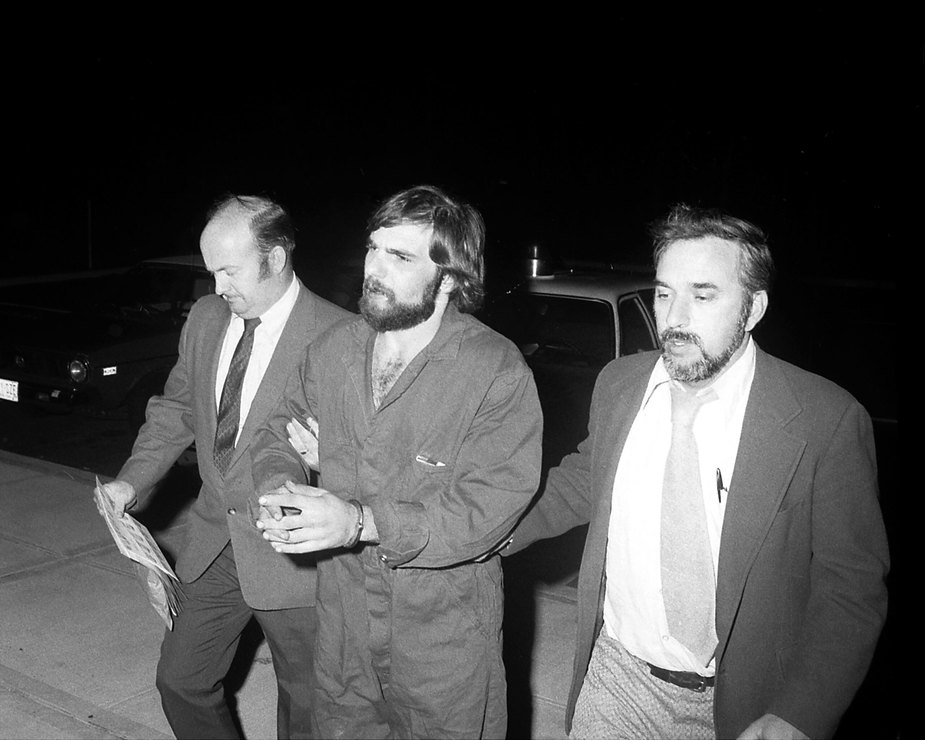
The bar door swung open before the call was made.
A neighbour reported that Ronald DeFeo Jr., then 23, had burst into a local bar claiming his family had been shot.
That was the documented entry point of the case.
Police were called to the DeFeo home at 112 Ocean Avenue in Amityville, New York.
They found six bodies, each shot with a .35-caliber rifle.
The father. The mother. Four of their children.
DeFeo Jr. told police he had been out of the house and returned to find the bodies.
He blamed a mob hit.
What exactly he said in the bar beyond the claim that his family had been shot is not established in the record.
Not the words. Not the tone. Not the moment before the door opened.
The house would later become famous through the 1977 book *The Amityville Horror* by Jay Anson, which claimed it was haunted.
A narrative widely disputed.
But that came later.
On that morning, there was only the claim, the call, and the six beds waiting at 112 Ocean Avenue.
She was on the ground below.
No, that is not right.
The bodies were in their beds.
The rifle was recovered. The claim was made. The door had swung open.
SIX BEDS, ONE RIFLE
The bar door had barely stopped swinging when the first officers reached 112 Ocean Avenue.
Inside, the house was quiet.
The bodies were in their beds.
Six of them: the father, the mother, and four of their children — Dawn, Allison, Marc, and John Matthew.
Each had been shot with a .35-caliber rifle, later recovered by police.
The eldest son, Ronald DeFeo Jr., then 23, was taken into custody that day.
The crime shocked the suburban Long Island community.
It became the subject of intense media scrutiny.
Relatives and neighbours described a volatile home life.
They spoke of a troubled household, of arguments and tension that had marked the family long before the shooting.
What the record does not establish is the exact positions of the bodies.
It does not establish the sequence of the shootings.
Six beds. One rifle. One family.
The house was a home in the morning.
By the time police arrived, it was a crime scene.
The father lay in one room. The mother in another. The children in theirs.
They were found where they slept.
That detail — the stillness of it — is what stayed with the officers who walked through the rooms.
The rifle was recovered. The claim was made. The door had swung open.
But the weight of that morning rested in the beds themselves.
THE CONFESSION AND THE VOICES
Under questioning, DeFeo Jr. confessed, saying he had killed his family in a fit of rage.
He later said he had heard voices.
The voices were never independently verified.
That is not established by the record. It is a claim he made.
The prosecution had his confession. The prosecution had the rifle, a .35-caliber weapon recovered by police.
What the prosecution did not have was forensic evidence linking DeFeo Jr. to the murders beyond his own words.
The defence argued that the confession was coerced.
That too was not established. It was the defence's contention.
The defence also argued insanity, citing DeFeo Jr.'s auditory hallucinations and a history of drug use.
Psychiatrists were prepared to testify.
The case rested on a man's statement and a weapon. The weapon was found. The statement was given.
What makes a confession believable? What happens when the only evidence is a man's own words?
That question hung over the room where DeFeo Jr. spoke.
A priest, Father Ralph Pecoraro, was called to the scene that morning.
He later claimed to have heard a voice urging him to leave the house.
That detail fed the paranormal lore that would follow the address. It was a priest's account, given after the fact.
The record does not establish that any voice spoke to the priest. It does not establish the voices DeFeo Jr. described.
It establishes a confession. It establishes a rifle.
The rest is testimony, memory, and what people said they heard.
THE TRIAL AND THE TWO STORIES
The trial opened in Suffolk County Court in 1975.
The prosecution argued that DeFeo Jr. had planned the murders to gain control of the family’s assets.
The defence presented an insanity plea, with psychiatrists testifying about DeFeo Jr.’s alleged mental illness.
The jury rejected the insanity defence.
They found DeFeo Jr. guilty of six counts of second-degree murder.
Judge Thomas M. Stark sentenced him to six consecutive terms of 25 years to life in prison.
Appeals were filed.
The conviction was upheld.
The exact psychiatric testimony is not detailed in the source.
The jury's deliberation process is not detailed in the source.
That would require evidence.
What remains is the legal record: six counts, six consecutive terms, one conviction.
The story of the house would come later, with its claims of hauntings and voices.
The story of the trial is plainer.
It is a story of a confession and a rifle.
It is also a story of a defence that failed.
The voices DeFeo Jr. described were not enough for the jury.
The plan to gain control of the family's assets was enough for the prosecution.
The judge made the sentence consecutive, one life term after another.
DeFeo Jr. remains in prison.
The conviction stands.
AND THE STORY STILL ISN'T OVER
He is still in prison.
Parole has been denied multiple times, with hearings as recent as 2021.
The house at 112 Ocean Avenue was sold and became the subject of the 1977 book *The Amityville Horror* by Jay Anson, which claimed the house was haunted.
That narrative has been widely disputed.
The paranormal claims about the house are not established by the record.
The surviving relatives have largely stayed out of the public eye.
Some have spoken about the tragedy in documentaries.
They did not ask for the story to become a haunting.
The case remains a touchstone of true-crime and paranormal lore.
It is a house, a book, a family, and a man still in prison.
The legal record stands: DeFeo Jr. was convicted of the murders.
The conviction was upheld on appeal.
Whether he will ever be released is not established.
The next concrete step is a future parole hearing.
There is no indication of release.
A rifle was recovered.
A confession was given.
Six bodies were found in their beds.
She was on the ground below.
The story outlived the verdict.
It outlived the house's fame.
It outlived the book's claims.
What remains is the record, and the man serving it.
That would require evidence.
Advertisement
You may also like
The mother who demanded justice after the last Son of Sam killing
The parking ticket was found near the last shooting scene. It was traced to a car registered to David Berkowitz. That is how the…
Bloodstained hair on Colette MacDonald's hand: the clue that broke the Green Beret's story
The bloodstained strand of hair lay on Colette MacDonald's hand. Military police found it on February 17, 1970, inside the Fort Bragg residence of…

The houseboat where a fugitive's manhunt ended, and the case closed without a trial
The houseboat was a squat white box tied to a dock on Miami Beach, and inside it, on July 23, 1997, they found Andrew…
The paymaster's $15,776 payroll — and the widows who testified
The paymaster and the guard were carrying two boxes along Pearl Street, an ordinary errand on an ordinary Thursday. The boxes held the payroll…
A paramedic spots one bottle — and the cyanide trail that changed packaging forever
The paramedic saw the bottle on the table in Adam Janus’s home. A 27-year-old postal worker, Janus had died suddenly that day in Arlington…
The fibers that tied a convicted man to 22 cases he was never tried for
The surveillance team heard the splash first. It was May 22, 1981, on the banks of the Chattahoochee River in Atlanta. A single sound…