The fibers that tied a convicted man to 22 cases he was never tried for
The surveillance team heard the splash first.
It was May 22, 1981, on the banks of the Chattahoochee River in Atlanta.
A single sound in the dark, water breaking against itself.
The team was watching the river because of the disappearances, the bodies, the fear that had gripped the city for nearly two years.
They heard the splash. They saw no one.
The body of a 27-year-old man was later recovered from the river.
That man was one of two adult victims for whom Wayne Williams was later convicted.
The splash is the detail the investigation latched onto.
It is the moment the case turned toward a suspect.
But what did that splash actually prove?
It is not established that the splash was caused by Williams or by any specific person.
The record only shows that a splash was heard and a body was later found.
The sound became a hinge.
A hinge between a river at night and a conviction.
Between what was heard and what could be shown.
The water closed over something. That much is documented.
Who made it close — that is another question.
THE FIBERS
Between July 1979 and May 1981, at least 28 Black children, adolescents, and young adults disappeared and were found murdered in Atlanta.
The victims ranged in age from 7 to 27, most of them male.
The case record documents the numbers. It documents the ages. It documents the years.
What it does not document is a single weapon.
No single weapon or vehicle was identified as central to the case — that is not established in the record.
The investigation was one of the largest in U.S. history, a task force of local, state, and federal agencies.
The FBI's hair and fiber analyst testified that fibers found on victims matched carpets, rugs, and hair from Williams's home.
He testified that they matched a dog in his family's car.
Fiber by fiber, the prosecution built a bridge from one address to many bodies.
The defense argued the fibers were common.
They argued the fibers could have come from many sources — from any home, any rug, any dog.
How specific is specific enough?
How common is too common?
The analyst said match. The defense said coincidence.
The record holds both statements, side by side, and does not resolve them.
The city waited. The families waited. The fibers sat in evidence bags, each one a small claim about where someone had been.
Not because the fibers proved everything. But because they were all the proof the case had.
THE TRIAL
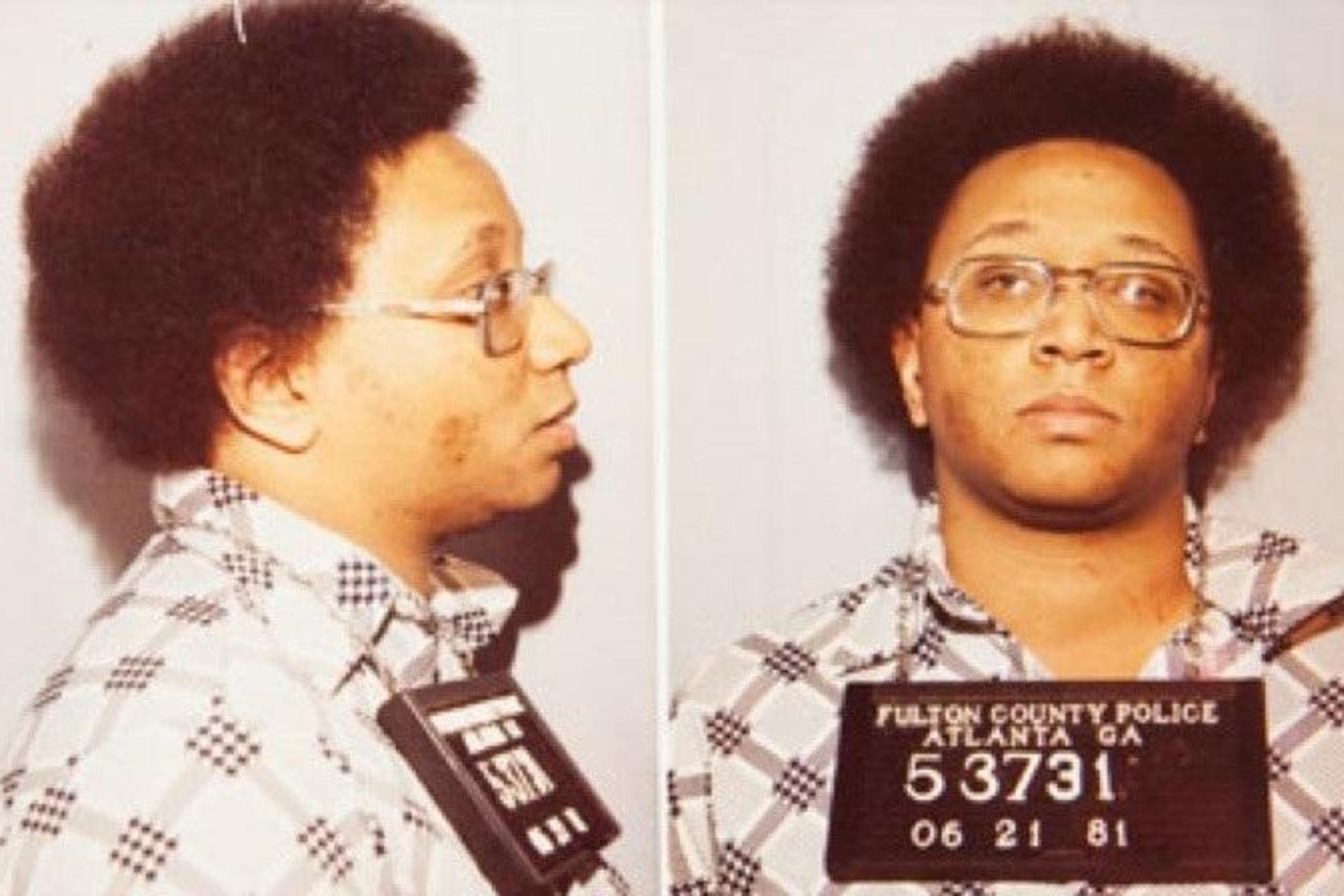
In June 1981, Wayne Williams, a 23-year-old freelance photographer and music promoter, was arrested and charged with two murders.
The trial began in January 1982 and lasted nearly two months.
The prosecution relied heavily on fiber evidence and the testimony of witnesses who placed Williams with the victims.
The defense argued the evidence was circumstantial and that Williams was a scapegoat.
On February 27, 1982, the jury found Williams guilty of both murders.
He was sentenced to two consecutive life terms.
The two victims are not named in the news coverage; they are referred to by role only.
The record does not name them.
Was it enough?
Was a web of fibers, matched and measured, enough to convict a man?
Was the word of witnesses, placed at the scene, enough to end the question?
The jury said yes.
The defense said no.
The fibers were common, they argued; they could have come from any number of homes, any number of cars, any number of lives.
The prosecution said the fibers were the thread that tied it all together.
The trial record holds both statements, side by side, and does not resolve them.
The city waited.
The families waited.
The verdict came down on a Saturday, and the courtroom was quiet.
THE 22 CLOSED CASES
The verdict came down on a Saturday, and the courtroom was quiet.
Then the case closed around him.
After the conviction, authorities closed 22 of the other cases, attributing them to Wayne Williams.
He was never tried for those.
The prosecution's interpretation was simple: the fiber evidence linked Williams to the broader pattern of murders.
The defense's interpretation was just as firm: the fibers were common, and the closure was a controversial decision.
It is not established that Williams was responsible for the 22 closed cases.
The source states only that authorities attributed them to him.
That is a fact about the record, not about the crimes.
The investigation was criticized for focusing on Williams while other suspects and theories were not fully pursued.
It was one of the largest investigations in U.S. history.
It ended with one name.
Some victims' families have expressed doubt that Williams was responsible for all the deaths.
They waited through the trial.
They waited through the closures.
They are still waiting.
The case remains officially closed.
No one else has been charged.
Williams remains in prison in Georgia, now in his 60s.
His appeals have been rejected by state and federal courts, including the U.S. Supreme Court.
In 2019, Atlanta's mayor ordered a review of the case files.
No new charges were filed.
The mothers of several slain children became public advocates.
Camille Bell, mother of Yusuf Bell, is one of them.
She has spoken publicly for decades.
Doubts are not evidence.
Closures are not convictions.
The fibers tied a convicted man to 22 cases he was never tried for.
That is documented.
The rest is a question the record leaves open.
AND THE STORY STILL ISN'T OVER
Wayne Williams is still in prison in Georgia.
He is in his 60s now.
His appeals have been rejected by state courts.
His appeals have been rejected by federal courts.
The U.S. Supreme Court declined to hear his case.
All of that is in the record.
In 2019, Atlanta Mayor Keisha Lance Bottoms ordered a review of the case files.
The review ended.
No new charges were filed.
No one else has been charged in connection with the murders.
That is also in the record.
The mothers of the victims kept working.
Camille Bell, whose son was among the dead, became an advocate.
She has spoken publicly about the case for decades.
Other mothers joined her.
They asked for answers.
They asked for evidence.
They asked for the case to be looked at again.
The case remains officially closed.
It remains a subject of public debate.
Documentaries examine it.
New audiences ask old questions.
Was one man responsible for all of it?
Was he responsible for any of it beyond the two convictions?
That would require evidence.
The 2019 review produced none.
It is not established that the case will be reopened.
It is not established that new charges will be filed.
The families wait.
One man sits in prison.
The record holds what it holds.
The rest is a question the record leaves open.
Advertisement
You may also like
The mother who demanded justice after the last Son of Sam killing
The parking ticket was found near the last shooting scene. It was traced to a car registered to David Berkowitz. That is how the…
Bloodstained hair on Colette MacDonald's hand: the clue that broke the Green Beret's story
The bloodstained strand of hair lay on Colette MacDonald's hand. Military police found it on February 17, 1970, inside the Fort Bragg residence of…

The houseboat where a fugitive's manhunt ended, and the case closed without a trial
The houseboat was a squat white box tied to a dock on Miami Beach, and inside it, on July 23, 1997, they found Andrew…
The paymaster's $15,776 payroll — and the widows who testified
The paymaster and the guard were carrying two boxes along Pearl Street, an ordinary errand on an ordinary Thursday. The boxes held the payroll…
A paramedic spots one bottle — and the cyanide trail that changed packaging forever
The paramedic saw the bottle on the table in Adam Janus’s home. A 27-year-old postal worker, Janus had died suddenly that day in Arlington…
The floppy disk metadata that ended BTK's silence and led to a church council president
A deleted file does not vanish. In 2005, a floppy disk arrived at a Wichita television station. It was from BTK, the killer who…