The floppy disk metadata that ended BTK's silence and led to a church council president
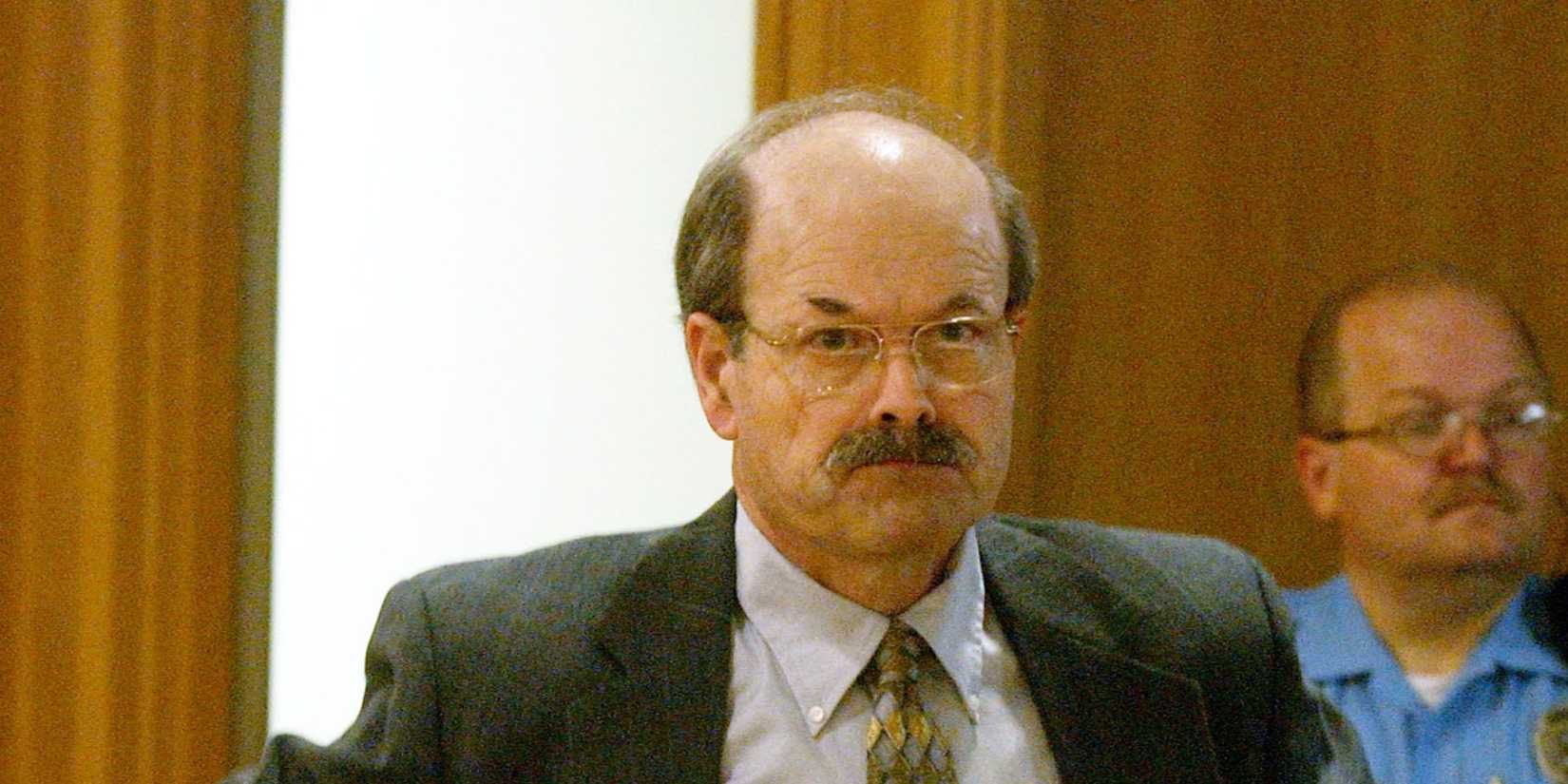
A deleted file does not vanish.
In 2005, a floppy disk arrived at a Wichita television station.
It was from BTK, the killer who had taunted the city for three decades.
The disk held a document.
The document had been deleted.
But the disk's metadata kept the name.
The metadata read "Dennis."
The metadata also carried a reference to a church.
It is not established exactly how police first connected that church reference to Dennis Rader.
Only that the metadata contained the name and the church.
That was enough.
It led police to a Wichita resident and former church council president.
His name was Dennis Rader.
BTK had been silent for years.
Then, in 2004, he sent a letter to the Wichita Eagle.
The silence broke.
The letters resumed.
The disk was part of that series, part of a decades-long trail of packages and notes to media and police.
How did a deleted file name a man?
How did a shred of digital memory end a hunt that spanned 1974 to 2005?
How did a church council president become BTK?
That would require evidence.
The evidence was on the disk.
JANUARY 15, 1974
January 15, 1974, was a Monday.
At 621 North Edgemoor Street in Wichita, Kansas, four members of the Otero family were murdered.
The victims were Joseph Otero, 38; his wife Julie Otero, 33; their son Joseph Otero Jr., 9; and their daughter Josephine Otero, 11.
The bodies were discovered later that day by the couple's eldest son, Charlie Otero, who was 15 and had been at school.
He came home to the house at 621 North Edgemoor Street.
The killer had bound the family.
The parents and the son were strangled.
The daughter was hanged from a pipe in the basement.
She was on the ground below.
The exact time of death is not established in the source.
The precise sequence of events inside the house is not established in the source.
What is documented is the address, the date, the four names, and the method.
The crime went unsolved for decades.
It became the first known murders of the man who later called himself BTK.
That name came later, in a letter claiming responsibility.
Not in 1974.
In 1974, there was only the house, the bodies, and a son who found them.
The case went cold.
It haunted a family.
It haunted a city.
And it would wait.
THE TAUNTING LETTERS
In 1974, the killer sent a letter to a Wichita television station.
He claimed responsibility for the Otero murders.
He named himself BTK, for “Bind, Torture, Kill.”
The exact contents of that letter are not detailed in the source.
Over the following decades, BTK sent a series of letters and packages to media and police.
He taunted investigators.
He taunted them for years.
The case refused to die.
In 2004, after a long silence, BTK resumed communication.
He sent a letter to the Wichita Eagle.
This led to a renewed investigation.
The Wichita Police Department and the FBI were involved.
FBI agent and profiler John Douglas was consulted on the case.
The exact contents of those letters and packages are not detailed in the source.
What did he write?
What did he want?
What did he reveal?
That would require evidence.
Investigators were left with fragments.
Fragments of paper.
Fragments of a voice that had waited for decades.
THE ARREST AND THE PLEA
In 2005, investigators examined a floppy disk BTK had sent to a television station.
The disk contained a deleted document.
That document carried metadata with the name "Dennis" and a reference to a church.
It was a fragment, but it pointed somewhere specific.
It pointed to Dennis Rader.
Rader was arrested on February 25, 2005.
DNA evidence linked him to the crime scenes.
The specific DNA evidence is not elaborated in the record.
The investigation also connected Rader to seven additional murders committed between 1974 and 1991.
Rader was charged with ten counts of first-degree murder.
He pleaded guilty to all charges on June 27, 2005, in a Sedgwick County court.
The prosecution presented evidence including DNA matches and Rader's own confessions.
The details of those confessions are not elaborated in the record.
The defense did not contest the charges.
Ten counts.
Ten guilty pleas.
The fragments had finally cohered into a whole.
AND THE STORY STILL ISN'T OVER
Judge Gregory Waller sentenced Dennis Rader to ten consecutive life terms.
The minimum was 175 years before parole eligibility.
Rader did not appeal.
He is serving his sentence at the El Dorado Correctional Facility in Kansas.
He has remained in prison since his conviction.
There is no possibility of release in his lifetime.
The case is closed.
The story is not.
Charlie Otero, who found the bodies as a fifteen-year-old, has spoken publicly about the case over the years.
His siblings have spoken too, about what was taken and what remains.
The BTK case drew extensive media coverage, documentaries and books, long after the verdict.
The public fascination did not end with the sentence.
It is a closed case. It is also an open wound in Wichita's memory.
Any future legal motions or parole hearings are not mentioned in the record.
The sentence is final, but the telling is not.
Ten counts.
Ten guilty pleas.
One man in a cell who will die there.
The survivors carry what the floppy disk could not delete.
That would require evidence.
Advertisement
You may also like
The mother who demanded justice after the last Son of Sam killing
The parking ticket was found near the last shooting scene. It was traced to a car registered to David Berkowitz. That is how the…
Bloodstained hair on Colette MacDonald's hand: the clue that broke the Green Beret's story
The bloodstained strand of hair lay on Colette MacDonald's hand. Military police found it on February 17, 1970, inside the Fort Bragg residence of…

The houseboat where a fugitive's manhunt ended, and the case closed without a trial
The houseboat was a squat white box tied to a dock on Miami Beach, and inside it, on July 23, 1997, they found Andrew…
The paymaster's $15,776 payroll — and the widows who testified
The paymaster and the guard were carrying two boxes along Pearl Street, an ordinary errand on an ordinary Thursday. The boxes held the payroll…
A paramedic spots one bottle — and the cyanide trail that changed packaging forever
The paramedic saw the bottle on the table in Adam Janus’s home. A 27-year-old postal worker, Janus had died suddenly that day in Arlington…
The fibers that tied a convicted man to 22 cases he was never tried for
The surveillance team heard the splash first. It was May 22, 1981, on the banks of the Chattahoochee River in Atlanta. A single sound…