A 7-year-old son slept through his mother's murder — and his father's story about a bushy-haired intruder

The July 4, 1954, house in Bay Village, Ohio, was quiet.
Marilyn Sheppard, 31, a homemaker and former model, was found bludgeoned to death in her upstairs bedroom, according to the case record.
Her 7-year-old son, Samuel Reese "Chip" Sheppard, was asleep in another room.
He was not harmed.
Her husband, Dr. Sam Sheppard, told police he had been asleep on a downstairs couch, the case record states.
He said he awoke to hear her scream.
He told police he saw a "bushy-haired" intruder fleeing the house.
He claimed he chased the man to the lake and struggled before losing consciousness.
The murder weapon was never recovered, according to the investigation record.
The house showed no sign of forced entry.
So the question sits in that July heat: how did a child sleep through a bludgeoning?
How did a husband on a couch not hear the attack begin?
How did a killer enter, strike, and vanish without a sound?
That would require evidence the record does not provide.
What the child heard or saw is not in the record.
The identity of any intruder is not established.
The only account of that night's noise is the father's own statement to police.
She was on the ground above him.
He was below, claiming sleep.
The son was between them, in another room, asleep.
THE HUSBAND'S STORY
He told police he had been asleep on the downstairs couch.
He said a scream woke him, and then he saw a "bushy-haired" intruder fleeing the house.
He claimed he chased the man down to the lake, struggled with him, and lost consciousness.

That was Sam Sheppard's statement, given to police on the morning of July 4, 1954.
Police found no sign of forced entry.
The investigation record shows no broken locks, no splintered frames, no sign that anyone came in from outside.
Coroner Dr. Samuel R. Gerber publicly declared Sam the prime suspect within hours.
He said so before forensic work was complete.
The prosecution later argued Sam bludgeoned Marilyn with a surgical instrument, possibly a hammer or a metal rod.
They argued he staged the scene to look like a burglary.
The weapon was never recovered.
Whether Sam actually saw an intruder is not established.
The weapon's identity is unknown.
The house was quiet.
The son slept through the mother's murder and the father's story.
A man who claims he fought an intruder to the shore of a lake—did he have a scratch?
The record does not say he did.
The record shows a man downstairs, a woman upstairs, and a son between them.
One story is dramatic, full of movement and struggle.
The other is a static scene: a house with no forced entry, a wife bludgeoned, a husband who says he woke up.
Which is more believable?
That would require evidence.
THE FAMILY DIVIDED
Marilyn Sheppard was a homemaker and a former model, according to the case record.
Her parents, the Reeses, and her sister lived nearby.
In the first days, they supported her husband, Dr. Sam Sheppard.
Then they turned against him.
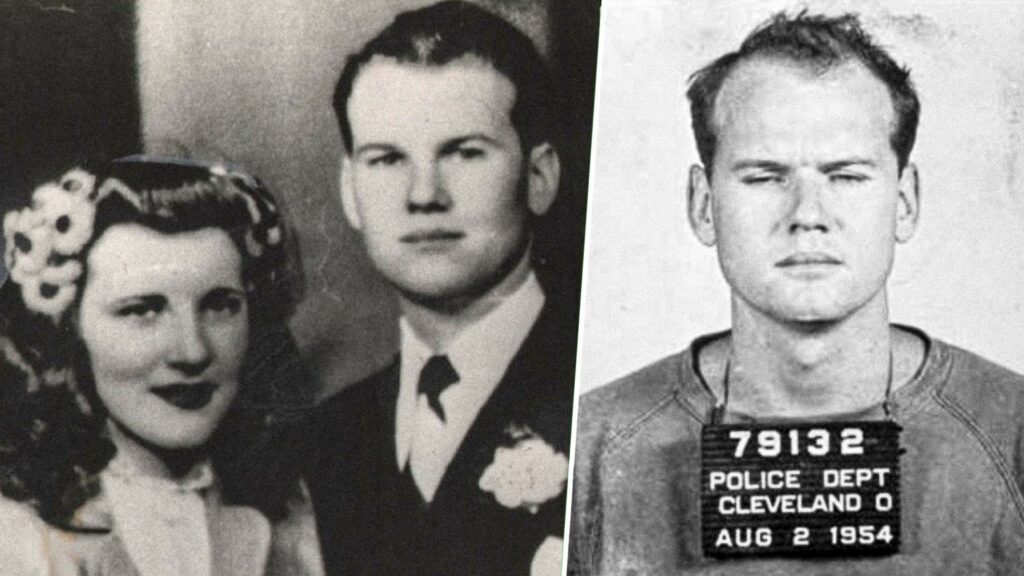
The case record does not detail the specific reasons for that change of heart.
That shift is not established in the record, only that it happened.
At the original trial, Marilyn's family took the stand.
Her sister testified against Sam Sheppard.
Her parents testified against him too, according to trial testimony.
They were not distant observers; they were witnesses for the prosecution.
The family that had lived close by became part of the case against the man their daughter had married.
It was a division inside a small circle of people who shared a driveway and a grief.
The Sheppard side had its own public defenders — Sam's brothers and his father, all physicians.
The Reese side had the victim.
The two families occupied the same courtroom, the same small suburb, the same loss.
The rift between the Sheppard and Reese families never healed, the case record states.
It is a fact of the aftermath, as fixed as the verdict.
Marilyn was the one in the middle, and she was gone.
Her family spoke for her in the only way left to them.
THE TRIAL AND THE VERDICT
The trial began in October 1954 and lasted nearly two months.
The judge allowed extensive media coverage and did not sequester the jury.
The courtroom was a stage, and the newspapers were the script.
On December 21, 1954, the jury found Sam Sheppard guilty of second-degree murder.
He was sentenced to life in prison.
It is a fixed fact of the record: a verdict, a sentence, a man taken away.
But the record does not stop there.
In 1964, the U.S. Supreme Court overturned the conviction in Sheppard v. Maxwell.
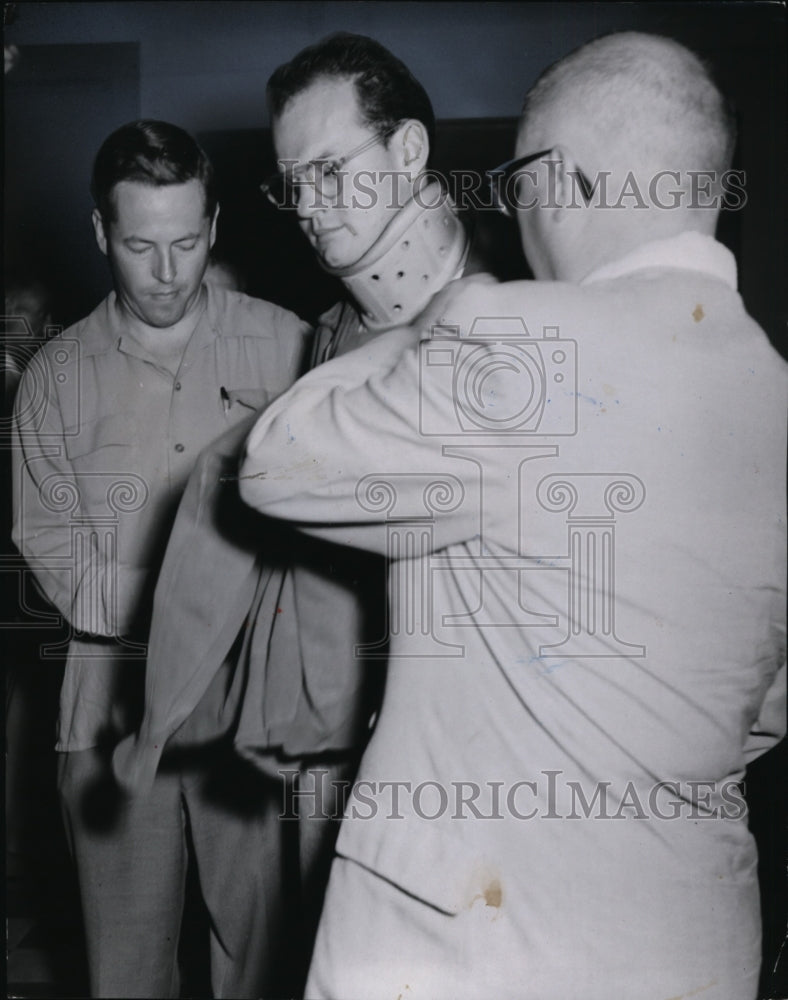
The Court criticized the "carnival atmosphere" of the trial.
The judge had failed to control pretrial publicity, the Court said.
The verdict collapsed.
At his 1966 retrial, Sam Sheppard was acquitted.
The defense argued the original investigation had been botched.
The real killer, they said, was never found.
Whether Sam Sheppard was guilty or innocent is not established by the record.
The acquittal does not prove innocence.
It proves only that the state did not prove its case the second time.
So what remains?
Marilyn Sheppard was bludgeoned to death in her own bedroom.
No weapon was ever recovered.
No forced entry was found.
Her son slept through it.
The trial gave a verdict.
The retrial took it back.
Marilyn was the one in the middle, and she was gone.
Was justice ever truly served for her?
That would require evidence the record does not contain.
AND THE STORY STILL ISN'T OVER
Acquittal did not give Sam Sheppard his life back.
He returned to medicine briefly, but the practice did not hold.
Alcoholism took hold, and legal troubles followed.
He died in 1970 at age 46 of liver failure, in a body that gave out the way the case never did.

His son, Samuel Reese Sheppard, was the child who slept through it all.
He spent decades trying to clear his father's name further.
He also spent those decades looking for the real killer.
The real killer, if there was one, was never identified.
That is not established by any record.
In 2002, a civil jury in Cuyahoga County found that Sam Sheppard had not murdered his wife.
It was a symbolic victory, the case record says.
It was not a criminal finding.
It did not name who did kill Marilyn Sheppard.
The question of who killed her remains open.
Marylyn's family had testified against Sam at the original trial.
The rift between the families never healed.
She was a homemaker and former model.
She was the one in the middle, and she was gone.
The case is taught in law schools now.
It is cited for its impact on media and trial fairness.
It is famous.
It is also unresolved.
The son who slept through the murder carried the question for the rest of his life.
Who really killed Marilyn Sheppard?
A bushy-haired man on the lake?
A husband who said he chased him?
A weapon that was never found?
That would require evidence the record does not contain.
Advertisement
You may also like
The parking ticket on a 1970 Ford Galaxie that led police to a suspected shooter
The parking ticket sat on the windshield of a 1970 Ford Galaxie. It sat there near the final shooting scene in Brooklyn, on a…
The car that drove away from Cielo Drive — and the witness who could not forget it
The car was yellow, or cream, or something in between. Linda Kasabian could not forget it. She drove it away from 10050 Cielo Drive…
The babysitter who didn't exist: the name Casey Anthony gave before Caylee vanished
The name she gave was Zenaida Fernandez-Gonzalez. A full name. A specific name. A name that sounded like a real person with a real…

The QuickBooks edits a business partner made after the McStay family vanished
The dogs were in the backyard. The vehicles were still in the driveway at the Fallbrook home, and the front door was unlocked, but…

The .44-caliber letter that turned a shooting spree into a hunt for 'Son of Sam'
The letter was found near the scene of the April 1977 attack. It was addressed to columnist Jimmy Breslin. It was signed "Son of…
The 2007 deal that let Epstein dodge federal charges until a 2018 exposé
In 2005, a mother in Palm Beach, Florida, told police that her 14-year-old daughter had been sexually abused by an older man. The older…