The parking ticket on a 1970 Ford Galaxie that led police to a suspected shooter
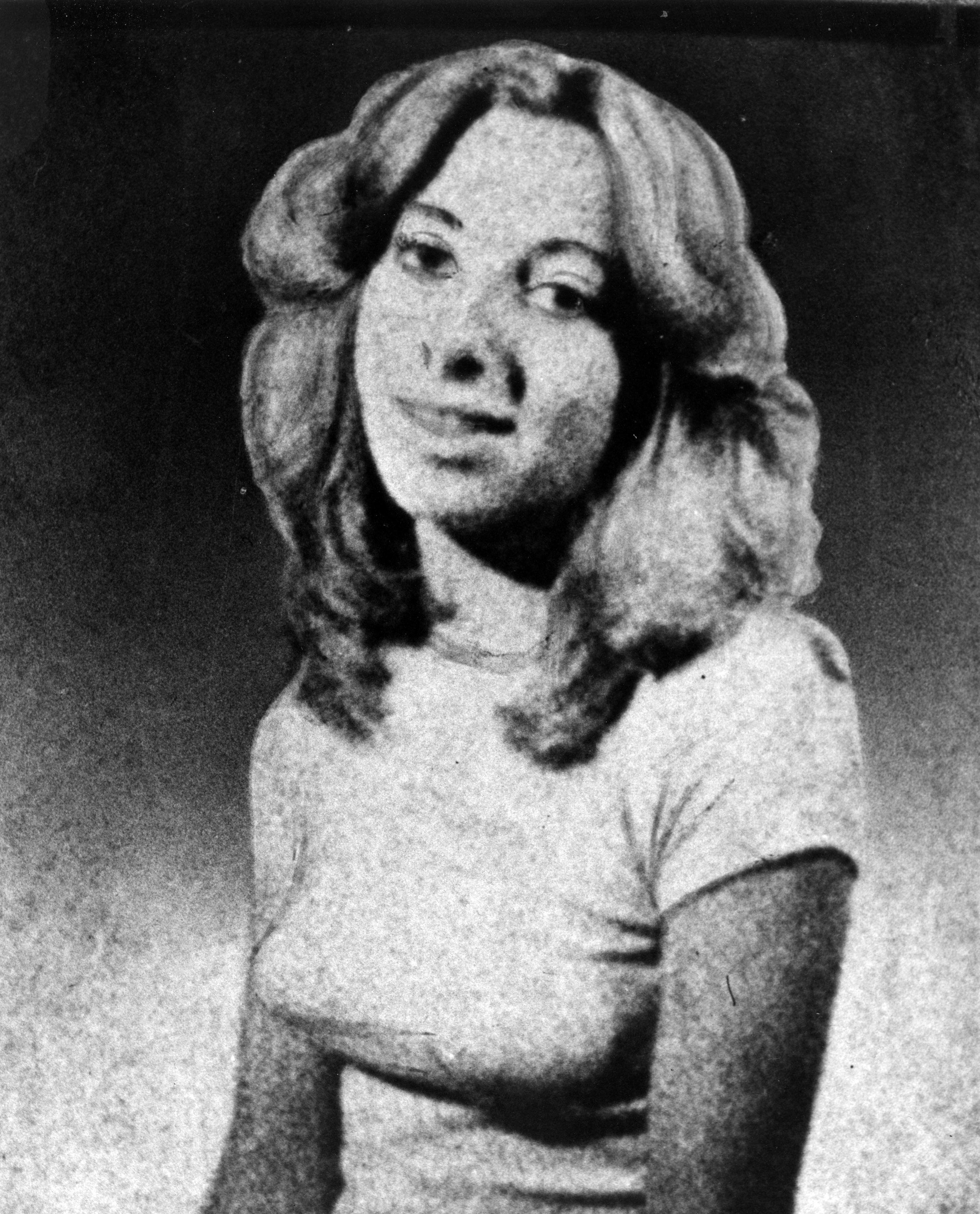
The parking ticket sat on the windshield of a 1970 Ford Galaxie.
It sat there near the final shooting scene in Brooklyn, on a street where a young woman had just been killed and her companion wounded.
A witness told police they had seen a man with a parking ticket on his car near the scene.
That witness account is in the investigation summary.
So is the next step: police traced the ticket to the car's registered owner.
The owner was a 24-year-old postal worker from Yonkers named David Berkowitz.
A slip of paper, a summons for parking, became the hinge of a manhunt that had run for a year.
Not because of ballistics.
Not because of a confession.
Because a car had been parked where it should not have been, and someone had written it down.
The ticket was the key break after a year of shootings.
Who exactly placed the ticket on the car, and the precise time it was issued, are not in the record.
That would require evidence.
What the record shows is the ticket itself, and the address it led to.
A year of fear, a city waiting, and then a parking violation.
It is mundane.
It is also the moment the case turned.
THE FIRST SHOTS
It begins on July 29, 1976, in the Bronx.
A woman and her companion were sitting in a car.
The woman was killed. The companion was wounded.
That was the first attack, according to the case summary.
Over the following year, seven more attacks followed.
Mostly they targeted young couples in parked cars in Queens, the Bronx, and Brooklyn.
The shooter used a .44-caliber revolver.
It was an uncommon weapon.
Newspapers dubbed him the ".44 Caliber Killer."
That name came before the other one, the one the city would learn later.
The investigation was hampered by a lack of witnesses.
It was hampered by the random nature of the attacks.
Who shoots a stranger in a parked car?
Who picks that couple, that street, that moment?
The record does not itemize the seven attacks that followed the first.
It does not name the first two victims in the case summary.
Police initially focused on the possibility of a single shooter.
One person. One revolver. One pattern.
The dead ends were many.
The false leads were real.
A suspect named in connection with an earlier shooting was later cleared.
The city waited.
A year of fear, and the gun kept firing.
Not because the police were idle. Because there was nothing to hold onto.
No witnesses. No motive. No thread.
Just a .44-caliber revolver and the terror it left behind.
THE FINAL ATTACK AND THE BREAK
The final attack came on July 31, 1977, in Brooklyn.
One victim was killed. Another was wounded but survived.
After the shooting, a witness reported seeing a man with a parking ticket on his car near the scene.
Police traced the ticket to a 1970 Ford Galaxie.
The car was registered to David Berkowitz.
When officers went to his Yonkers apartment, they found the car outside and a rifle visible inside.
Berkowitz emerged from the building.
He was arrested without incident on August 10, 1977.
A 24-year-old postal worker, stopped in the street.
Officers recovered the .44-caliber revolver from his apartment.
The weapon that had terrorised the city for a year was now in evidence.
The name of the witness is not in the record.
The exact wording of the parking ticket is not in the record either.
What the record does show is a ticket, a car, and a name.
That was the thread.
After a year of nothing to hold onto, it was enough.
THE CONFESSION AND THE PLEA
The man with the parking ticket had a name.
David Berkowitz confessed to the shootings.
He told investigators a neighbor's dog had commanded him to kill.
Whether that claim was a genuine delusion or a calculated statement is not established by the record.
The confession came after the arrest, after the car, after the rifle seen in the apartment.
On May 8, 1978, Berkowitz pleaded guilty to all eight shootings in Bronx County Supreme Court.
The plea avoided a trial.
He was sentenced to 25 years to life for each of the six murders, to be served consecutively.
Additional time was added for the two attempted murders.
The case against him was built on the ticket, the car, the confession.
It was also built on a year of missteps.
The investigation was criticized for its length.
It was criticized for a series of false leads.
One suspect, named in connection with an earlier shooting, was later cleared.
That suspect was not Berkowitz.
The record does not say how close that false lead came to derailing the case.
What the record does show is the plea, the sentence, the closure of a trial that never happened.
The shootings ended with an arrest in Yonkers.
The legal case ended with a guilty plea in the Bronx.
The dog command remains a confessed claim, repeated but unverified.
Not because the record disproves it.
But because the record never establishes it.
AND THE STORY STILL ISN'T OVER
He remains inside.
Attica Correctional Facility held him first. Later, Sullivan Correctional Facility did.
Parole has been denied multiple times. Most recently, the record shows, in 2022.
He has expressed remorse in some statements. He has also claimed his confession was influenced by mental illness.
The next hearing date is not in the record. No motion is pending on paper. Only the denial stands.
The case remains one of the most studied serial-killer investigations in American history. It is studied in classrooms. It is studied in police departments. It is studied in true-crime archives.
It led to changes in how New York City police handled serial investigations. The failures were mapped. The procedures were rewritten.
The dog command remains a confessed claim, repeated but unverified. Not because the record disproves it. But because the record never establishes it.
That would require evidence.
Advertisement
You may also like
The fibers that tied a convicted man to 22 cases he was never tried for
The surveillance team heard the splash first. It was May 22, 1981, on the banks of the Chattahoochee River in Atlanta. A single sound…
The floppy disk metadata that ended BTK's silence and led to a church council president
A deleted file does not vanish. In 2005, a floppy disk arrived at a Wichita television station. It was from BTK, the killer who…
The DNA test that finally linked Albert DeSalvo to Mary Sullivan's murder
He confessed in 1965. Albert DeSalvo was already in custody, held on charges unrelated to the murders of the Boston Strangler. He said he…
The tarot card 'Call me God' and the tip that finally stopped the 2002 D.C. sniper attacks
A tarot card was left at one of the shooting scenes. It carried the message "Call me God." The card is a documented piece…
The 1996 ransom note detail that still haunts the Ramsey investigation
The 911 call came at 5:52 a.m. on December 26, 1996. Patsy Ramsey told the dispatcher her 6-year-old daughter was missing. A ransom note…
The car that drove away from Cielo Drive — and the witness who could not forget it
The car was yellow, or cream, or something in between. Linda Kasabian could not forget it. She drove it away from 10050 Cielo Drive…