The tarot card 'Call me God' and the tip that finally stopped the 2002 D.C. sniper attacks
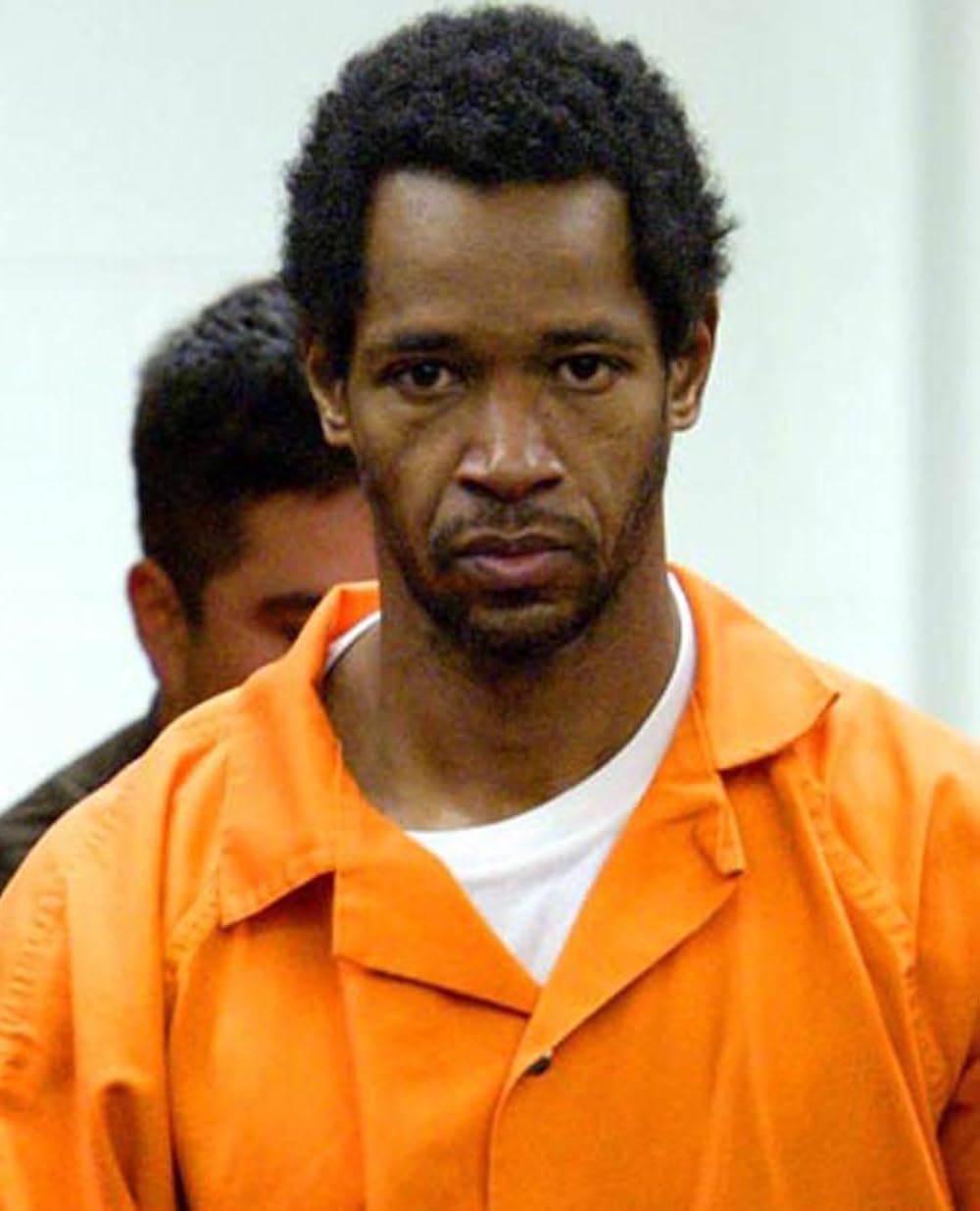
A tarot card was left at one of the shooting scenes.
It carried the message "Call me God."
The card is a documented piece of evidence in the 2002 D.C. sniper investigation, though the exact wording beyond those two words is not in the record.
Investigators connected the card to John Allen Muhammad, one of the two men later arrested.
The attacks spanned October 2 to October 24, 2002.
Ten people were killed.
Three were wounded.
The shootings crossed Maryland, Virginia, and Washington, D.C.
It was one of the largest investigations in U.S. history.
Local police worked the case.
The FBI worked the case.
The Bureau of Alcohol, Tobacco, Firearms and Explosives worked the case.
Montgomery County Police Chief Charles Moose became the public face of the response, holding frequent press conferences and often addressing the suspects directly.
A witness reported a blue Chevrolet Caprice at one shooting.
A tip from a citizen who recognized the car from a police bulletin led police to a rest stop on Interstate 70 near Myersville, Maryland.
There, on October 24, they found Muhammad and Lee Boyd Malvo sleeping in the car.
The card was left at a scene before the arrests.
It was evidence.
It was also a taunt.
Who picked it up?
How did it end?
The record shows the card was connected to Muhammad, and the record shows the investigation that followed it.
THE BLUE CAPRICE
The first shooting was outside a liquor store in Montgomery County, Maryland.
Then gas stations. Parking lots. Other public places.
For three weeks, the shots came without pattern, and the region braced for the next one.
The final shooting came on October 22, on a bus in Aspen Hill, Maryland.
The bus driver was killed.
Police had spent the manhunt looking for a white van.
That focus broke when a witness reported a blue Chevrolet Caprice at a shooting in Montgomery County.
One witness.
That was the break.
On October 24, a truck driver called in a tip.
The tip led police to a rest stop on Interstate 70 near Myersville, Maryland.
There, in a blue 1990 Chevrolet Caprice, police found John Allen Muhammad and Lee Boyd Malvo.
Both were sleeping.
In the car, officers found a Bushmaster .223-caliber rifle.
Ballistics linked that rifle to multiple shootings.
The random terror was stopped by a single witness and a single tip.
The identity of the truck driver is not in the record.
The identity of the citizen who recognized the car is not in the record either.
What remains documented is the car, the rifle, and the sleepers inside it.
TWO TRIALS, TWO SENTENCES
Muhammad, a U.S. Army veteran, was tried first in Virginia for the murder of a man in Manassas.
He was convicted of capital murder and sentenced to death.
Malvo, 17 at the time of the attacks, was tried separately in Virginia for the murder of a woman in Falls Church.
He was convicted of capital murder and sentenced to life without parole.
Both were tried as adults.
The trials did not run together.
They ran one after another, in the same state, over different victims, toward different ends.
Muhammad’s appeals failed.
He was executed by lethal injection on November 10, 2009, in Virginia.
Malvo’s conviction and sentence were upheld on appeal.
He was later transferred to a federal prison.
The lead investigator was Montgomery County Police Chief Charles Moose, who gave frequent press conferences addressing the suspects directly.
He spoke to them through the cameras.
He asked them to call.
The record does not show that they did.
What the record shows is the divergence.
One man died by the state.
The other man remains in prison, serving life without parole.
The specific evidence connecting the tarot card to Muhammad, beyond investigator statements, is not detailed in the record.
That is not established.
What is established is the sentence.
What is established is the execution date.
What is established is the appeal that failed for Muhammad and the appeal that failed for Malvo.
Closure came in two forms, and they were not the same form.
It is justice.
It is also a long legal path that ended in two different cells.
THE TIP VS. THE THEORY
The arrest came after a tip from a citizen who recognized the car from a police bulletin.
That is the documented path.
The tarot card is a documented piece of evidence.
It was left at one scene, and it carried the message "Call me God."
Investigators connected the card to Muhammad.
But the record does not establish that the card was a confession.
It does not establish that it was a direct message from the shooters.
Was it a taunt?
Was it a signature?
Was it a random object left behind by someone else?
The record does not answer those questions.
That would require evidence.
Any viral theory about the card's meaning or origin is not in the record.
It is simply part of the evidence.
The tip is what stopped the case.
The card is what haunts it.
They are not the same thing.
One led to a rest stop on Interstate 70, where police found the two men sleeping in a blue Chevrolet Caprice.
The other led nowhere.
The case remains a landmark in American criminal justice.
It is a landmark regarding juvenile sentencing.
It is a landmark regarding the use of the death penalty.
Muhammad was executed in 2009.
Malvo remains in prison, serving life without parole.
In 2017, Malvo's lawyers sought to overturn his sentence based on a U.S. Supreme Court ruling about juvenile life sentences.
Courts upheld his sentence.
The documented path is closed.
The symbolic piece of evidence stays open.
AND THE STORY STILL ISN'T OVER
The documented path is closed.
Courts upheld his sentence.
Muhammad was executed in 2009.
Malvo remains in prison serving life without parole.
In 2017, Malvo's lawyers sought to overturn his sentence based on a U.S. Supreme Court ruling about juvenile life sentences.
Courts upheld his sentence.
That was the last recorded step.
Any specific upcoming hearing date or parole proceeding is not in the record.
The next concrete step would be a future parole hearing or an appeal.
That would require evidence.
The victims' families have largely stayed out of the public eye.
Some have spoken at parole hearings.
Some have spoken in documentaries.
The families of the victims have received some compensation from the state of Maryland.
Many have said no amount of money can replace their loved ones.
It is compensation.
It is not restoration.
The case is closed legally.
The grief is not.
The legal questions about juvenile sentencing remain open.
The questions about the death penalty remain open.
The questions about what a family carries forward remain open.
That part does not close.
Muhammad is gone.
Malvo remains.
The families remain.
Advertisement
You may also like
The mother who demanded justice after the last Son of Sam killing
The parking ticket was found near the last shooting scene. It was traced to a car registered to David Berkowitz. That is how the…
Bloodstained hair on Colette MacDonald's hand: the clue that broke the Green Beret's story
The bloodstained strand of hair lay on Colette MacDonald's hand. Military police found it on February 17, 1970, inside the Fort Bragg residence of…

The houseboat where a fugitive's manhunt ended, and the case closed without a trial
The houseboat was a squat white box tied to a dock on Miami Beach, and inside it, on July 23, 1997, they found Andrew…
The paymaster's $15,776 payroll — and the widows who testified
The paymaster and the guard were carrying two boxes along Pearl Street, an ordinary errand on an ordinary Thursday. The boxes held the payroll…
A paramedic spots one bottle — and the cyanide trail that changed packaging forever
The paramedic saw the bottle on the table in Adam Janus’s home. A 27-year-old postal worker, Janus had died suddenly that day in Arlington…
The fibers that tied a convicted man to 22 cases he was never tried for
The surveillance team heard the splash first. It was May 22, 1981, on the banks of the Chattahoochee River in Atlanta. A single sound…