The 1987 saliva sample that waited 14 years to name a killer
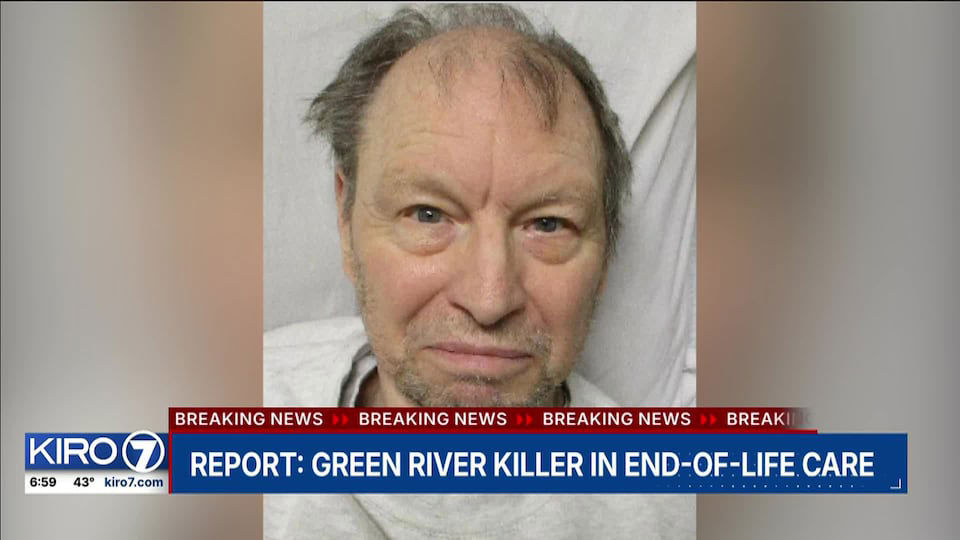
A truck painter from Auburn, Washington, gave the investigators his saliva in 1987.
Gary Leon Ridgway was a suspect in the Green River murders, and the sample was meant to place him at the crimes.
The technology in 1987 could not do what they needed it to do.
It could not match his DNA to the evidence found on the victims, per the source.
So the sample sat.
It sat through the years when the task force chased other suspects.
It sat through the discovery of more bodies in the river and the woods around Seattle–Tacoma.
It sat while the case went cold, and the families waited.
The record does not say where the sample was stored.
It does not say which technician handled it.
It does not say why it was not retested sooner.
Those details are not in the record.
What the record does say is that Ridgway was a suspect early on, stopped in 1984 with a prostitute but not arrested.
What it says is that in 1987, he gave the saliva.
What it says is that the sample waited 14 years.
By 2001, the testing had improved.
Improved DNA testing matched that saliva to semen found on several victims, according to the source.
The match was conclusive, the source states.
A single biological sample, collected before the science could read it, finally spoke.
What changed was the science.
What changed was the patience of the evidence.
What changed was the technology that turned a truck painter's spit into a name.
1982–1998: THE BODIES IN THE GREEN RIVER
Between 1982 and 1998, a series of murders occurred in Washington State, primarily in the Seattle–Tacoma area, per the source.
The victims were mostly young women, many of whom were sex workers or runaways, the source states.
The killer became known as the Green River Killer, named after the Green River near Seattle where the first victims were discovered.
The investigation began in 1982 when the bodies of two victims were found in the Green River.
Detectives formed a task force, which at its peak involved dozens of investigators, according to the source.
The case remained unsolved for nearly two decades.
Sixteen years of searches, of riverbanks and ditches, of names added to a list.
Sixteen years of families waiting.
The exact number of victims during this period is not specified in the source beyond the range of murders.
What the record establishes is the range: a series of killings stretching from 1982 to 1998.
What the record does not establish is a precise count that would close the list.
The task force grew, then shrank, then kept working.
The lead detective was Dave Reichert of the King County Sheriff's Office.
The river gave up bodies, and the task force gave up leads.
Some suspects were followed; some were cleared.

The science was not ready.
Not because the evidence was missing, but because the technology could not yet read it.
The saliva sample from 1987 waited.
It waited in storage while the task force chased other names.
It waited while the river gave up more victims.
It waited for the method that would finally match it.
1984: A STOP, NOT AN ARREST
Ridgway had been a suspect early on — the source states this.
In 1984, he was stopped with a prostitute.
He was not arrested.
The source does not say who made the stop or what agency was involved.
That detail is not in the record.
Neither is the reason he was let go.
It was a near-miss: a suspect in hand, and the case would wait 17 more years.
The task force made mistakes, including early tunnel vision on other suspects — the source states this.
Investigators chased other names while the real killer stayed outside the net.
They also used geographic profiling and witness statements to build the case, per the source.
Those tools pointed toward Ridgway, but they were not enough.
Not yet.
In 1987, during this period of suspicion, Ridgway provided a saliva sample — the source links it to the investigation.
It was a sample given under scrutiny, a sample that should have mattered.
The DNA technology at the time was not advanced enough to link him definitively, the source says.
So the sample went into storage.
It waited.
The stop in 1984 was a moment the record leaves open.
Was he questioned then?
Did anyone connect him to the river?
That would require evidence.
The record does not establish it.
What the record establishes is this: a suspect was known, a stop was made, and no arrest followed.
The saliva sample sat for 14 years.
It waited for the method that would finally match it.
2001: THE DNA MATCH
In 2001, the sample was tested again.
By then, the method existed.
Improved DNA testing matched Ridgway's saliva to semen found on several victims, the source states.
The match was conclusive.
It was the turning point that led to his arrest, per the source.

The sample had waited 14 years for that method.
It had waited for the science to catch up to the suspect.
Gary Leon Ridgway was arrested in November 2001.
The source gives the month and the year, nothing more precise.
The lead detective was Dave Reichert of the King County Sheriff's Office.
The prosecutor was Norm Maleng, the King County Prosecuting Attorney.
They had a name.
They had a sample.
Now they had the match.
The specific laboratory that performed the 2001 test is not in the record.
The exact date of the match is not in the record either.
What the record establishes is the match itself, and the arrest that followed it.
Fourteen years of storage.
One conclusive result.
Then the arrest.
AND THE STORY STILL ISN'T OVER
In 2003, Gary Ridgway pleaded guilty to 48 counts of aggravated first-degree murder.
He did it to avoid the death penalty, per the source.
The plea agreement was negotiated by prosecutor Norm Maleng and the defense attorney.
The source names Maleng. It does not name the defense attorney.
The trial judge accepted the plea.
The judge sentenced Ridgway to 48 consecutive life sentences without the possibility of parole.
The total was later adjusted to 49.
An additional victim was confirmed after the plea, the source states.
The names of those later-confirmed victims are not in the record. Neither are the exact dates of their confirmations.
Ridgway cooperated with investigators.
That cooperation led them to several previously undiscovered remains.
He is incarcerated at the Washington State Penitentiary in Walla Walla.
Forty-nine lives.
One sentence per life, stacked like a ledger.
The identifications did not stop at the plea. They continued for years.
That part of the story is not over. It may never be over.
The DNA match closed the case against one man.
It did not close the question of who else was out there.
The record holds the conviction. It does not hold every name.
That would require evidence.
The evidence that exists is conclusive: the saliva sample, the 2001 match, the plea.
The rest is a quiet prison cell in Walla Walla.
The rest is the weight of what remains unconfirmed.
Advertisement
You may also like

NBA fans' data at risk as league tracks everything you do
Your phone knows where you sit. Your wallet knows what you buy. And the NBA—the league you cheer for every single night—has been quietly…

NBA's Colorado Privacy Statement Hides a Shocking Data Sale Clause
The NBA's own privacy page just admitted it — they're selling your data, and Colorado residents are the first to see the fine print.…
The 18-year-old athlete whose family says the legal system forgot
January 13, 1999, was a school day. Hae Min Lee, an 18-year-old senior at Woodlawn High School, did not come home that evening. Her…
The detective's rogue-LAPD theory that never got a courtroom test
The SUV stopped at a red light at Wilshire Boulevard and South Fairfax Avenue. It was shortly after midnight on March 9, 1997. A…
Her wedding rings on the nightstand — and the truck leaving
The wedding rings sat on the nightstand. The purse and phone were still inside the home. Shanann Watts, 34, was gone. It was the…
81 minutes, 13 masterpieces, and the one detail the FBI still can't explain
Two men in Boston police uniforms rang the buzzer at the Isabella Stewart Gardner Museum just after midnight on March 18, 1990. They said…