The Black Dahlia clue that never led anywhere — a newspaper clipping
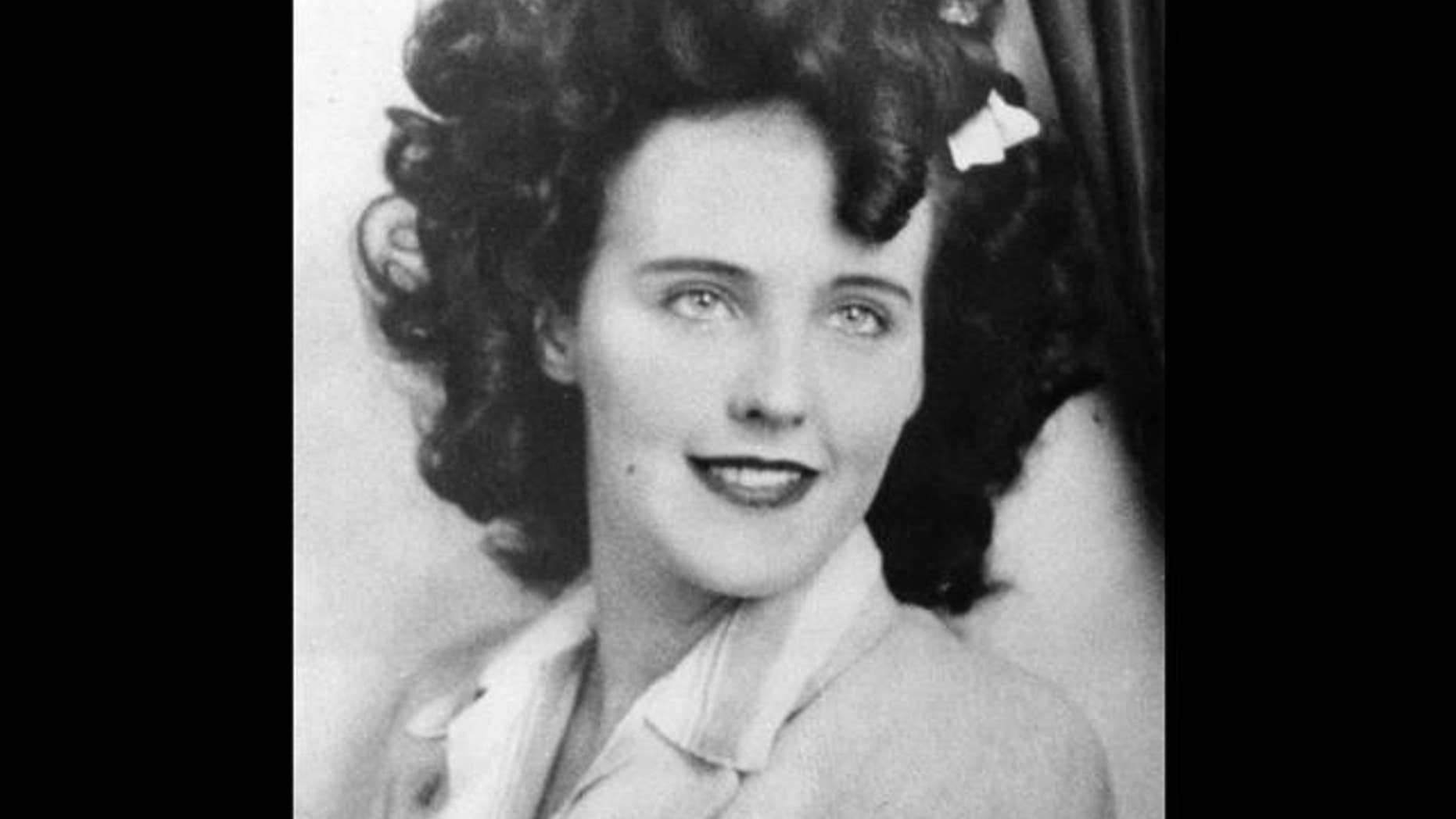
The clipping was a piece of a newspaper, folded once, kept among Elizabeth Short's belongings.
Investigators logged it as a key piece of evidence.
They read it. They checked it. They chased what it pointed to.
The record states the clipping yielded no actionable leads.
That is what the LAPD investigation concluded: nothing came of it.
What the clipping said is not specified in the record.
Not the date, not the story, not the page it came from.
That would require evidence, and the evidence does not say.
The morning of January 15, 1947, a woman's body was found in a vacant lot at 39th Street and Norton Avenue in Leimert Park.
She was 22 years old. She was an aspiring actress.
The case took a name from a film, *The Blue Dahlia*, and from her preference for black clothing.
The name was the "Black Dahlia."
The body had been severed at the waist. It had been drained of blood. It had been posed.
The killer's identity was never determined.
No one was ever charged.
The clipping sits in the file as a documented fact.
It is a piece of the record. It is not the key.
The investigation was one of the largest in LAPD history, and the clipping was part of it.
Hundreds of tips came in. Dozens confessed. None could provide verifiable details.
The clipping yielded no actionable leads.
That is the finding. That is all the finding is.
THE BODY IN THE LOT
On the morning of January 15, 1947, a woman's body was found in a vacant lot at 39th Street and Norton Avenue in the Leimert Park neighborhood of Los Angeles.
The body was Elizabeth Short's, a 22-year-old aspiring actress.
The corpse had been severed at the waist.
It had been drained of blood.
It had been posed.
The hair was arranged. The arms were raised.
Investigators read the pose as deliberate display.
The killer's work showed surgical precision.
That precision led investigators to consider whether the perpetrator had medical training.

That was never established.
No fingerprints were recovered from the corpse.
The body had been washed clean of blood.
The Los Angeles County coroner's office determined the cause of death as hemorrhage from multiple wounds.
The exact time of death could not be fixed with certainty.
The trail went cold from the lot itself.
Not because of a lack of evidence. But because the evidence refused to point anywhere.
What was found: a body cleaned of trace. What was found: a pose that said something. What was found: a wound pattern that hinted at a skill set.
What was not found: a fingerprint. What was not found: a weapon. What was not found: a time.
The cut was precise. The killer's identity was not.
THE MANLEY INTERVIEW
The drifter had a name that fit his hair, and a story that almost fit the timeline.
Robert "Red" Manley was seen with Elizabeth Short days before her death.
He was questioned extensively by the lead detective and his partner.
The questioning was long. The answers were repeated. The alibi held.
Manley submitted to a polygraph examination. He passed it.
He was cleared.
Investigators traced Short's movements through her final days. They followed her from hotel to hotel, from ride to ride. The trail went cold.
Manley's exact whereabouts on the day of the murder are not in the record. Neither is his exact conduct. That is not established.
What is established is the pressure he sat under. The lead detective pushed. The partner pushed. Manley answered.
The polygraph said one thing. The investigation said another. The record says he was cleared.
So the lead evaporated.
Then the LAPD opened the floodgates. Hundreds of tips arrived. Dozens of people confessed.
Each confession was checked. Each tip was weighed. None carried verifiable details.
One man said he did it. Another said he watched. Another said he knew the spot. None could describe the wound. None could name the pose. None could produce the weapon.
The evidence that decided the case was the evidence that was not there. No fingerprint. No weapon. No fixed time of death.
Manley walked away. The confessions were filed. The case went quiet.
A promising lead. A clean polygraph. A cold trail.
That would require evidence.
THE CLIPPING REVISITED
The clipping was a documented piece of evidence, found among Elizabeth Short's belongings.
The record states it yielded no actionable leads.
It was a newspaper clipping.
That is what the file says, and what the file says is all there is.
Not because investigators overlooked it.
Because it pointed nowhere.
The lead detective and his partner examined the victim's belongings.
The clipping was logged.
It was read.
It was checked against the accounts of witnesses, against the confessions, against the movements of Robert "Red" Manley.
Nothing matched.
The Los Angeles County District Attorney's Office reviewed the evidence.
It found insufficient grounds for prosecution.
No one was ever charged.
The case never went to trial.
That is the plain arithmetic of the record: one clipping, zero leads, no charges.
Over the decades, books and documentaries have named various individuals as suspects.
None of those claims have been substantiated by court proceedings.
None have produced a conviction.
The identity of the killer is not established.
The clipping's relevance is not established beyond being found.
It is a fact that it existed.
It is a fact that it was examined.
It is not a fact that it meant anything.
The reader wants a hidden key.
The record offers a dead end.
That would require evidence.
She was on the ground below, and the clipping stayed in her belongings, and the case went quiet.
AND THE STORY STILL ISN'T OVER
The LAPD officially closed the case in the 1950s.
It has been revisited periodically since.
The LAPD has stated the case remains open but inactive.

Open, but inactive.
That is the language of a file that is not closed and not moving.
Elizabeth Short's mother, Phoebe Short, died in 1985.
She lived nearly four decades past her daughter's murder without a resolution.
The case has inspired books.
It has inspired films.
It has inspired television programs.
None of them have produced a definitive resolution.
That is not in the record.
Whether the case will ever be reopened is not in the record.
The clipping sits with the rest of the evidence.
The evidence sits with the rest of the file.
The file sits in the department's keeping.
The record offers no more.
It offers no suspect.
It offers no trial.
It offers no conviction.
It offers a case that is open but inactive.
The lead detective is gone.
His partner is gone.
The witnesses are gone.
The victim's mother is gone.
The story remains.
It remains because the questions remain.
Who posed the body?
Who washed the blood away?
Who left the clipping that led nowhere?
That would require evidence.
The evidence was never found.
The case was never solved.
The file is still there, open but inactive.
That is all the record establishes.
Advertisement
You may also like

NBA fans' data at risk as league tracks everything you do
Your phone knows where you sit. Your wallet knows what you buy. And the NBA—the league you cheer for every single night—has been quietly…

NBA's Colorado Privacy Statement Hides a Shocking Data Sale Clause
The NBA's own privacy page just admitted it — they're selling your data, and Colorado residents are the first to see the fine print.…
The 18-year-old athlete whose family says the legal system forgot
January 13, 1999, was a school day. Hae Min Lee, an 18-year-old senior at Woodlawn High School, did not come home that evening. Her…
The detective's rogue-LAPD theory that never got a courtroom test
The SUV stopped at a red light at Wilshire Boulevard and South Fairfax Avenue. It was shortly after midnight on March 9, 1997. A…
Her wedding rings on the nightstand — and the truck leaving
The wedding rings sat on the nightstand. The purse and phone were still inside the home. Shanann Watts, 34, was gone. It was the…
81 minutes, 13 masterpieces, and the one detail the FBI still can't explain
Two men in Boston police uniforms rang the buzzer at the Isabella Stewart Gardner Museum just after midnight on March 18, 1990. They said…