The bloody gloves that never matched — and the verdict that split a nation
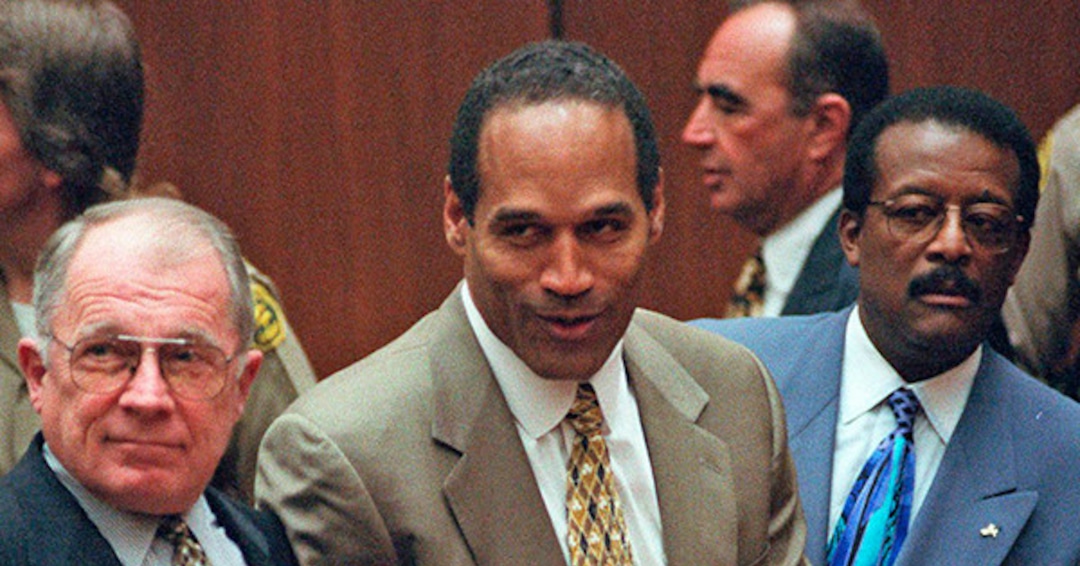
It began with a glove on Bundy Drive.
On June 12, 1994, Nicole Brown Simpson and Ronald Goldman were found stabbed to death outside her condominium in Brentwood, Los Angeles.
A passerby discovered the bodies around midnight and called police.
Officers found a bloody glove at the scene.
They found a matching glove later, at Simpson’s estate.
One glove at each place.
Two gloves, the same pair, separated by miles and a wall of questions.
The knife that killed them was never recovered.
Police searched extensively. They dragged ponds, combed fields, followed tips.
No knife.
The glove became the case’s central object, the thing everyone pointed at and no one could explain.
A theory circulates online that the glove was planted.
That is a theory.
The record does not establish it.
What the record shows is this: a glove at the scene, a glove at the estate, and a defense that argued the evidence was mishandled.
Everything else is argument.
She was on the ground below. He was nearby. The glove lay between them in photographs.
Was the glove moved? Was it dropped? Was it placed?
That would require evidence.
That evidence is not in the record.

THE NIGHT OF JUNE 12
The night of June 12, 1994, began with a pair of eyeglasses.
Ronald Goldman, a waiter at a nearby restaurant, was returning them to Nicole Brown Simpson; they belonged to her mother.
He never made it home.
A passerby discovered the bodies around midnight and called police.
Nicole Brown Simpson and Ronald Goldman were found stabbed to death outside her condominium on Bundy Drive.
Both had been killed with a knife.
The knife was never recovered.
A trail of blood drops led from the bodies to Simpson’s Bronco.
Blood evidence linked Simpson to the scene.
That was the prosecution's case in its earliest form: two bodies, a trail, a vehicle.
The exact sequence of events that night is not fully documented.
Not the order of the attacks.
Not the path of the killer.
Not how the trail of blood came to end at the Bronco.
The record shows the drops. It does not show the steps.
Simpson was charged with two counts of first-degree murder.
The charge came days later, after the Bronco chase and the live broadcast.
But on the night itself, there was only the scene: the bodies, the glasses, the blood.
And a glove, left behind, that would later be matched to another.
:max_bytes(150000):strip_icc():focal(649x0:651x2)/Kim-Goldman-and-Fred-Goldman-sister-and-father-of-murder-victim-Ronald-Goldman-041124-db6578097eb34513927218d9fa960656.jpg)
THE BRONCO CHASE
On June 17, 1994, Simpson fled in a white Bronco with Robert Kardashian in the vehicle.
The chase was broadcast live, and the nation watched.
It became a defining moment.
What Simpson was thinking during the chase is not documented.
The record shows only the flight, the vehicle, and the cameras.
Simpson was charged with two counts of first-degree murder.
The trial began in January 1995.
It lasted nearly nine months.
On October 3, 1995, the jury acquitted Simpson of both counts.
The verdict was widely controversial.
It was A. It was also B. A verdict the jury delivered. B. A verdict millions refused to accept.
Was it the glove that did it? Was it the DNA? Was it the doubt?
That would require evidence.
The prosecution argued the blood matched. The defense argued the handling of it.
The glove that never fit became the symbol of the doubt.
Simpson walked out of the courtroom a free man.
The cameras followed him then, too.
The nation had watched him run. Now it watched him leave.
THE VERDICT AND AFTERMATH
:max_bytes(150000):strip_icc():focal(749x0:751x2)/PEOPLE_MAG_BROWN_SISTERS_nicole-tout-1067c705ba0c4ab7a7e648e3ffd95be0.jpg)
He was acquitted on October 3, 1995.
Both counts, first-degree murder, gone.
The criminal case was over. The civil case was not.
In 1997, a civil jury in a wrongful death lawsuit brought by the Goldman and Brown families found Simpson liable for the deaths.
The jury ordered him to pay $33.5 million in damages.
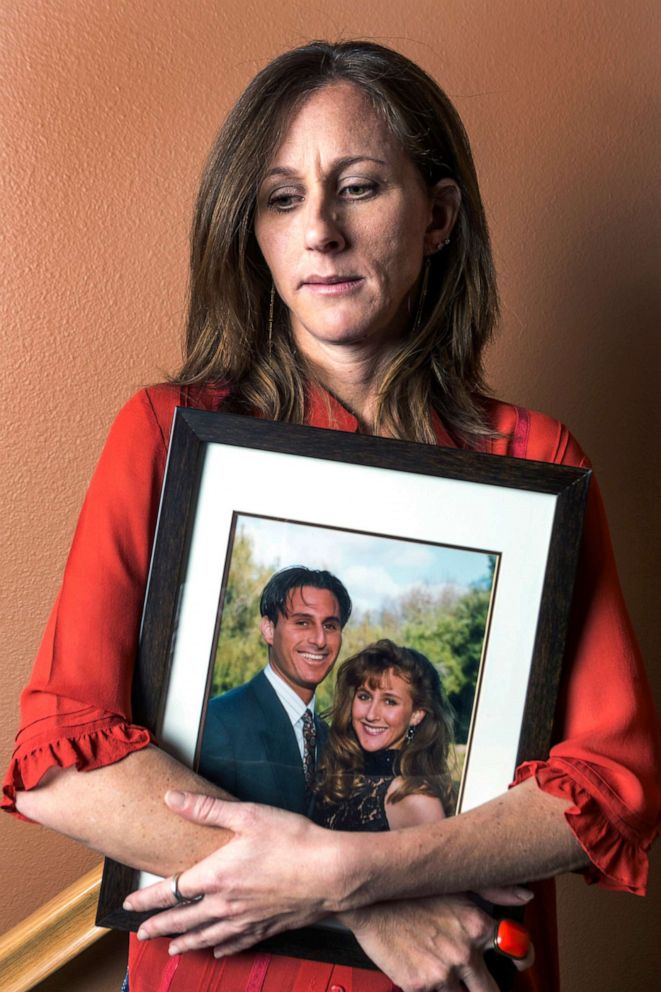
Fred Goldman and Kim Goldman have spoken publicly about the case for decades.
They have said the money was never the point.
The judgment remained largely unpaid.
The full details of the civil judgment enforcement are not in the record.
What is documented is the pursuit.
What is documented is the persistence.
Then came Las Vegas.
In 2008, Simpson was convicted of armed robbery and kidnapping.
He was sentenced to 9 to 33 years in prison.
He was granted parole in 2017 and released.
The families kept speaking.
The civil judgment kept looming.
It is a legal aftermath with two tracks: the acquittal and the liability.
It is also a family story that outlasted both.
Kim Goldman became an advocate. Fred Goldman became a fixture in courtrooms and interviews.
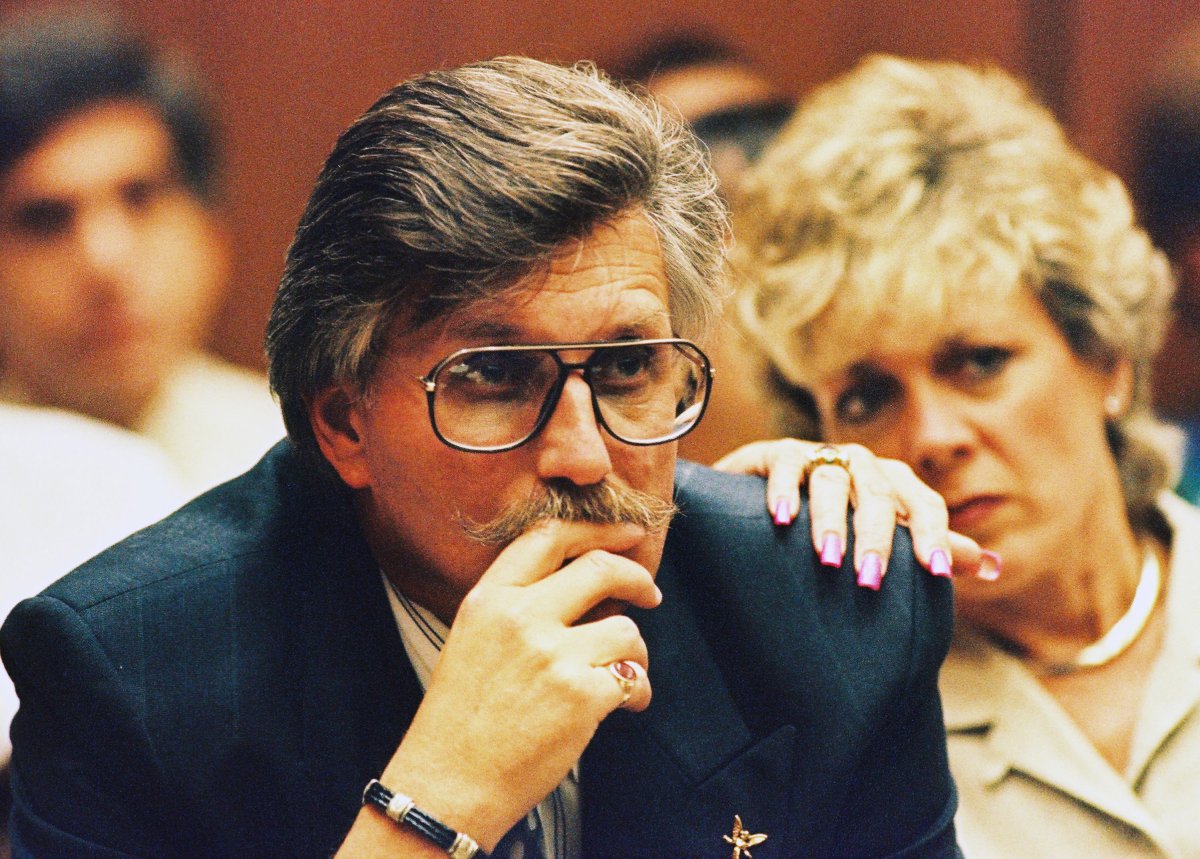
They did not stop when the verdict came down.
They did not stop when the sentence came down.
They did not stop when he walked free again.
The money was owed. The record says so.
Whether it was ever fully collected, the record does not say.
AND THE STORY STILL ISN'T OVER
He walked out of prison in October 2017.
He lived in Las Vegas.
On April 10, 2024, he died of cancer at age 76.
The Goldman family kept pursuing the civil judgment.
The record says it remained largely unpaid.
Nicole’s sisters, especially Denise Brown, kept speaking.
They spoke about domestic violence awareness.
They spoke about their sister.
The knife was never recovered.
The exact location of the murder weapon is unknown; that is not established by the record.
The case remains one of the most scrutinized in American legal history.
The debate about the verdict continues.
The debate about the evidence continues.
What was proven in a criminal court was one thing.
What a civil jury found was another.
What the public believes is still another.
The glove sat in evidence.
The blood trail was argued over.
The verdict split a nation, and the split never fully closed.
Simpson was acquitted.
He was also found liable.
He served time for other crimes.
He was released.
He died.
The families are still here.
Fred Goldman has spoken for decades.
Kim Goldman has spoken for decades.
Denise Brown has spoken for decades.
They are not finished.
The story is not finished.
It is a case that refuses to close.
It is a case with a body count, a verdict, a judgment, and no weapon.
The last chapter was written in a hospital bed, not a courtroom.
But the questions outlive the answers.
That would require evidence.
The record does not provide it.
Advertisement
You may also like
31 days passed before a missing 2-year-old was reported — the case that split a family
The 911 call came on July 15, 2008. Cindy Anthony told the dispatcher her 2-year-old granddaughter, Caylee Marie Anthony, was missing. Thirty-one days had…
The parking ticket that broke the Son of Sam case open
On the night of July 31, 1977, a woman in Brooklyn heard the shots. She looked out and saw a man running to a…
The neighbor's shout that made Kitty Genovese's attacker flee — then return
A window opened above 82-70 Austin Street, and a man named Robert Mozer shouted into the dark. The shout went out in the early…
One parolee's tip led police to Polly Klaas's body — but a key detail was missed
The slumber party was supposed to be a sleepover. Twelve-year-old Polly Klaas and two friends were at her mother's home in Petaluma, California, on…
Scott Peterson's boat: the 14-footer that made a fishing trip impossible to prove
A 14-foot aluminum fishing boat. That was the boat Scott Peterson said he took to the Berkeley Marina on the morning of December 24,…
The FBI's 17-year hunt for a bomber hinged on one brother's phone call — why did it take so long?
The manifesto ran 35,000 words. In 1995, the Unabomber sent it to The New York Times and The Washington Post, demanding publication. The Post…