A boat bought weeks before Christmas, and the fishing trip that broke a timeline
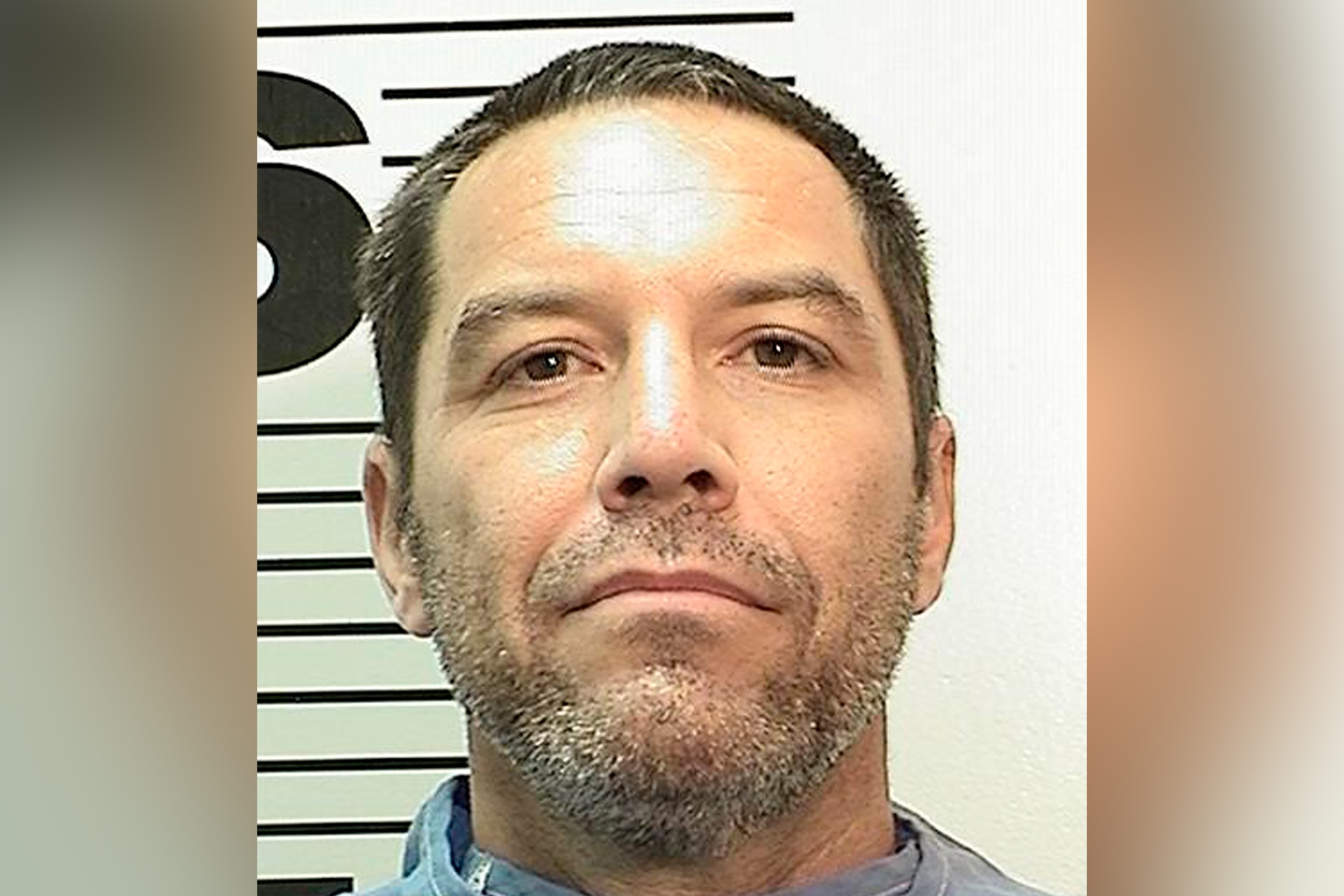
The boat was new when Scott Peterson told police he had spent the morning fishing alone at the Berkeley Marina.
He bought it weeks before Christmas, in the ordinary way anyone buys a boat.
It was the same stretch of bay where, months later, the body of his wife and the body of their unborn son would wash ashore.
It is not established that the boat was purchased with the intent to commit a crime.
That is the prosecution's argument, not a documented fact.
What the record shows is narrower: he bought the boat, he told police he took it out alone that morning, and the remains surfaced near that same water.
No murder weapon was ever found.
No witness placed Scott with Laci at the time of her disappearance.
The case against him was built on circumstance, and the boat sat at the center of it.
Why buy it then?
Why fish alone on the morning his pregnant wife went missing?
Why point police toward the exact water where her body would be found?
The record does not answer those questions.
It only holds the purchase, the claim, and the location.
Detectives noted the inconsistencies in his timeline and his behavior.

The lead detective, Al Brocchini of the Modesto Police Department, kept returning to the boat.
It was an ordinary object.
It was also the one thing that tied Scott Peterson to the bay before the bodies were there.
THE DISAPPEARANCE
She was 27 years old, and she was eight months pregnant.
Laci Peterson disappeared from her home in Modesto, California, on December 24, 2002.
Her husband, Scott Peterson, reported her missing that evening.
The investigation initially treated Laci's disappearance as a possible abduction.
A pregnant woman does not simply vanish from her own neighborhood without a trace.
Scott told police he had gone fishing alone at the Berkeley Marina that morning.
He said he had been alone on the water while his wife disappeared.
The bay was more than an hour's drive from the family home in Modesto.
Detectives found inconsistencies in his timeline and behavior.
The specific inconsistencies are not detailed in the record — only that investigators found them.
That would require the kind of evidence the source does not provide.

The lead detective, Al Brocchini, kept returning to the boat.
It was an ordinary object.
It was also the one thing that tied Scott Peterson to the bay before the bodies were there.
Now there was a second timeline to consider.
There was the timeline of a missing pregnant woman.
There was the timeline of a husband who said he went fishing alone.
There was the timeline of the bay itself, waiting to give up what it held.
The investigation treated the disappearance as an abduction at first.
That changed as the hours turned to days, and the days turned toward the new year.
The boat sat in the record, purchased weeks before Christmas, an ordinary purchase that would not stay ordinary.
THE AFFAIR AND THE ANCHORS
In late December 2002, Amber Frey, a Fresno massage therapist, came forward.
She revealed that she had been in a romantic relationship with Scott Peterson, who had told her he was unmarried.
She cooperated with investigators.
She recorded phone calls with him.
:max_bytes(150000):strip_icc():focal(999x0:1001x2)/laci-peterson-family-2-d60dbe78a8384fc4b387604161b69e09.jpg)
The calls became part of the record, his voice and hers, played later in a courtroom.
On April 13, 2003, the body of a full-term male infant washed ashore in San Francisco Bay.
The next day, Laci Peterson's body was found, both near the Berkeley shoreline.
The remains were identified as Laci Peterson and the couple's unborn son, whom they had planned to name Conner.
Investigators argued the body's location and condition indicated it had been weighted and dumped in the bay.
That was the prosecution's argument.
It is not established that the bodies were weighted and dumped.
The concrete anchors that prosecutors suggested had been used were not found with the bodies.
The bodies surfaced near where Scott Peterson told police he had been fishing that morning.
The boat sat in the record, purchased weeks before Christmas.
The bay held the bodies, but it did not hold the anchors.
Circumstance is not the same as proof, and proof is not the same as certainty.
She was on the ground below the timeline, waiting to be found.
THE TWO STORIES
The prosecution argued Scott killed Laci to escape his impending fatherhood and continue his affair with Amber Frey.
:max_bytes(150000):strip_icc():focal(749x0:751x2)/Jackie-Peterson-and-Lee-Peterson-leave-the-San-Mateo-Superior-Courthouse-121625-55846a7459e640d79a1b33bfbc8af4b1.jpg)
The defense contended that Laci was abducted by strangers while walking their dog.
Investigators could not rule out that theory. They also found it unsupported.
It is not established that Laci was abducted by strangers. The record does not establish it.
The physical evidence was largely circumstantial.
No murder weapon was ever found. No witness placed Scott with Laci at the time of her disappearance.
The bay held her body. It did not hold the anchors prosecutors suggested had been used.
Scott's behavior after the disappearance became part of the prosecution's case.
He sold Laci's car. He changed his appearance. He was carrying thousands of dollars in cash when arrested.
The prosecution argued these were signs of guilt. The defense argued they were the actions of a man under suspicion, not a man convicted.
The defense argued there was no direct evidence. The case, they said, was built on suspicion and circumstance.
Was it enough? Was the timeline enough? Was the boat enough?
That would require evidence.
What the record establishes is this: a boat, a bay, a body, a timeline. What it does not establish is a stranger on the sidewalk.
The jury would decide what the circumstance meant. The circumstance did not decide for them.
AND THE STORY STILL ISN'T OVER

The trial began in June 2004 in Redwood City, California, after a change of venue from Modesto because of extensive pretrial publicity.
On November 12, 2004, the jury found Scott Peterson guilty of first-degree murder for Laci's death and second-degree murder for the death of their unborn son.
In the penalty phase, the jury recommended the death penalty.
On March 16, 2005, the judge sentenced Scott Peterson to death by lethal injection.
In 2020, the California Supreme Court overturned the death sentence, ruling that the trial judge had erred in jury selection.
It upheld the murder convictions.
In December 2021, a judge resentenced him to life in prison without the possibility of parole.
He remains incarcerated.
Sharon Rocha, Laci's mother, has continued to speak publicly about the case.
Amber Frey later wrote a book about her involvement.
What is the next concrete step in the case?
A pending hearing?
A motion?
That would require evidence the record does not specify.
What the record establishes is a verdict, an overturned sentence, a resentencing.
What it does not establish is what comes next.
Advertisement
You may also like

NBA League Pass student deal: 40% off, but is it the best stream?
The 40% off is real. The fine print is a different beast entirely. Students are being handed the keys to the kingdom — every…

NBA fans' data at risk as league tracks everything you do
Your phone knows where you sit. Your wallet knows what you buy. And the NBA—the league you cheer for every single night—has been quietly…

NBA's Colorado Privacy Statement Hides a Shocking Data Sale Clause
The NBA's own privacy page just admitted it — they're selling your data, and Colorado residents are the first to see the fine print.…
The 18-year-old athlete whose family says the legal system forgot
January 13, 1999, was a school day. Hae Min Lee, an 18-year-old senior at Woodlawn High School, did not come home that evening. Her…
The detective's rogue-LAPD theory that never got a courtroom test
The SUV stopped at a red light at Wilshire Boulevard and South Fairfax Avenue. It was shortly after midnight on March 9, 1997. A…
Her wedding rings on the nightstand — and the truck leaving
The wedding rings sat on the nightstand. The purse and phone were still inside the home. Shanann Watts, 34, was gone. It was the…