The calling card left on a choir singer's body that police couldn't explain
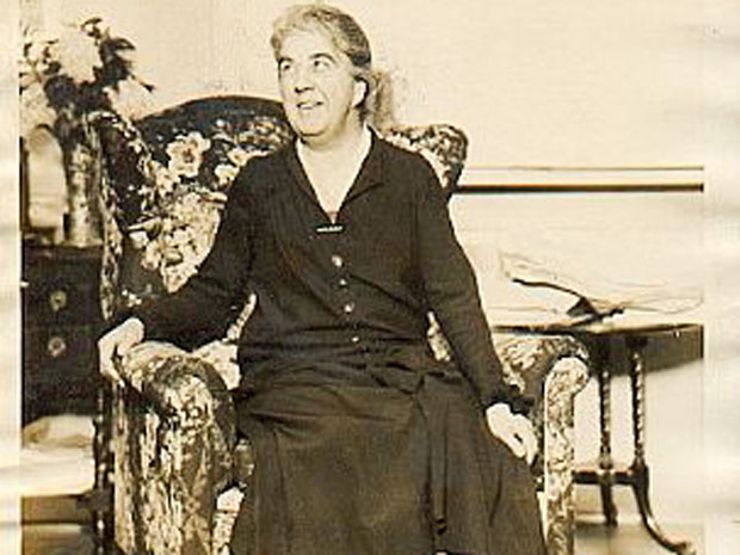
The morning of September 15, 1922, a local man found two bodies beneath a crabapple tree in a secluded lane known as "Lovers' Lane" near New Brunswick, New Jersey.
Reverend Edward Wheeler Hall, an Episcopal minister, had been shot; his body lay with his head resting on his coat.
Nearby lay Mrs. Eleanor Reinhardt Mills, a choir singer in Hall's church, also shot, her throat cut.
On Mills's body lay a calling card from Hall's church.
Police could not explain it.
A killer had left a trace of the victim's own parish, a card that named the church where she sang and the minister who led it.
Why would anyone leave such a thing?
Why place it on her, and not on him?
And whose card was it, exactly?
That would require evidence.
The record does not establish why the calling card was placed there, or by whom.
It was simply there, an object the investigators could not fold into any story they told.
The case became a national sensation for reasons beyond the card.
Hall was a married minister.
Mills was a married mother of two, a choir singer in his church.
Their affair was illicit, and the class divide between the families was apparent — Hall's wife came from wealth; Mills did not.
But the card sat on the body, a small, stiff piece of paper that refused to mean anything clear.
It is a detail that asks a question.
It is a detail that leaves the question open.
THE TWO LIVES
Reverend Edward Wheeler Hall was the rector of St. John's Episcopal Church in New Brunswick, New Jersey.
Eleanor Reinhardt Mills was a choir member in his church.
She was also a married mother of two.
Hall was married to Frances Noel Stevens Hall, who came from a wealthy family.
Two marriages, one church, one choir.
The ordinary texture of Sunday mornings — hymns, sermons, polite nods in the pews.
It is the texture of a life that had not yet collided with another.
The affair between Hall and Mills was illicit.
Both were married.
That fact would become the motive the prosecution later argued.
The class divide was noted in the case.
Frances came from money; Mills's circumstances were more modest.
The record does not detail the exact nature or duration of the affair.
It does not say when it began, or how long it had been running.
It does not say who knew, or who looked away.
The two lives ran parallel — church, choir, marriage — until they did not.
One was the man in the pulpit.
One was the voice in the congregation.
Both were bound to other people.
That binding was the scandal.
That binding was the argument the state would make years later.
THE BOTCHED SCENE
The bodies were moved before a thorough examination of the scene.
The area was not secured.
Detective William S. Decker of the New Brunswick Police Department led the initial investigation, and his work was later questioned because he had not preserved key evidence.
The scene was lost before it was properly read.
Early suspicion fell on the victims' spouses, but no arrests were made for several years.
The case sat.
In 1926, a grand jury indicted Frances Hall, her two brothers, and a fourth man, Henry Carpender, a cousin of Frances Hall.
The case against them was largely built on the testimony of a farmer's wife known as the "Pig Woman," who claimed to have witnessed the murders from a distance.
Her testimony was highly unreliable.
She was bedridden with cancer at the time of the trial and testified from a stretcher.
Her story had changed over time.
There was no physical evidence linking the defendants to the crime.
The prosecution argued that Frances Hall and her brothers murdered the couple out of jealousy and to protect the family's reputation.
The defense attacked the credibility of the witness and the lack of forensic evidence.
The jury deliberated for only a few hours.
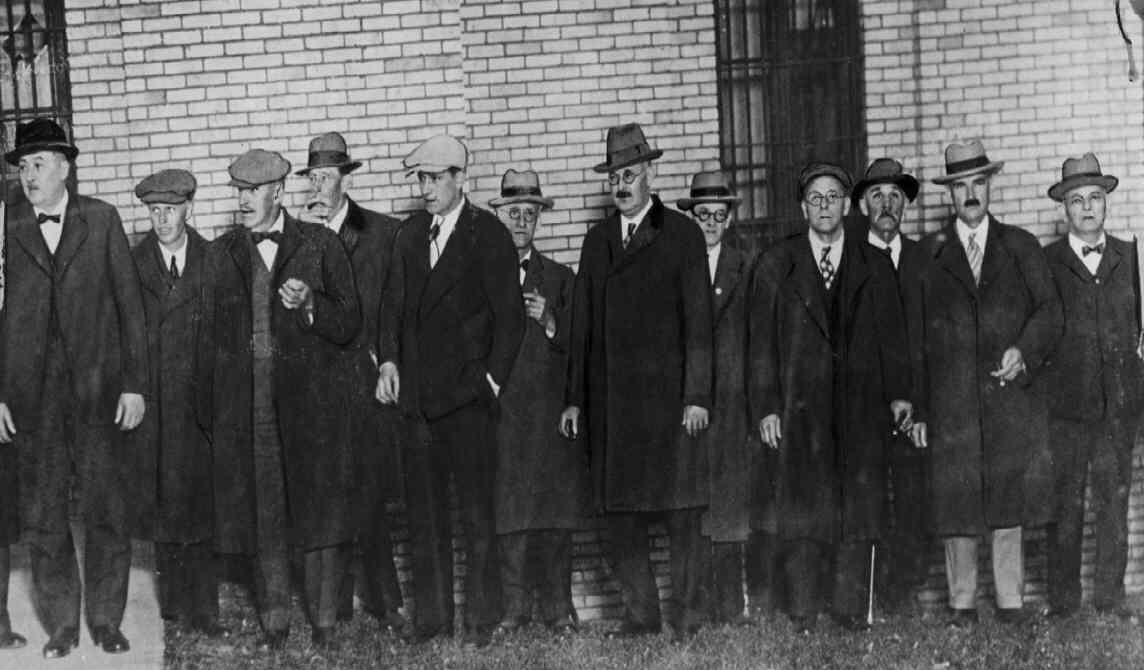
It returned a verdict of not guilty for all four defendants on December 3, 1926.
Henry Carpender was never tried; the charges against him were dropped before the trial.
The identity of the killer or killers is not established by the record.
Not because the evidence pointed elsewhere.
But because the evidence was never properly gathered.
The lead detective had not preserved key evidence.
The bodies had been moved.
The area had not been secured.
What was left was a calling card from Hall's church placed on Mills's body, a detail the police couldn't explain.
It is a fact that the card was found there.
It is a theory, circulating online, that the card was a deliberate taunt.
The documented record only shows it was found on the body.
That would require evidence.
THE TRIAL AND THE ACQUITTALS
The trial began in November 1926 in Somerville, New Jersey, with Alexander Simpson of the New Jersey Attorney General's office leading the prosecution.
The prosecution argued that Frances Hall and her brothers had murdered the couple out of jealousy and to protect the family's reputation.
The defense attacked the credibility of the "Pig Woman," who was bedridden with cancer at the time of the trial and testified from a stretcher.
The defense also pointed out that her story had changed over time and that there was no physical evidence linking the defendants to the crime.
After a lengthy trial, the jury deliberated for only a few hours and returned a verdict of not guilty for all four defendants on December 3, 1926.
Henry Carpender was never tried, as the charges against him were dropped before the trial.
The verdict was widely seen as a failure of the prosecution's case, which relied heavily on the stretcher-bound witness's dubious testimony.
It was not an exoneration.
It was an acquittal.
Whether the defendants were guilty or innocent is not established by the record.
They were acquitted, not exonerated.
The case remains officially unsolved.
After the acquittals, no further arrests were made.
Frances Hall lived quietly until her death in 1942.
The murder site, the crabapple tree, was later cut down.
The case remains a classic example of a sensational but unresolved American crime.
The record shows a verdict, not a truth.
The record shows a trial, not a conclusion.
The record shows a theory, not a fact.
AND THE STORY STILL ISN'T OVER
The verdict came down on December 3, 1926.
Not guilty, for all four.
The jury deliberated for only a few hours.
Henry Carpender was never tried; the charges against him were dropped before the trial began.
After the acquittals, no further arrests were made.
The Hall-Mills case remains officially unsolved.
Frances Hall lived quietly until her death in 1942.
Her brothers died in 1935 and 1955.
The "Pig Woman" died in 1928, shortly after the trial.
Who killed Hall and Mills remains unknown.
The calling card's meaning remains unexplained.
A .32-caliber revolver was the likely murder weapon, though it was never recovered.
No new evidence has emerged to identify the killer or killers, despite numerous books and documentaries.
The murder site, the crabapple tree, was later cut down.
The case remains a classic example of a sensational but unresolved American crime.
Not because the investigation was closed.
But because the record simply stops.
The tree is gone.
The ground where it stood is empty.
That is where the story ends: not with an answer, but with a cleared patch of earth.
The record shows a verdict, not a truth.
The record shows a trial, not a conclusion.
The record shows a theory, not a fact.
That would require evidence.
Advertisement
You may also like
The fishing boat Scott Peterson bought weeks before his pregnant wife vanished
The boat was 14 feet of aluminum, and Scott Peterson bought it in late November 2002. That was weeks before his pregnant wife Laci…
The bloody glove that didn't fit: how a detective's tape destroyed the prosecution's case
He held them up for the jury to see. Two leather gloves, dark against his hands. One found on Bundy Drive, where Nicole Brown…
The 1947 clipping found near Elizabeth Short that led nowhere
The morning of January 15, 1947, began with a woman walking her daughter past a vacant lot at 39th Street and Norton Avenue. She…
The gun that put Keffe D in the Cadillac — and the plea deal he says should free him
The motion landed in February 2025, in a Clark County courtroom, and it hinged on a piece of paper filed nearly two decades earlier.…
The 340-symbol cipher cracked in 2020 — and the message that still names no one
In December 2020, a team of codebreakers announced they had cracked the 340-symbol cipher. David Oranchak, a software developer, and Sam Blake, a mathematician…
The misread clue that derailed the Tate murder probe for months
Five people were found dead at 10050 Cielo Drive in Benedict Canyon on the morning of August 10, 1969. Among them was actress Sharon…