The misread clue that derailed the Tate murder probe for months
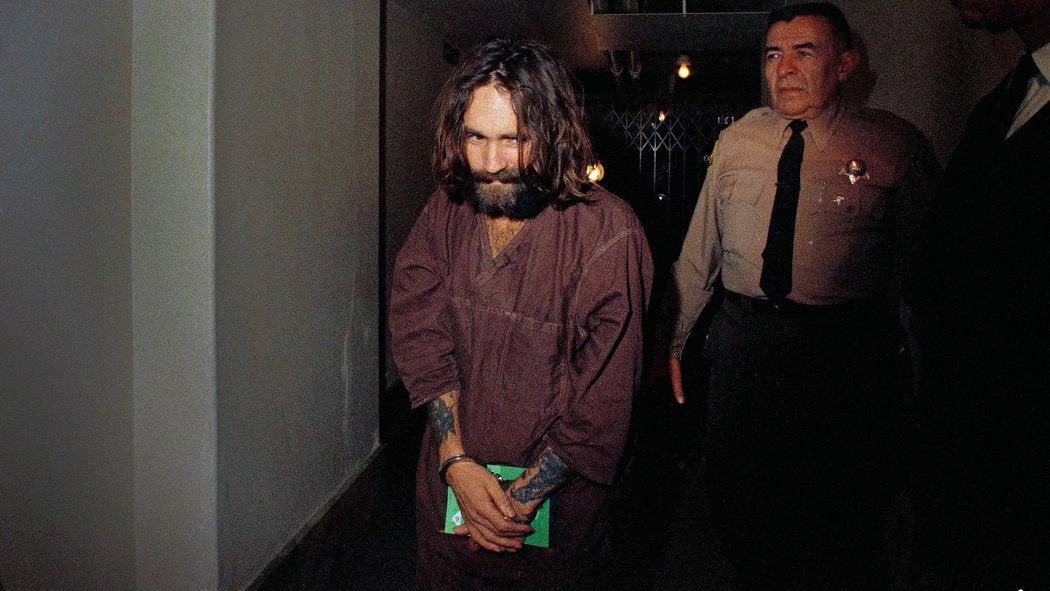
Five people were found dead at 10050 Cielo Drive in Benedict Canyon on the morning of August 10, 1969.
Among them was actress Sharon Tate, eight months pregnant.
Also dead were coffee heiress Abigail Folger, a hairstylist, a writer, and a visitor.
The housekeeper discovered the bodies.
Drugs were present at the scene.
The victims had connections to the entertainment industry.
So the initial investigation followed a theory: this was a drug-related killing.
It was a documented mistake.
The drug theory slowed the case for months.
Not because the drugs were irrelevant. But because the drugs were a clue pointing the wrong way.
How could a clue lead them so wrong?
What exactly was misread?
What did the scene suggest that the record does not support?
That would require evidence.
The source does not specify the exact nature of the misread clue.
It states only that the theory was mistaken.
The theory was a fact of the investigation. The theory was not a fact of the case.
The case sat on that error.
It sat there while the real trail went cold.
THE DRUG THEORY
The drug theory came from the victims’ connections to the entertainment industry and the presence of drugs at the scene.

It was a documented mistake.
The lead detective led the LAPD investigation on that error.
He followed the drugs.
He followed the names the drugs led him to.
What the record does not establish is the specific evidence that pointed first to drugs.
That detail is not in the source.
The theory was a fact of the investigation.
The theory was not a fact of the case.
One night later, August 10, 1969, Leno and Rosemary LaBianca were murdered in their Los Feliz home.
Two crime scenes.
Two sets of bodies.
One investigation that did not connect them.
The failure to link the Tate and LaBianca killings quickly delayed a unified investigation.
That delay was a turning point.
It was also a choice.
Not because the scenes were clean.
But because the drug theory had already set the direction.
Every day the case followed the theory, the real trail went colder.
The LaBianca murders sat in a separate file.
The Tate murders sat in another.
The lead detective’s team worked one.
:max_bytes(150000):strip_icc()/Susan-Atkins-030525-eaa8484463b84c80803b4a1e3bcc9cfe.jpg)
The other waited.
Could a faster connection have changed the outcome?
Could a clearer read of the scenes have pointed to Spahn Ranch sooner?
Could the investigation have moved before November, before the jailhouse confession?
That would require evidence.
The record shows the mistake.
The record shows the delay.
It does not show what might have been.
THE CONFESSION
The break came in November 1969, three months after the five bodies were found on Cielo Drive.
Susan Atkins, in jail on other charges, told her cellmate Virginia Graham about the crimes.
Graham reported the confession to authorities.
A separate jailhouse informant also relayed details.
The record does not establish the exact details of what Atkins told Graham.
What is established is that the information finally gave the LAPD a direction.
The lead detective connected the murders to the Spahn Ranch group.
Not because the confession was complete.
Because it was a thread, and the thread led somewhere.
A key turning point was the discovery of a gun used in the murders, traced to the group.
The .22-caliber revolver tied the Cielo Drive scene to the Family.
The investigation turned.
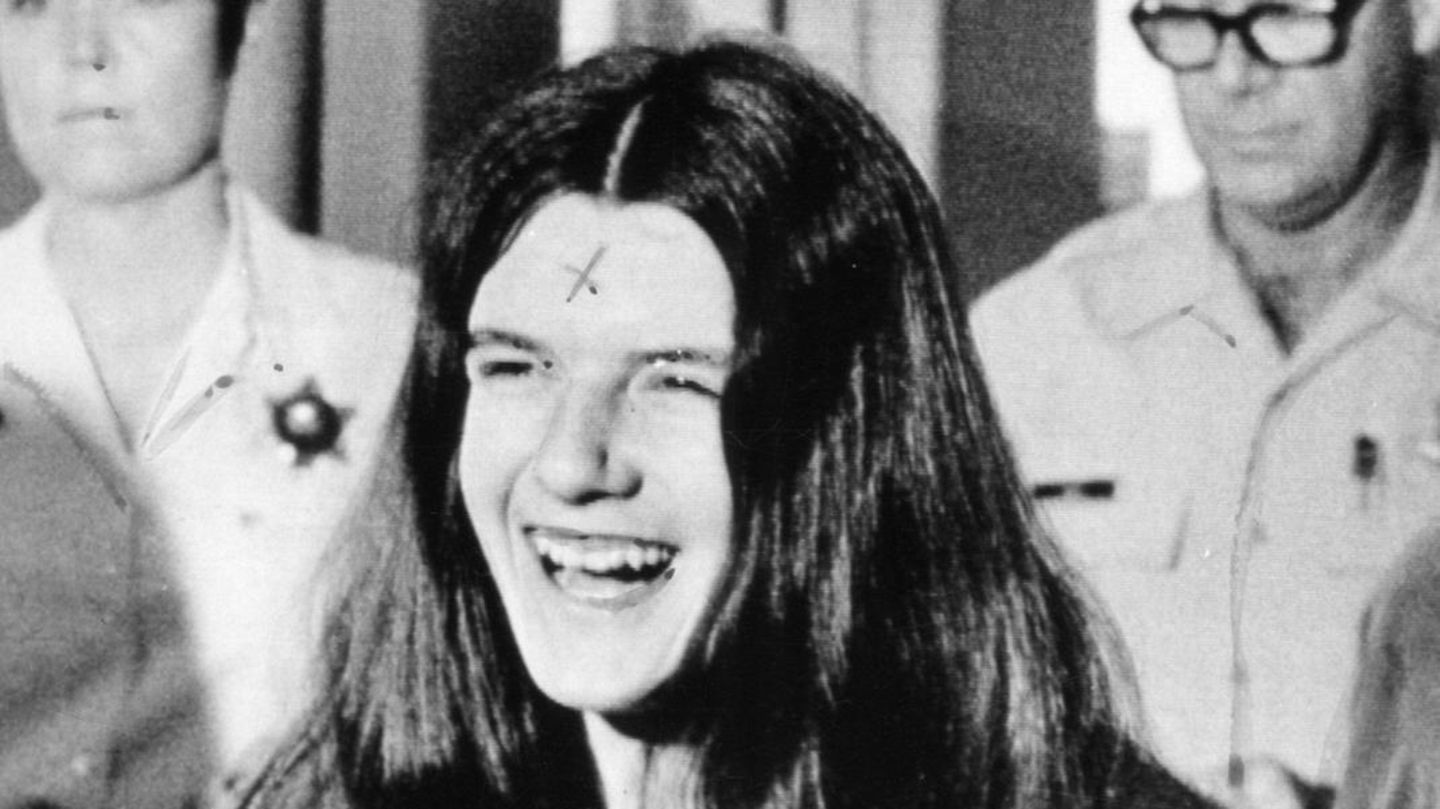
Linda Kasabian, granted immunity, later testified about Manson’s planning and the events of both nights.
She drove the car on August 9.
She was present for what happened at Cielo Drive.
She described the planning.
She described the aftermath.
The drug theory did not survive the confession.
It did not survive the gun.
What the record shows is a shift: from a mistake to a path.
It shows the delay.
It shows the turn.
It does not show what Atkins said word for word.
That would require evidence the source does not provide.
TWO STORIES
The trial began in June 1970.
The prosecution’s case relied heavily on accomplice testimony, including Kasabian’s, and physical evidence such as fingerprints and the murder weapons.
The defense presented a chaotic case, including Manson’s outbursts and the appearance of an X carved on his forehead.
What the defense argued beyond that chaos is not detailed in the source.
That would require evidence the record does not provide.
Manson directed the attacks but was not present at the scenes.
Both sides acknowledged that fact.
It is a documented fact.
:max_bytes(150000):strip_icc()/Leslie-Van-Houten-030525-fd2591b965064cc0b888c70d473a57c6.jpg)
It is also a strange one: the man on trial for murder was never in the room where the murders happened.
The drug theory was a documented mistake, not a fact established by the record.
It was a theory that slowed the case for months.
It was a theory that stemmed from the victims’ connections to the entertainment industry and the presence of drugs at the scene.
It was a theory the record does not support.
The record supports fingerprints.
The record supports the murder weapons.
The record supports Kasabian’s testimony.
Which story holds up?
The one with the gun traced to the Family?
The one with the X carved into a forehead?
The one with the jailhouse confession?
Or the one that began as a guess about drugs?
The record answers that question.
In January 1971, all four defendants were convicted.
The drug theory was not among the evidence.
The drug theory was the mistake that derailed the probe.
The trial was the turn.
The conviction was the turn.
The theory was the detour.
AND THE STORY STILL ISN'T OVER
:max_bytes(150000):strip_icc():focal(1083x409:1085x411)/sharon-tate-1967-tout-080825-6f698357c86347d6b03be79a2ebaeee0.jpg)
They stayed.
All of them stayed, for decades, behind the same walls the verdicts put them behind.
Charles Manson died in 2017 at a California hospital.
Susan Atkins died in prison in 2009.
Patricia Krenwinkel and Leslie Van Houten remained incarcerated.
Van Houten was granted parole in 2023 and released.
Tex Watson remained in prison.
The house at 10050 Cielo Drive was demolished in 1994.
The address is gone.
The file is not.
What the record does not establish is the current status of any ongoing legal proceedings.
That would require evidence beyond the source.
Decades is a long time to hold a sentence.
Decades is a longer time to hold a theory.
The drug theory was the detour.
The convictions were the turn.
The aftermath is the weight.
Doris Tate, Sharon Tate’s mother, campaigned for victims’ rights until her death in 1992.
The case has been the subject of numerous books, films, and documentaries.
The telling continues.
The record stays fixed.
All convicted defendants remained in prison for decades.
That is what the source says.
That is what the record holds.
Advertisement
You may also like
The phone call that put Adnan Syed near Leakin Park — and the call records that later unraveled
She was 18, a senior at Woodlawn High School, and she did not come home on January 13, 1999. Hae Min Lee disappeared after…
The unserved 1955 arrest warrant for Carolyn Bryant, found in a courthouse basement, and the family still seeking answers
The warrant was folded, typed, and dated 1955, and it was found in 2018 in a courthouse basement. It named Carolyn Bryant, the woman…
The $50,000 ransom note left on a windowsill that began a 20-month hunt
The nursery window faced the night. A ladder leaned against it, reaching the sill. On the sill, a note. It demanded $50,000. The child…
The 1954 murder trial a judge let the press decide — and the Supreme Court still cites
The 911 call did not exist in 1954. On July 4, 1954, in Bay Village, Ohio, a Cleveland suburb, Marilyn Sheppard, 31, was found…
The 1993 raid on a Texas ranch that left four ATF agents dead — and the fire's origin still disputed
He called himself David Koresh, though he was born Vernon Wayne Howell. He was the self-proclaimed prophet and leader of the Branch Davidians at…
Why Kitty Genovese's killer returned to the street before the fatal blow
She was on the ground below her apartment at 82-70 Austin Street in Kew Gardens, Queens, in the early hours of March 13, 1964.…