The $50,000 ransom note left on a windowsill that began a 20-month hunt
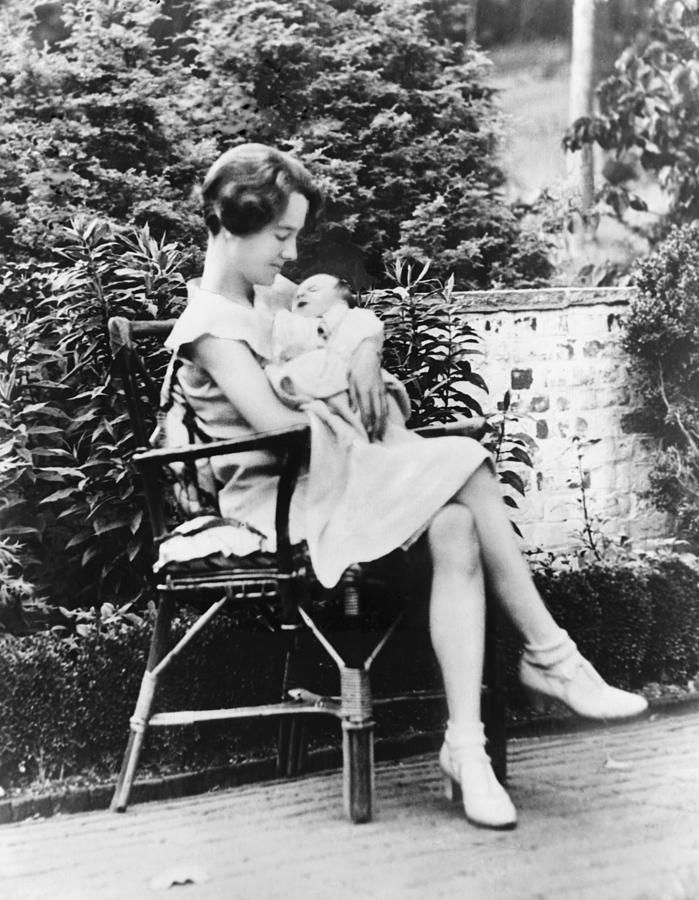
The nursery window faced the night.
A ladder leaned against it, reaching the sill.
On the sill, a note.
It demanded $50,000.
The child was twenty months old.
He was taken from his crib that night, March 1, 1932, from the Lindbergh home near Hopewell, New Jersey.
The note and the ladder are the first documented artifacts of the crime.
No witness saw anyone place them.
Who built the ladder?
Who wrote the note?
Who climbed it?
That would require evidence.
The record does not establish who put the ladder there.
The record does not establish who left the note.
At that moment, the kidnapper's identity was unknown.
The window was open.
The crib was empty.
The note sat on the sill, waiting to be read.
THE RANSOM AND THE BODY
The ransom was paid in April 1932.
Fifty thousand dollars, handed over in the dark, on the promise that the child would come home.
The child did not come home.
On May 12, 1932, his body was found in a wooded area about four and a half miles from the house.
The medical examiner who testified at trial gave the cause of death: a blow to the head.
The weapon was a blunt object, never identified.
The exact date and circumstances of the child's death are not in the record.
That is not established.
What is established is the money.
The ransom money had been recorded, bill by bill, before it was paid.
Some of those gold certificates were later traced to Hauptmann.
The lead detective, superintendent of the New Jersey State Police, led the investigation.
The Lindberghs' butler was scrutinized.
He was cleared.
The hope had a price, and the price was paid.
The body was found anyway.
Not because the ransom was the wrong amount.
Because the child was already gone, and no one knew when.
The money moved through hands for two years before it led anywhere.
The body had led nowhere at all.
She was on the ground below.
THE ARREST
Two years after the ransom was paid, a man paid for gasoline with a bill from the ransom money.
He was arrested on September 19, 1934.
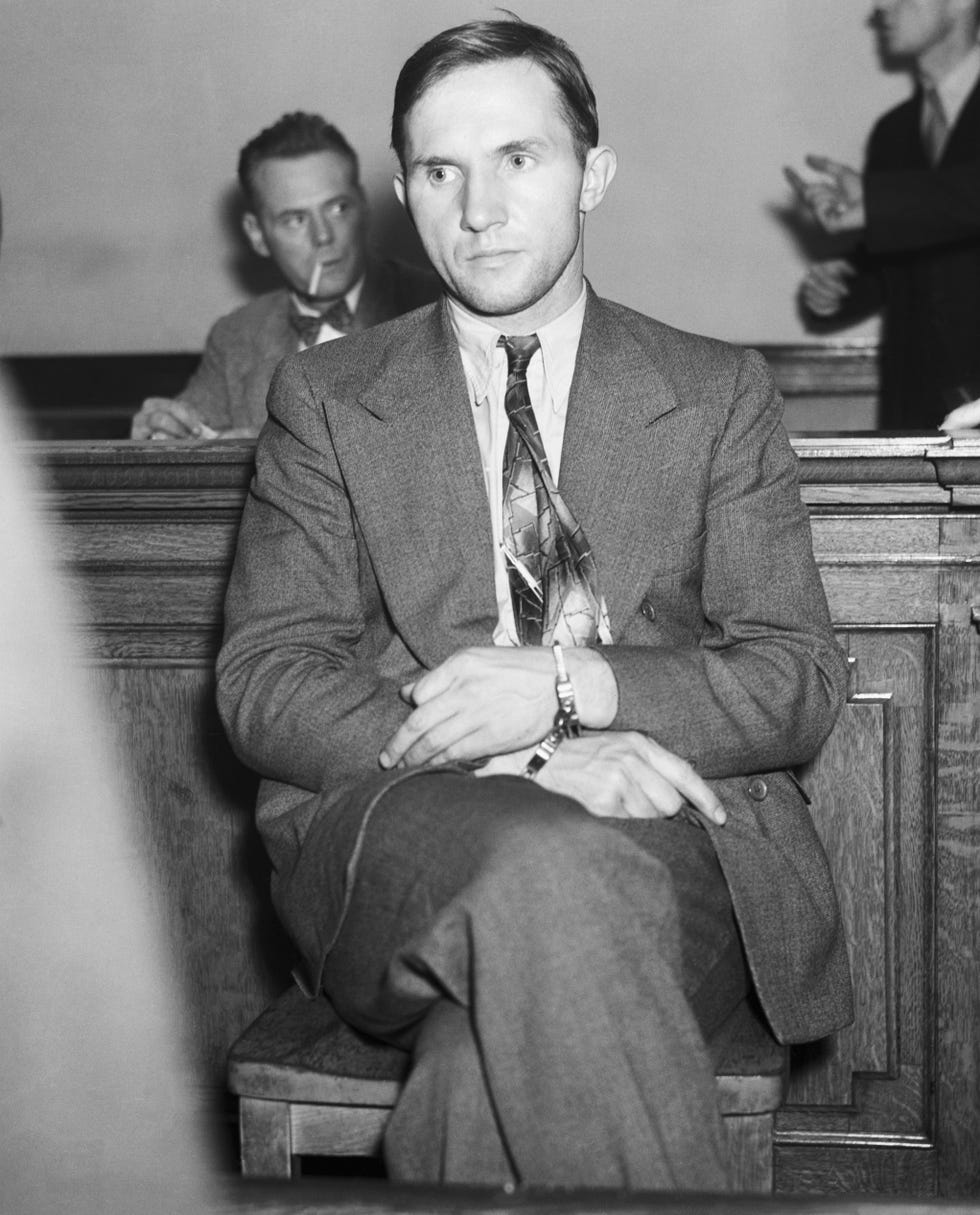
His name was Bruno Richard Hauptmann, a German immigrant carpenter.
The net tightened around him with three kinds of evidence.
The ransom notes were traced through handwriting analysis to Hauptmann.
Wood from the ladder was matched to planks in Hauptmann's attic.
The ransom money itself had been recorded, and the gold certificates led to his arrest.
A retired schoolteacher who had acted as intermediary in the ransom negotiations testified at trial.
He testified that he had met with the kidnapper and identified Hauptmann as the man he had spoken to.
That identification is one man's testimony.
The record does not independently corroborate its reliability.
The handwriting match is an expert opinion.
The wood match is an expert opinion.
They are not absolute proof.
The defense would argue the evidence was circumstantial, that Hauptmann was framed.
But the prosecution had the handwriting, the wood, and the money.
It had the schoolteacher's voice placing Hauptmann at the ransom drop.

It had the bill spent at a gas station.
The case moved from arrest to indictment in October 1934.
The trial began on January 2, 1935, in Flemington, New Jersey.
The money had moved through hands for two years.
It stopped moving when it reached Hauptmann's.
THE TRIAL AND THE VERDICT
The indictment came in October 1934.
First-degree murder, the charge against Bruno Richard Hauptmann.
The trial opened on January 2, 1935, in Flemington, New Jersey.
It ran before a judge of the New Jersey Court of Oyer and Terminer.
The prosecution was led by the New Jersey Attorney General, David T. Wilentz.
He presented the handwriting, the wood, the gold certificates.
He presented the witness who said he had met the kidnapper.
The defense was led by Edward J. Reilly.
Reilly argued the evidence was circumstantial.
He argued Hauptmann was framed.
He argued the wood, the notes, the money had all been placed.
The prosecution called the victim's parents to the stand.
The defense called the accused's wife.
The courtroom was packed; the case was a spectacle.
On February 13, 1935, the jury returned.
The verdict was guilty of first-degree murder.
The sentence was death.
Was the evidence enough?
Was the frame-up real?
Did the jury weigh the wood against the denial?
That would require evidence.
The record shows a guilty verdict.
The record does not show the jury's reasoning.
It does not disprove the defense's claim of fabrication.
Hauptmann was sentenced to death.
The defense's claim remains a claim, not a finding.
AND THE STORY STILL ISN'T OVER
The appeals were filed, and they were rejected.
The final appeal went to the U.S. Supreme Court.
It was denied.
Hauptmann was executed in the electric chair at the New Jersey State Prison on April 3, 1936.
The execution did not end the questions.
His wife, Anna Hauptmann, maintained his innocence for decades.
She filed multiple appeals and petitions.
All were denied.
She died in 1994.
The case remains one of the most debated in American criminal history.
Some writers and researchers argue that Hauptmann was innocent.
They argue the evidence against him was flawed.
Was the ladder matched to his attic planks?
Was the handwriting his?
Was the ransom money his?
That would require evidence the record does not settle.
Whether Hauptmann was actually guilty or innocent is not established by the record.
The verdict stands.
The debate outlived it.
The case changed the law.
It led to the passage of the Federal Kidnapping Act.
Kidnapping became a federal crime.
The house, the ladder, the note, the money — those are facts.
The identity of the kidnapper beyond the conviction remains a matter of debate, not record.
The execution was carried out.
The story still is not over.
Advertisement
You may also like

Adnan Syed's 2024 freedom is secure, but the conviction status remains in legal limbo as the Lee family fights on.
It began with a voice. In 1999, an anonymous phone call pointed police toward Adnan Syed—no name given, no evidence offered, just a voice…
The letter that sent the Trailside Killer to a dead end
A letter arrived for the authorities during the Trailside Killer investigation. It was threatening. It was taunting. Handwriting analysis linked it to the killer,…
The letter Erik allegedly wrote about abuse — and why the Menendez brothers' appeals keep failing
A letter Erik allegedly wrote sits inside a 2023 habeas corpus petition filed by the brothers’ attorneys. It describes the abuse, the petition says.…
The parole officer's alert that led authorities to Richard Allen Davis
A woman reported a suspicious man near the Klaas home on the night of October 1, 1993. Her description pointed to Richard Allen Davis,…
The tarot card left at a crime scene — and the message that still haunts detectives
The card was left on the ground at one of the crime scenes. It was a tarot card, and on it someone had written…
The ransom note on a windowsill — then a 72-day wait that ended in a woods
The nursery was quiet. It was the evening of March 1, 1932, and Charles Lindbergh Jr., the 20-month-old son of aviator Charles Lindbergh and…