The tarot card left at a crime scene — and the message that still haunts detectives
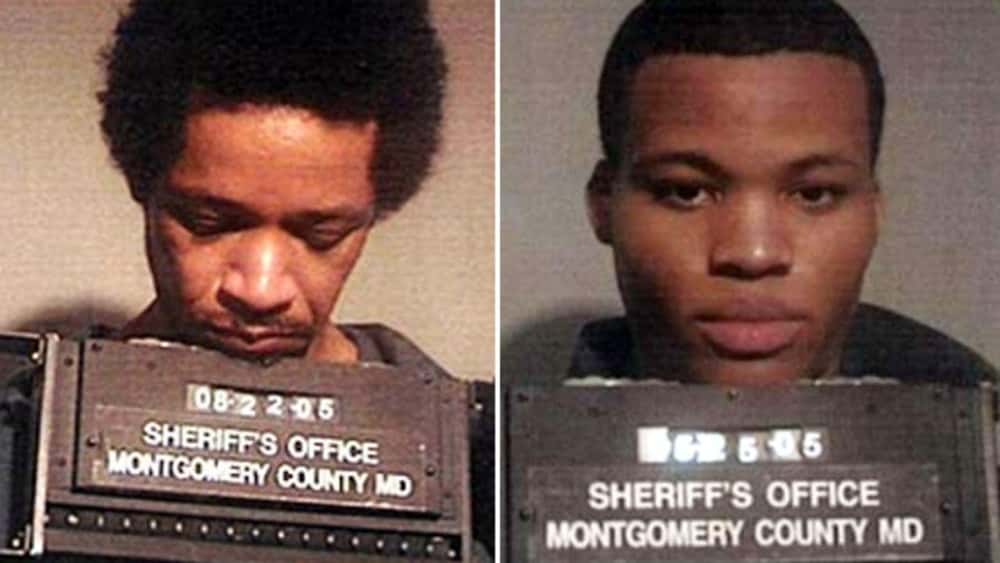
The card was left on the ground at one of the crime scenes.
It was a tarot card, and on it someone had written a message by hand.
"Dear Policeman, I am God."
That message is in the case record. It is documented evidence, not a rumor and not an online theory.
It was left sometime between October 2 and October 24, 2002, during the three weeks of shootings that terrorized the Washington, D.C. metropolitan area.
The attacks spanned Maryland, Virginia, and the District of Columbia. Ten people were killed. Three others were wounded.
The shootings happened at gas stations, at shopping centers, at schoolyards. Schools kept children indoors. Residents were afraid to pump gas.
The exact crime scene where the card was found is not specified in the source. Which shooting it was left at is also not specified.
The record holds the card and the words. It does not hold the location.
A tarot card with a taunt in handwriting. A claim of divinity addressed to a policeman.
Who left it there? Why that message, and why that card?
That would require evidence the record does not provide.
The card remains what it was: a piece of paper, a message, a documented artifact from a case that paralyzed a region.
THREE WEEKS OF TERROR
Between October 2 and October 24, 2002, a series of shootings terrorized the Washington, D.C. metropolitan area across Maryland, Virginia, and the District of Columbia.
Ten people were killed and three wounded in seemingly random attacks at gas stations, shopping centers, and schoolyards.
Schools kept children indoors.
Residents were afraid to pump gas.
Montgomery County Police Chief Charles Moose led the investigation and held daily press briefings.
A witness reported seeing a white van near one of the shootings.
Later, a 1990 Chevrolet Caprice was identified as the vehicle.
The specific witness's identity and the exact timing of the white van sighting are not in the source.
The suspects were linked to the shootings through ballistics evidence and a Bushmaster .223-caliber rifle found in the car.
That rifle would become central to the case.
The region watched.
The region waited.
Every stop at a gas station carried a risk.
Every schoolyard felt exposed.
The randomness was the terror.
The record establishes the shootings, the casualties, and the fear.
What it does not establish is a pattern the public could use to predict the next one.
That would require evidence the record does not provide.
The paralysis was real, and it was documented.
Chief Moose stood before cameras daily, his briefings the only steady rhythm in three weeks of chaos.
The attacks ended on October 24 with the arrest of two men at a rest stop off Interstate 70 in Maryland.
But that is the next part of the story.
THE ARREST AND THE RIFLE
The tip came from a truck driver who had heard about the suspects' vehicle on the news.

He recognized the car and called it in.
On October 24, 2002, police arrested two men at a rest stop off Interstate 70 in Maryland.
They were found sleeping in the car.
Inside the car was a Bushmaster .223-caliber rifle.
The men were John Allen Muhammad, 41, an Army veteran, and Lee Boyd Malvo, 17 at the time.
The rifle and ballistics evidence linked them to the shootings.
The terror of three weeks ended with two men asleep in a Chevrolet Caprice.
One was old enough to be the other's father.
One was still a teenager.
The truck driver's name is not specified in the source.
The exact rest stop location is not specified either.
What is documented is the arrest, the rifle, and the sleep.
Chief Moose had stood before cameras daily, his briefings the only steady rhythm in three weeks of chaos.
Now the rhythm stopped.
The suspects did not resist.
They did not flee.
They were asleep when the officers arrived.
The relief was immediate.
The disbelief followed.
A 41-year-old Army veteran and a 17-year-old boy, together in a car with a rifle.
That is what the record shows.
It is a fact.
It is also the beginning of a much longer story.
TWO TRIALS, TWO FATES
Muhammad was tried first, in Prince William County, Virginia, for the murder of Dean Meyers.
He was convicted of capital murder and sentenced to death.
Malvo was tried separately, in Fairfax County, for the murder of Linda Franklin.
He was convicted and sentenced to life without parole.
Two juries. Two men. Two fates.
The prosecution argued both were equally responsible for the shootings.
The defense for Malvo emphasized his youth and Muhammad's influence.
That is what the record shows of the arguments.
The specific arguments made by Malvo's defense about Muhammad's influence are not detailed in the source.
Muhammad's appeals failed.
He was executed by lethal injection on November 10, 2009.
Malvo's case took a different turn.
In 2017, the U.S. Supreme Court ruled mandatory life sentences for juveniles unconstitutional.
That ruling led to a resentencing hearing for Malvo.

He was resentenced to life in prison.
Not a release. Not a reduction.
A re-examination of the sentence, under a new legal standard.
The law had changed around him.
The outcome, in the end, did not.
One man is gone.
The other remains in prison, serving multiple life sentences.
That is where the two trials leave them.
A difference of years, of influence, of age.
A difference the courts weighed, and then weighed again.
The record holds the verdicts.
The meaning of those verdicts is still being argued.
AND THE STORY STILL ISN'T OVER
Muhammad was executed by lethal injection on November 10, 2009.
Malvo remains in prison, serving multiple life sentences.
He has filed appeals, and he was resentenced after the Supreme Court ruled that mandatory life sentences for juveniles are unconstitutional.
The resentencing did not change his outcome.
He was again sentenced to life in prison.
Malvo has given interviews from prison expressing remorse.
His statements have been met with skepticism by some victims' families.
The families have formed support networks.
They have advocated for victims' rights.
They have pushed for gun control and victim compensation.
The case remains one of the most studied examples of a serial sniper attack in American history.
It is studied in law schools.
It is studied in criminology programs.
It is studied by behavioral analysts trying to understand how two people could terrorize a region for three weeks.
The legal chapter closed for Muhammad in 2009.
For Malvo, the chapter stays open.
He has filed appeals, and the record does not establish any specific upcoming hearing, motion, or decision date.
That uncertainty is part of the story now.
The verdicts are in the record.
The meaning of those verdicts is still being argued.
The families keep arguing it.
They keep the names of the victims in public view.
They keep the questions alive.
A difference the courts weighed, and then weighed again.
The record holds the verdicts.
The meaning of those verdicts is still being argued.
Advertisement
You may also like
The 1981 mall toy aisle detail that derailed the Adam Walsh case for years
July 27, 1981, in the toy department of the Hollywood Mall in Hollywood, Florida. A six-year-old boy named Adam Walsh was separated from his…
The love letters and calling cards left beside two bodies in Lovers' Lane
The crabapple tree stood in a secluded lane called Lovers' Lane, near the New Jersey border with Pennsylvania. On the night of September 14,…
The $5,800 in D.B. Cooper ransom cash a boy found on a riverbank
The boy was eight years old, playing on a sandbar along the Columbia River in Washington in 1980. He pulled three bundles of cash…
The handwritten confession scrawled on a boat's interior that sealed Dzhokhar Tsarnaev's fate
The boat sat in a Watertown backyard, tarp pulled over it, ordinary as any lawn ornament. On April 19, 2013, Dzhokhar Tsarnaev was found…
The glove that fit one hand in court but not the other — O.J. Simpson's trial
In June 1995, in a Los Angeles courtroom, O.J. Simpson struggled to pull on a pair of leather gloves. One appeared to fit. The…
The confession Amityville killer recanted, then the haunting story that followed
Six bodies, each in a bed, in a house on Ocean Avenue. The morning was November 13, 1974, in Amityville, New York. The dead…