The love letters and calling cards left beside two bodies in Lovers' Lane
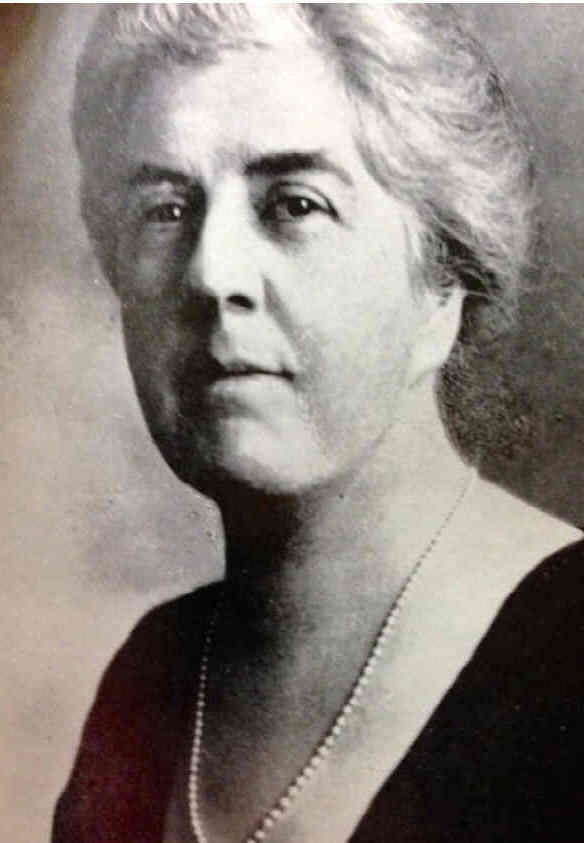
The crabapple tree stood in a secluded lane called Lovers' Lane, near the New Jersey border with Pennsylvania.
On the night of September 14, 1922, two bodies were found beneath it.
Reverend Edward Wheeler Hall and Mrs. Eleanor Reinhardt Mills lay on the ground, both shot in the head.
Around them, the killer had arranged love letters and calling cards.
The objects were placed with care, as if the scene had been staged.
The couple had been having an affair.
He was a married Episcopal minister.
She was a choir singer in his church, also married.
It is not established who placed the love letters and calling cards.
It is not established whether they were placed before or after the killings.
The record does not answer either question.
The case became one of the most sensational murder mysteries of the 1920s.
National newspapers sent reporters to Phillipsburg.
Photographers captured the tree, the lane, the scattered paper.
Who would take the time to arrange letters beside two dead bodies?
Who would leave calling cards as a signature?
Who would want the scene to be read, not just seen?
That would require evidence.
The crime scene itself was disturbed before it could be documented properly.
Local authorities failed to secure the area.
Evidence was moved.
The love letters were among the items mishandled.
The killer's handiwork was already there, arranged in the dark.
The victims were there too, beneath the crabapple tree.
The lane was called Lovers' Lane.
It was a name that made the scene feel intimate, and also obscene.
THE AFFAIR AND THE INVESTIGATION
The victims were Reverend Edward Wheeler Hall, a married Episcopal minister, and Eleanor Reinhardt Mills, a choir singer in his church, also married.
The couple had been having an affair.
That affair was the story the press told, and the story the letters told too.
The love letters found beneath the crabapple tree were physical evidence of that affair.
So were the calling cards, arranged around the bodies.
But the investigation began badly.

Local authorities failed to secure the crime scene.
Evidence was disturbed before proper documentation.
It is not established who moved or mishandled the love letters, or what exactly was disturbed before documentation.
That remains one of the open questions of the case.
The grand jury was convened in 1922.
It came largely due to pressure from the press and the public.
The case was reopened, but the scene was already compromised.
The letters had been picked up, passed around, put back.
The calling cards had been shuffled.
What the record shows is a scene that was handled poorly.
What the record does not show is who handled it, or why.
The truth may have been lost in the chaos.
It may have been lost before the first photograph was taken.
The investigation was criticized for its handling of the crime scene.
Some evidence, including the love letters, was moved or mishandled.
That criticism came early, and it never went away.
The prosecution would later build a case on motive and opportunity.
But the foundation was shaky from the start.
The ground beneath the crabapple tree had been walked on.
The letters had been touched.
The record is what it is.
What was disturbed, and by whom, would require evidence that no longer exists.
THE TRIAL OF THE FOUR
The trial began in November 1926 in Somerville, New Jersey.
It lasted nearly a month.
Four defendants sat in the dock: Hall's widow, her two brothers, and her cousin.
All four were charged with first-degree murder.
The prosecution, led by Alexander Simpson, built its case on motive, opportunity, and one witness.
That witness was the farmer known as the "Pig Woman."
She claimed she had seen the four defendants at the murder scene on the night of the killings.
She was dying of cancer when she took the stand.
Under cross-examination, her testimony contradicted itself.
It is not established whether the "Pig Woman" actually saw the defendants.
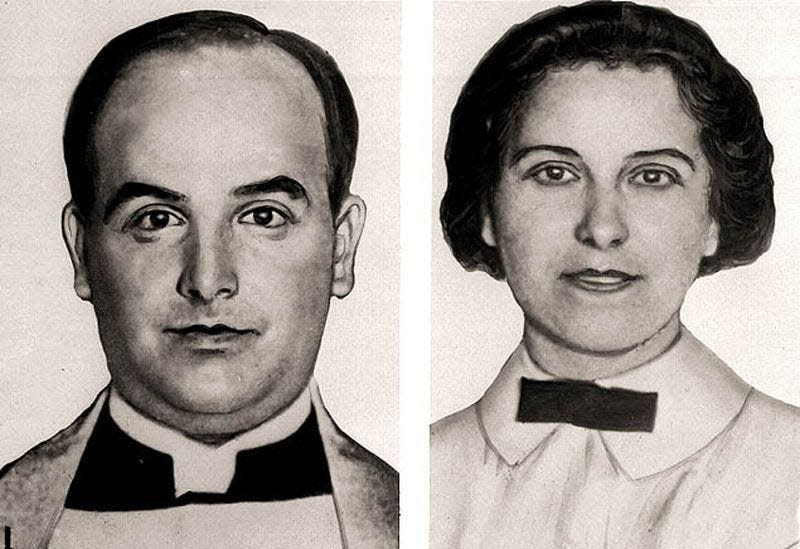
Her credibility was severely damaged.
The defense argued the evidence was circumstantial.
The prosecution, they said, had failed to prove a motive.
They pointed to the investigation itself.
The crime scene had been mishandled.
Letters had been touched.
Evidence had been moved.
The record is what it is.
Four years had passed between the arrests and the trial.
The case against the four rested on a witness whose word could not hold.
It rested on a motive that was never shown.
It rested on a scene that was disturbed before it was documented.
The jury heard the testimony.
They heard the contradictions.
They heard the defense's argument that suspicion is not proof.
Then they deliberated.
The verdict would come in December.
But that is another section of this story.
THE VERDICT AND THE VIRAL THEORY
On December 3, 1926, the jury deliberated for just over five hours.
Then they returned.
Not guilty, for all four defendants.
The verdict was widely seen as a failure of the prosecution's case.
The prosecution had built its story on motive, on opportunity, on the testimony of a dying woman whose account shifted under cross-examination.
The defense had argued the evidence was circumstantial.
The jury agreed.
The murder was never officially solved.
No one else was ever charged with the murders.
The four acquitted defendants returned to their lives.
Frances Hall lived quietly in Westfield, New Jersey, until her death in 1942.
The case passed from the courtroom into the archive.
It did not stay there.
Online, a theory circulates: that the love letters and calling cards were the killer's signature.
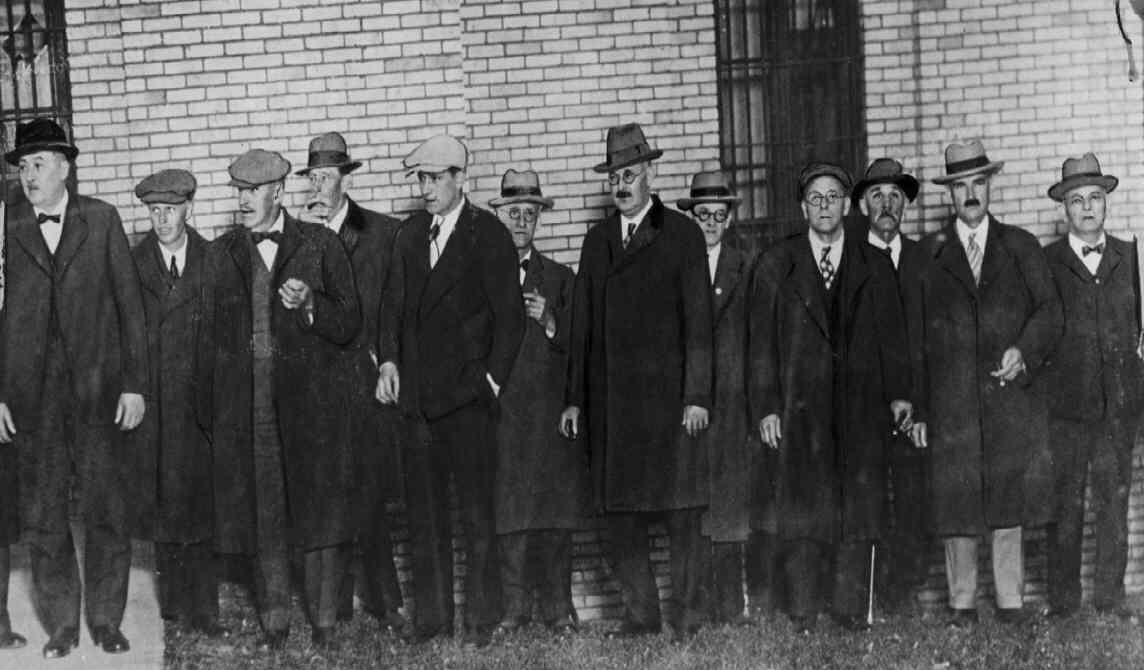
That the arrangement of those objects was a message.
That the physical evidence points to a particular hand.
The theory is a theory.
It is not a fact established by the record.
The record does not establish who killed the couple.
It does not establish who left the love letters and calling cards.
It does not establish whether the four acquitted defendants were involved in any way.
What is documented is the scene: the letters, the cards, the two bodies beneath the crabapple tree.
What is documented is the verdict: not guilty, after five hours.
What is documented is the silence afterward.
The gap between them is where the story lives.
That gap is also where the theory lives.
Closing it would require evidence.
AND THE STORY STILL ISN'T OVER
After the acquittal, the four defendants returned to their lives.
Frances Hall lived quietly in Westfield, New Jersey, until her death in 1942.
The case has remained a subject of fascination for true-crime historians and authors.
It is often cited as an example of a flawed investigation and a trial that failed to deliver justice.
The families of the victims and the accused have largely faded from public view.
The case remains officially unsolved.
No one else was ever charged.
The weapon is a .32-caliber pistol, never recovered.
It is not established where that pistol is.
It is not established who owns it.
It is not established whether it will ever be found.
What would change if it surfaced tomorrow?
What would it prove, and to whom?
That would require evidence.
The verdict was read on December 3, 1926, after just over five hours of deliberation.
That was the end of the trial.
It was not the end of the questions.
The love letters and calling cards were physical evidence.
The theory of who left them remains unproven.
The gap between them is where the story still lives.
That gap has never closed.
Advertisement
You may also like
The tarot card left at a D.C. sniper crime scene that said 'Call me God'
The card was on the ground at a crime scene in Montgomery County. A tarot card, face up, with a message written across it:…
The cell phone records that placed a suspect near Leakin Park — but one witness kept changing his story
January 13, 1999, was a school day. Hae Min Lee, an 18-year-old senior at Woodlawn High School in Baltimore County, Maryland, was last seen…
The parole agent who saw a sketch and stopped a car — then Polly Klaas's killer led police to her body
The parole agent saw the car first. A sketch, a tip, and a car on the road — that was the break. On November…
The cellmate tip that cracked the Clutter case after investigators ignored a footprint
The footprint was there on the night of November 15, 1959, inside the farmhouse near Holcomb, Kansas. Four members of the Clutter family were…
The cell tower records that placed Adnan Syed at Leakin Park — and the witness who changed his story
The phone call came on February 12, 1999. Baltimore County police picked up an anonymous tip that day, and the voice on the line…
The jailhouse informant's testimony that could not save Casey Anthony
She sat in the witness box and testified that Casey Anthony had made incriminating statements while in jail. Her name was Robyn Adams, a…