The glove that fit one hand in court but not the other — O.J. Simpson's trial
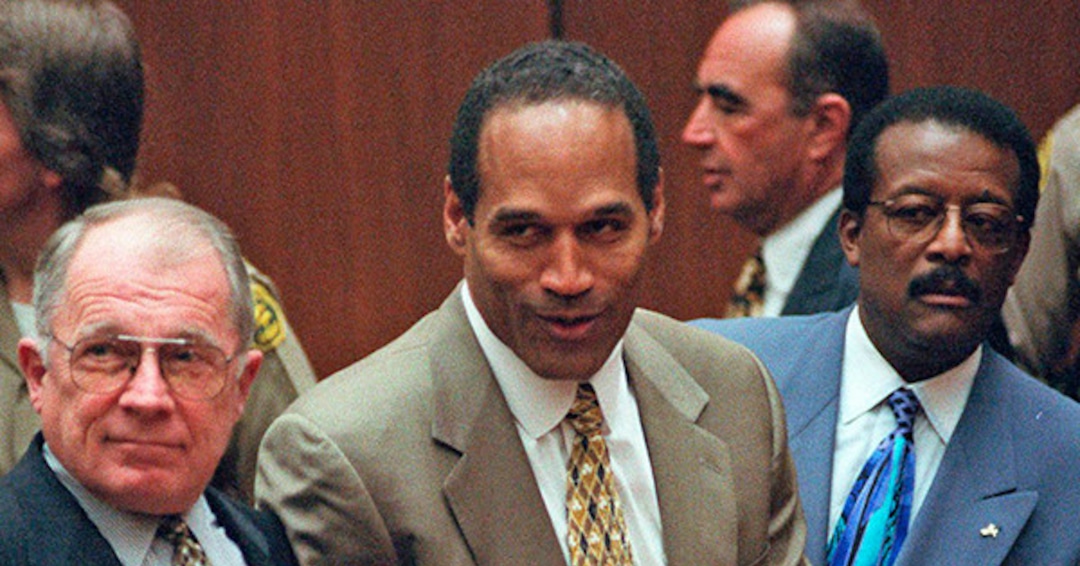
In June 1995, in a Los Angeles courtroom, O.J. Simpson struggled to pull on a pair of leather gloves.
One appeared to fit. The other did not.
The demonstration was captured on live television and became an iconic image of the trial.
The gloves were part of the prosecution’s physical evidence: a bloody glove found at the crime scene and a matching glove at Simpson’s estate.
The moment raised immediate questions. Did the gloves shrink? Were they the wrong size? Or was Simpson faking?
Whether the glove truly did not fit, or whether Simpson was deliberately struggling, is not established by the source.
A theory circulating online — that the glove failure proved Simpson’s innocence — is not a fact established by the record.
It was one piece of a contested case. It was not a definitive proof.
The record shows a struggle in court. The record does not show what the struggle meant.
THE NIGHT OF JUNE 12, 1994
The neighbor walking her dog found them around midnight.
Nicole Brown Simpson, 35, was the ex-wife of football star O.J. Simpson.
The second victim, 25, was a waiter at a nearby restaurant.
He had gone to the condominium to return a pair of eyeglasses that Nicole’s mother had left at the restaurant.
The two were found stabbed to death outside Nicole’s condominium on Bundy Drive in the Brentwood neighborhood of Los Angeles.
The killings occurred sometime after 10:00 p.m. that evening.
The exact time of death is not specified in the record.
The murder weapon was a knife.
It was never recovered.
The bodies lay on the ground before the neighbor saw them.
She was on the ground below.
What happened in the hours between 10:00 p.m. and midnight?
What brought the waiter to that doorstep?
What happened when he arrived?
That would require evidence.
The record gives a location.
The record gives a time.
The record gives two names and two ages.
It does not give the moment.
Nicole Brown Simpson was 35.
The waiter was 25.
They were found outside her condominium.
The neighbor was walking her dog.
The knife was never found.
The night of June 12, 1994, holds the facts that are known.
It also holds the hours that are not.
THE INVESTIGATION AND THE CHASE
Police found a bloody glove at the crime scene on Bundy Drive.
They found a matching glove at Simpson’s estate, along with blood drops and other evidence.
DNA testing linked Simpson to blood at the scene.
The defense argued contamination and police misconduct.

The lead detective had a history of racist remarks, and his testimony about finding the glove became a central issue.
His past became a weapon for the defense.
The defense also pointed to Simpson’s cut hand.
The timeline of the murders, they argued, did not match the prosecution’s case.
A cut hand could explain the blood.
It could also explain nothing, the defense said, if the police had planted it.
On June 17, 1994, Simpson failed to surrender.
A white Ford Bronco owned by his friend Al Cowlings became the subject of a slow-speed chase.
The chase was broadcast live on television.
The source does not state who was driving the Bronco, only that Cowlings owned it.
Was Simpson inside?
That would require evidence.
The evidence pointed to Simpson.
It also began to bend under the defense’s pressure.
The glove was found.
The blood was linked.
The cut hand was explained.
And still, the questions mounted.
THE TRIAL AND THE GLOVE DEMONSTRATION
The glove demonstration happened in open court, on live television.
Simpson struggled to pull the gloves on.
The defense claimed they did not fit.
The prosecution suggested they had shrunk from blood.
The record does not specify which glove — left or right — appeared to fit or not.
It only says Simpson struggled.
The trial began in January 1995.
It lasted nearly nine months.
Simpson was charged with two counts of first-degree murder.
The prosecution, led by Deputy District Attorneys Marcia Clark and Christopher Darden, argued that DNA and the gloves linked Simpson to the murders.
The defense, led by Johnnie Cochran and others, argued contamination, police misconduct, and a flawed timeline.
The blood was linked.
The cut hand was explained.
And still, the questions mounted.
In court, the gloves were one piece of a contested case.
Not a definitive proof of innocence.
Not a definitive proof of guilt.
The demonstration became a viral moment before viral moments had a name.
It was replayed, re-examined, repeated in argument.
The defense said the gloves were too small.
The prosecution said they had shrunk from blood.
The jury heard both.
_1_16x9_992.jpg?w=1600)
On October 3, 1995, the jury acquitted Simpson of both murders.
The acquittal landed like a shock.
The competing narratives had weighed on the courtroom for months.
The glove was one image among many.
The DNA was one argument among many.
The verdict was one decision.
That decision was not guilty.
That decision did not end the questions.
AND THE STORY STILL ISN'T OVER
The acquittal was not the end.
In 1997, a civil jury found Simpson liable for wrongful death and battery.
The award was $33.5 million to the families of Nicole Brown Simpson and Ronald Goldman.
Simpson was ordered to pay the judgment.
Much of it remained unpaid.
The source does not state whether the civil judgment was ever fully paid.
The Goldman family continued to pursue it.
The father of Ronald Goldman has spoken publicly about the case for decades.
Nicole Brown Simpson's family turned to domestic violence awareness work.
That work continues.
Simpson's own story moved on.
In 2008, in Las Vegas, Nevada, he was convicted of armed robbery and kidnapping.
He served nine years in prison.
He was released on parole in October 2017.
He died of cancer on April 10, 2024.
He was 76.
The legal saga outlasted the man.
The verdict was one decision.
It was not the only decision.
It was not the final one.
The case remains one of the most scrutinized in American legal history.
The debates about the evidence continue.
The debates about the verdict continue.
What was proven in one courtroom was questioned in another.
What was settled in one trial was reopened in the next.
The glove fit one hand in court.
It did not fit the other.
That moment was memorable.
It was not conclusive.
It was one piece of a contested case.
The record shows that much.
The rest is argument.
Advertisement
You may also like
A wedding ring left on the dresser — and the confession that followed it
The ring sat on the bedroom dresser. Shanann Watts had returned home that morning, August 13, 2018, from a business trip to Arizona. Her…
The car trunk odor that haunted Casey Anthony's trial — and the verdict that followed
The odor came from the trunk of an abandoned car. In July 2008, investigators impounded the vehicle that Casey Anthony had left behind in…
The juror dismissed in 2004 — and the penalty order that vanished 16 years later
The juror raised a hand during the penalty phase in 2004. The juror said something about the death penalty, expressed doubt about it. The…
The truck axle that cracked the Oklahoma City bombing case open
The rear axle of a Ryder truck lay in the rubble, still attached to its differential. Within hours of the April 19, 1995 explosion,…
After 46 years in prison, what happens to the Manson Family now?
The housekeeper, Winifred Chapman, arrived at 10050 Cielo Drive the morning after the first night of killings and found the bodies. She found actress…
The fishing boat Scott Peterson bought days before Laci vanished — and the lie that unraveled
He bought the boat in the days before Laci vanished. He did not mention it when he called police on December 24, 2002, to…