The truck axle that cracked the Oklahoma City bombing case open
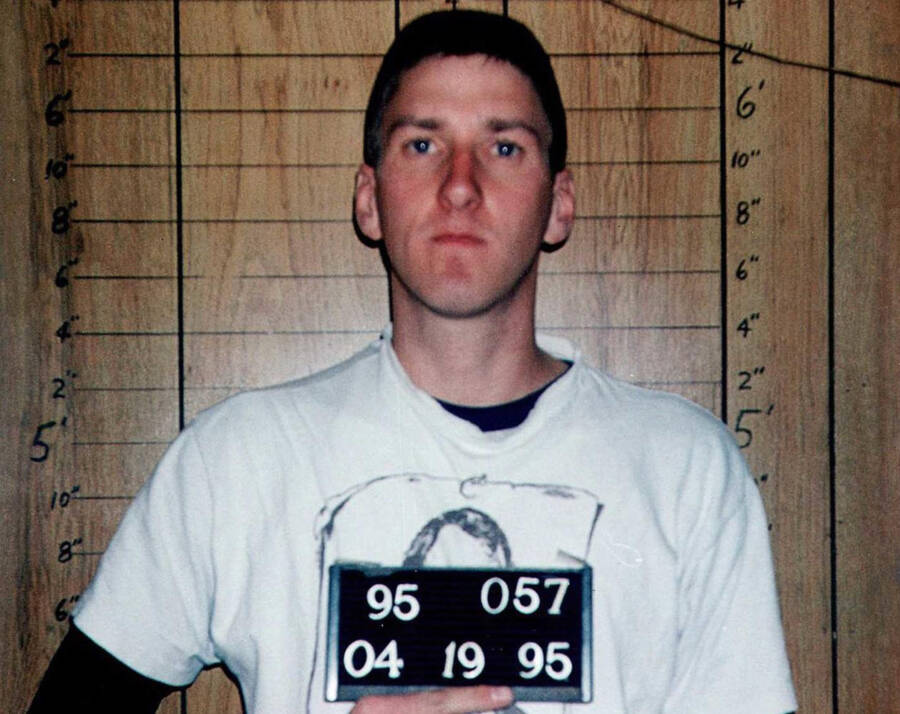
The rear axle of a Ryder truck lay in the rubble, still attached to its differential. Within hours of the April 19, 1995 explosion, investigators found it in the debris of the Alfred P. Murrah Federal Building. The vehicle identification number stamped on that axle traced it to a rental truck. The truck had been rented by Timothy McVeigh.
The blast had destroyed the front of the nine-story building. It killed 168 people, including 19 children in the day-care center. It injured more than 680 others. It was the deadliest act of domestic terrorism in U.S. history at the time.
One piece of metal. One stamped number. One name on a rental contract.
A single axle became the anchor of one of the largest investigations in FBI history. Rescue workers were still pulling survivors from the concrete when the forensic work began. The axle did not just survive the explosion. It carried the investigation forward.
What it did not do—what no single piece of evidence could do—was explain everything that followed. The axle was a starting point. The rest of the story would take years, trials, and testimony to unfold.
THE RENTAL AND THE TRAFFIC STOP
The Ryder truck was rented by Timothy McVeigh, according to the investigation evidence.
The rental contract was not the only thread.
Shortly after the bombing, McVeigh was stopped for a traffic violation and was already in custody while rescue workers were still counting the dead.
A motel clerk and a waitress identified McVeigh as the man they had seen, according to the investigation evidence.
The identification came while the city was still digging.
Forensic evidence included explosive residue on McVeigh's clothing and a receipt for ammonium nitrate fertilizer, according to the investigation evidence.
The fertilizer receipt matched the bomb's main ingredient.
The residue matched the blast.
The man in handcuffs matched the man on the rental contract.
The exact timeline between the explosion and the traffic stop is not specified in the record.
What is specified is the sequence: the axle, the number, the name, the stop.
He was not arrested for the bombing.
He was held for a traffic violation.
And the investigation built its case while he sat in custody.
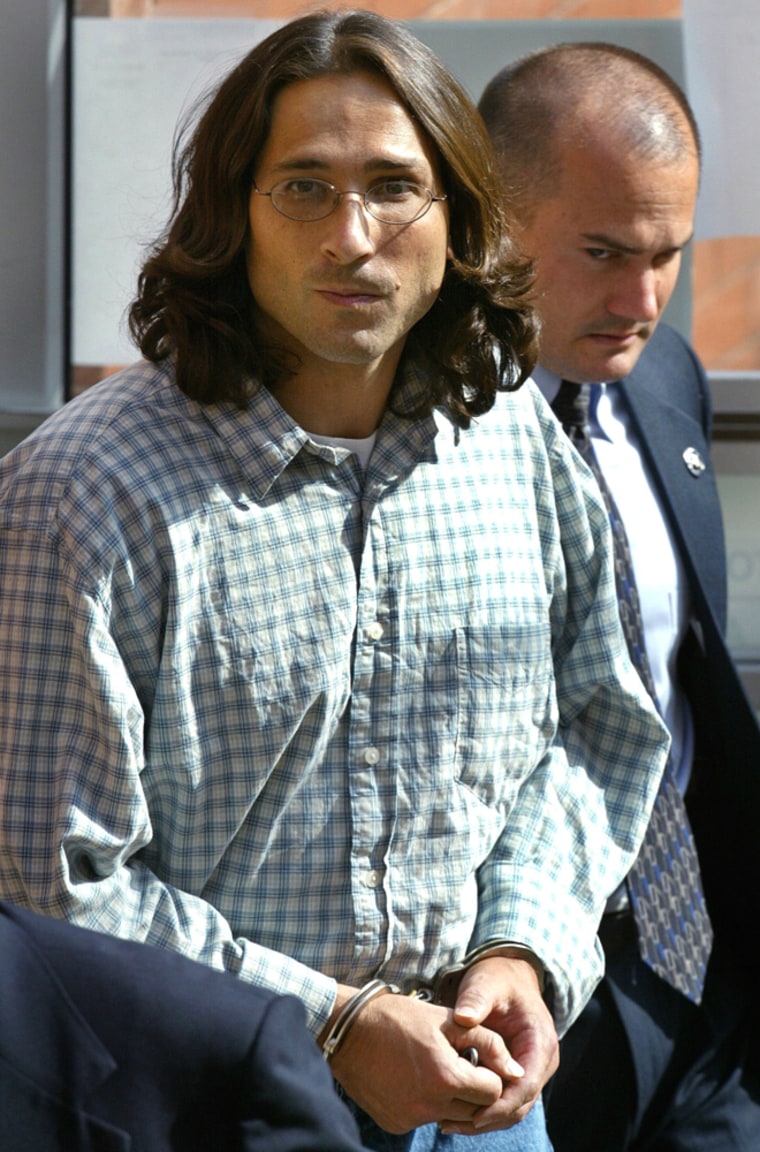
The evidence did not need a confession to speak.
It had the truck.
It had the receipt.
It had the residue on his clothes.
It had the witnesses who placed him where the record places him.
One man in a jail cell.
One city in rubble.
The distance between those two facts is the rest of the story.
THE TWO STORIES
Two stories ran side by side through the courtroom.
The first was the prosecution's. Joseph Hartzler, the lead prosecutor, argued that Timothy McVeigh and Terry Nichols had planned the attack for months.
That story had pieces. A rental receipt. Explosive residue. The axle with its vehicle identification number.
Michael Fortier, an acquaintance with prior knowledge of the plot, pleaded guilty and testified for the prosecution.
His testimony helped build the case against the two men he knew.
The second story belonged to the defense. Stephen Jones, McVeigh's lead attorney, did not dispute the axle's link to his client.
He challenged the overall case instead.
The record does not detail what alternative narrative the defense offered. It states only that they made their arguments.
Not because the arguments were weak. Because the trial summary does not preserve them.
That would require evidence the record does not contain.
There was a third thread, never tried in court. James Nichols, Terry's brother, was publicly suspected.
He was never charged. He was cleared.
So the courtroom heard one version of events, anchored by the axle and Fortier's words.
The other version remains a shadow in the record, mentioned but not described.
One story led to a conviction. The other led to an execution.
The distance between those two facts is the rest of the story.
THE VERDICTS AND THE SENTENCES
The trial moved to Denver, to federal court, before Judge Richard Matsch.
McVeigh was charged with 11 counts of conspiracy and murder.
In June 1997, the jury convicted him on all 11 counts.
The same jury sentenced him to death.
McVeigh’s appeals were unsuccessful.
On June 11, 2001, he was executed by lethal injection at the federal penitentiary in Terre Haute, Indiana.
That was the finality of one story.
Terry Nichols faced a separate trial.
He was convicted of conspiracy and involuntary manslaughter.
The specific charges against Nichols beyond those two are not listed in the record.
The record does not establish any further counts against him.
Nichols was sentenced to life in prison without the possibility of parole.
His conviction and sentence were upheld on appeal.
His requests for a new trial have been denied.

He remains in federal prison.
Michael Fortier, who had prior knowledge of the plot and testified for the prosecution, pleaded guilty to lesser charges.
Fortier received a 12-year sentence for his cooperation.
He was released from prison in 2006 after serving his time.
The contrast is stark, and it is on the record.
McVeigh was executed.
Nichols lives on in a cell.
Fortier walked free.
One axle tied the truck to McVeigh.
The same evidence helped send Nichols away for life.
The same case bought Fortier his freedom.
The story ended for McVeigh on June 11, 2001.
It did not end for the families.
The Oklahoma City National Memorial now stands on the site of the former federal building.
The victims' families remain active in memorial events.
Some of them have spoken publicly about their losses.
Some of them testified at trial.
Some of them opposed the death penalty that the jury delivered.
The weight of the sentence falls on one man.
The weight of the loss falls on many.
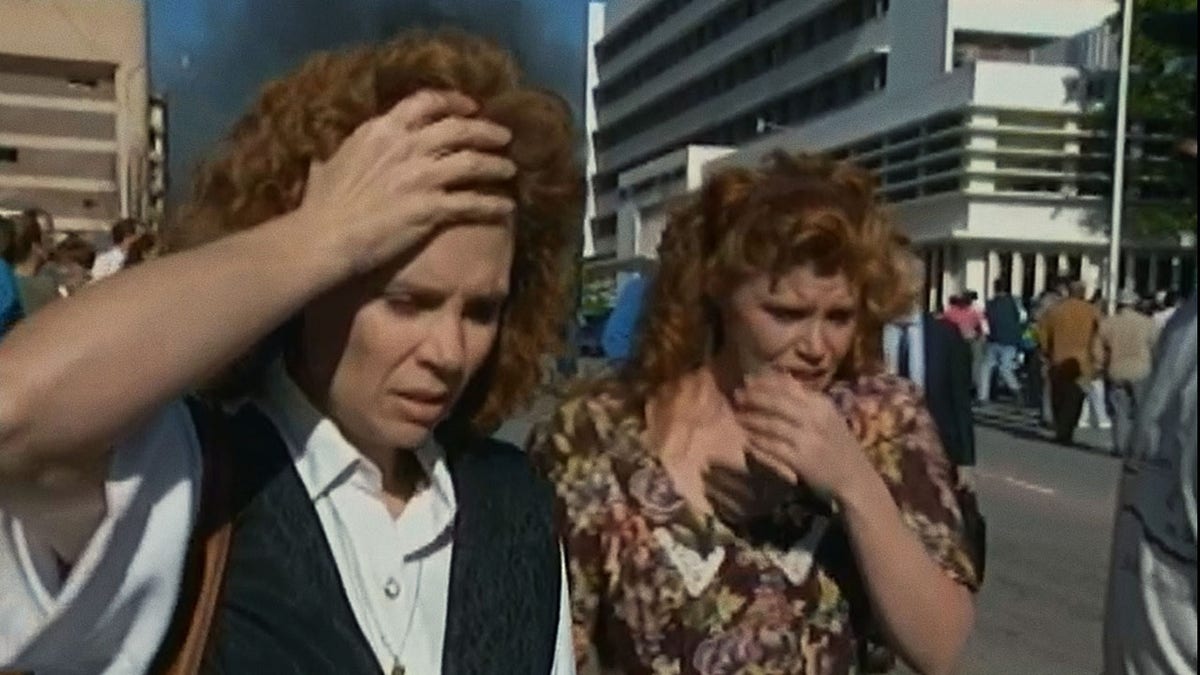
That is where the record leaves it.
AND THE STORY STILL ISN'T OVER
Terry Nichols remains in federal prison, serving life without parole.
His requests for a new trial have been denied.
That is where the record leaves him.
No pending legal motions or hearing dates for Nichols are specified in the record.
Michael Fortier was released from prison in 2006 after serving his sentence.
He had pleaded guilty and testified for the prosecution.
The Oklahoma City National Memorial now stands on the site of the former federal building.
The memorial and museum continue to draw visitors.
The case remains a defining event in American domestic terrorism.
That is what the record establishes.
What it does not establish is any other theory of the bombing.
The axle tied the truck to the rental.
The rental tied the truck to a man.
The man was convicted.
The victims' families remain active in memorial events.
Bud Welch, a victim's father, continues to speak publicly.
He has opposed the death penalty.
Others have spoken about their losses, too.
They have spoken about the ongoing impact.
The weight of the sentence falls on one man.
The weight of the loss falls on many.
That is where the record leaves it.
Advertisement
You may also like
The tarot card left at a D.C. sniper crime scene that said 'Call me God'
The card was on the ground at a crime scene in Montgomery County. A tarot card, face up, with a message written across it:…
The cell phone records that placed a suspect near Leakin Park — but one witness kept changing his story
January 13, 1999, was a school day. Hae Min Lee, an 18-year-old senior at Woodlawn High School in Baltimore County, Maryland, was last seen…
The parole agent who saw a sketch and stopped a car — then Polly Klaas's killer led police to her body
The parole agent saw the car first. A sketch, a tip, and a car on the road — that was the break. On November…
The cellmate tip that cracked the Clutter case after investigators ignored a footprint
The footprint was there on the night of November 15, 1959, inside the farmhouse near Holcomb, Kansas. Four members of the Clutter family were…
The cell tower records that placed Adnan Syed at Leakin Park — and the witness who changed his story
The phone call came on February 12, 1999. Baltimore County police picked up an anonymous tip that day, and the voice on the line…
The jailhouse informant's testimony that could not save Casey Anthony
She sat in the witness box and testified that Casey Anthony had made incriminating statements while in jail. Her name was Robyn Adams, a…