After 46 years in prison, what happens to the Manson Family now?
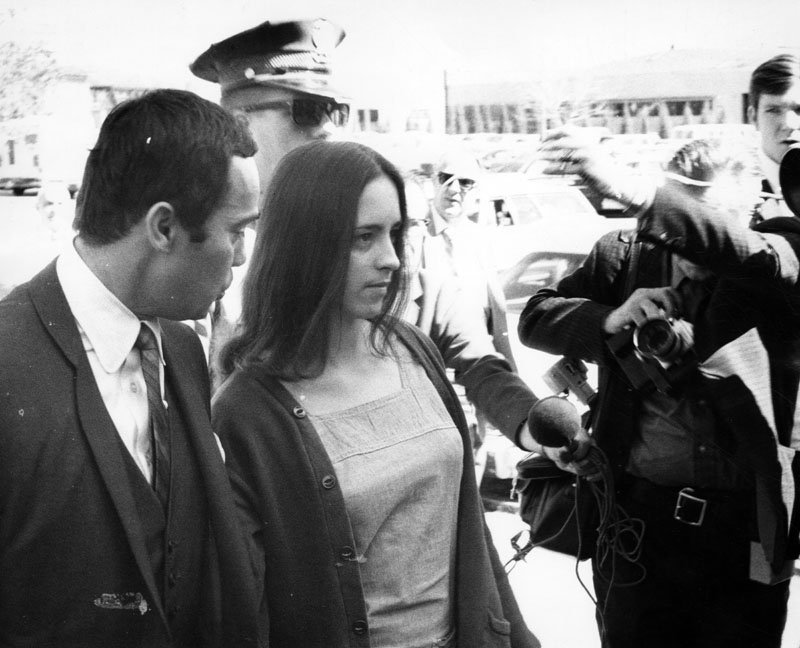
The housekeeper, Winifred Chapman, arrived at 10050 Cielo Drive the morning after the first night of killings and found the bodies.
She found actress Sharon Tate, eight and a half months pregnant, and four others.
The following night, Leno and Rosemary LaBianca were murdered in their Los Feliz home.
The killings were committed by members of a group led by Charles Manson, later known as the Manson Family.
The initial investigation was hampered by a lack of obvious motive.
Why would anyone do this?
Why these houses, these people, these nights?
Why leave the scene without a message, without a demand, without a reason?
The record does not establish the motive here, not yet.
That would require evidence, and the evidence had not yet surfaced.
The housekeeper had only the morning, the bodies, and the silence of a Benedict Canyon property that no longer made sense.
It is a scene without a story.
It is also a scene that demands one.
THE BREAK IN THE CASE
The break came in October 1969, in a jail cell, not at a crime scene.
Susan Atkins, jailed on unrelated charges, confided in her cellmate, Veronica Graham.
Graham reported the confession to authorities.
Atkins later testified before a grand jury.
The exact content of that confession is not detailed in the source; only that she confided and testified.
It is a gap in the record.
The case needed more than a cellmate's word.
The prosecution found it in Linda Kasabian, who drove the car and acted as lookout.
Kasabian was granted immunity in exchange for her testimony.
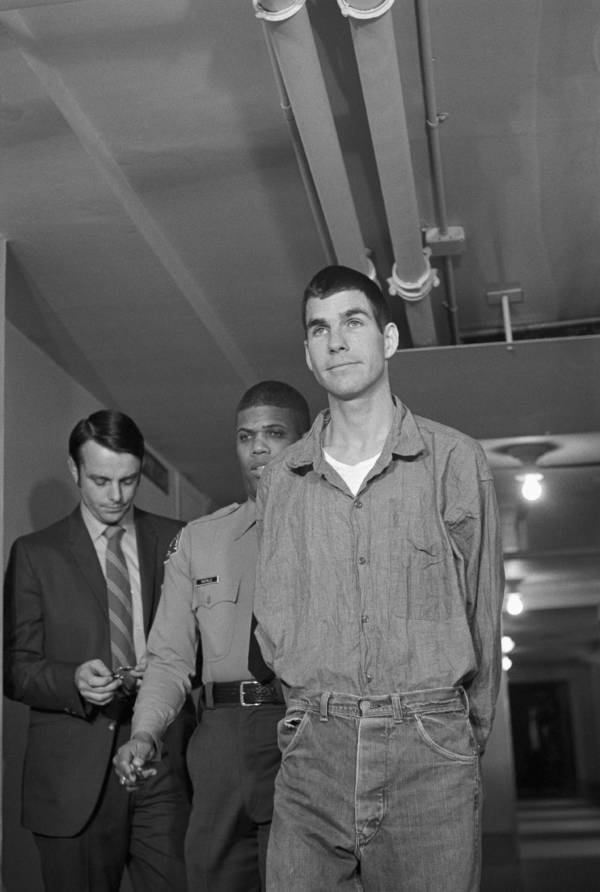
The prosecution relied on her heavily.
Physical evidence backed her account: fingerprints, a gun found during a search, and the murder weapons.
The investigation was led by Lieutenant Earl Deemer of the Los Angeles Police Department.
Deemer had the pieces.
He had the witnesses.
He had the weapons.
What he did not have, at first, was a motive that made sense.
The murders seemed random.
The victims seemed unconnected.
The break in the case was not a single moment.
It was a confession, a testimony, and a trail of objects.
It is a relief, the way a door finally opens.
It is also fragile.
A cellmate's report.
A co-defendant's immunity.
A story that depends on the people who chose to tell it.
Kasabian chose to talk.
Atkins chose to talk, then testified.
The record holds what they said.
It does not hold everything.
THE TRIAL AND THE VERDICT
The trial began in June 1970.
Charles Manson, Susan Atkins, Patricia Krenwinkel, and Leslie Van Houten were charged with first-degree murder and conspiracy to commit murder.
:max_bytes(150000):strip_icc()/Susan-Atkins-030525-eaa8484463b84c80803b4a1e3bcc9cfe.jpg)
Linda Kasabian, granted immunity, testified for the prosecution.
The defendants were convicted on January 25, 1971, and sentenced to death.
Tex Watson was tried separately, convicted, and also sentenced to death.
The verdicts landed. Then the sentences did not.
In 1972, the California Supreme Court struck down the death penalty, and the death sentences were automatically commuted to life in prison.
All appeals were denied.
The trial produced a verdict. It did not produce an ending.
The prosecution argued that Manson orchestrated the murders to incite a race war he called "Helter Skelter."
That motive was disputed by the defense.
The specific arguments of the defense are not detailed in the record, only that the motive was disputed.
What remains is the sentence: life in prison, with parole denied, again and again.
The courtroom closed. The legal saga did not.
Convicted does not mean finished. It means the state holds the rest.
The death sentences were commuted. The appeals were denied. The years stretched.
That is the verdict. It is also the beginning of what followed.
THE TWO STORIES OF THE MOTIVE
The prosecution told one story: Manson wanted to start a race war, and he called it "Helter Skelter."
That story came from the prosecutor, Vincent Bugliosi, who wrote the book *Helter Skelter* about the case.
The defense disputed it.
They argued the motive was something else, or that there was no clear motive at all.
The trial produced a verdict, but it did not produce certainty.
The actual motive is not established beyond the prosecution's claim.
That is the record.
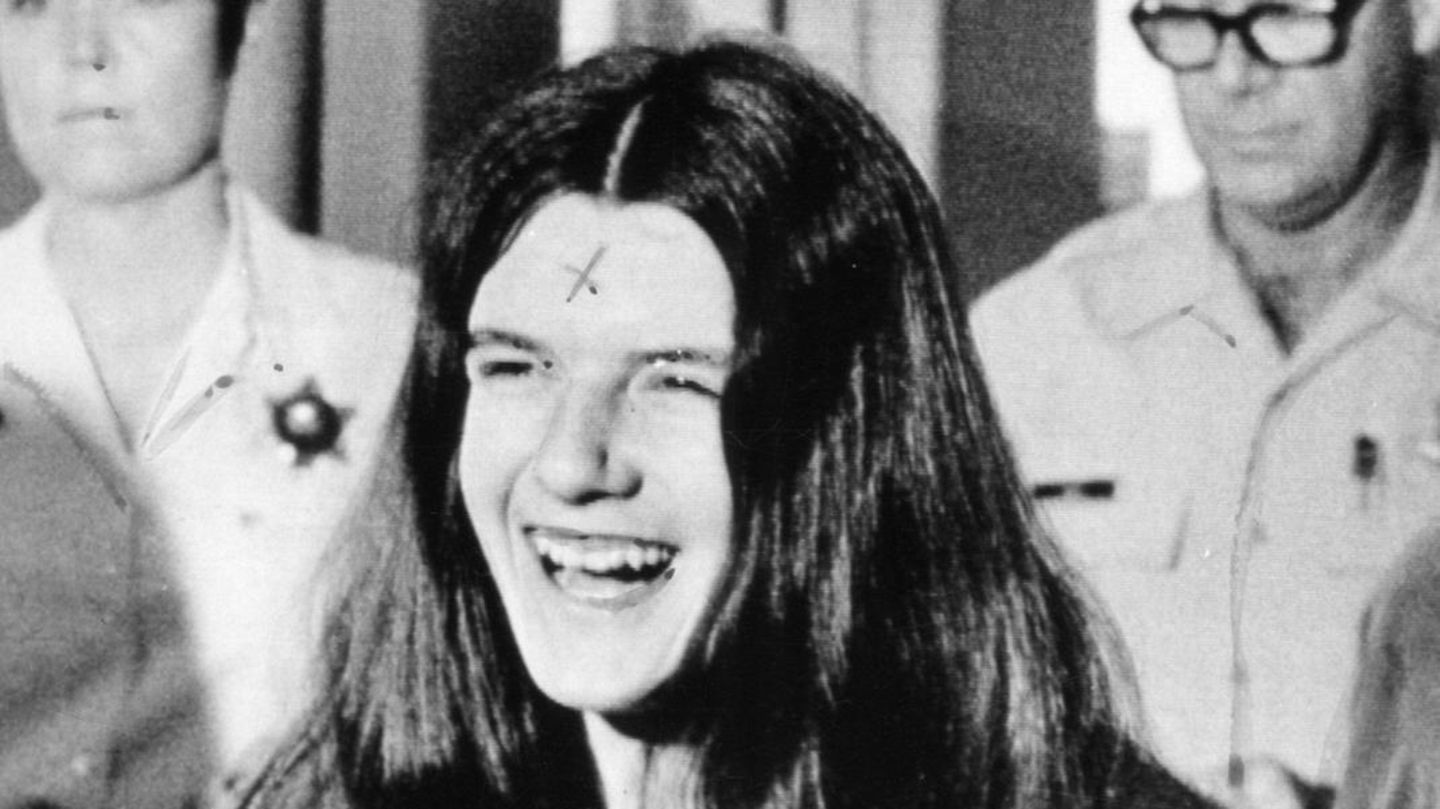
It is also the limit of it.
The Manson Family as a functioning group dissolved after the arrests.
The people remained.
Some of the convicted have expressed remorse in parole hearings.
Others have maintained their innocence or minimized their roles.
Remorse is a statement.
Innocence is a statement.
Neither changes the convictions.
Manson's name and image have persisted in popular culture.
He is a symbol now, a shorthand for a certain kind of American fear.
The symbol is not the man.
The man died of natural causes on November 19, 2017, at Corcoran State Prison, after serving 46 years.
The symbol outlived him.
What popular culture remembers is a story.
What the record shows is a trial, a conviction, and a sentence.
The two are not the same.
The theory of Helter Skelter is a theory.
The verdict is a fact.
That would require evidence.
The evidence was heard in court.
The theory was repeated in books and films.
One is documented.
The other is told.
:max_bytes(150000):strip_icc()/Leslie-Van-Houten-030525-fd2591b965064cc0b888c70d473a57c6.jpg)
AND THE STORY STILL ISN'T OVER
Charles Manson died of natural causes on November 19, 2017, at Corcoran State Prison, after serving 46 years.
Tex Watson remains incarcerated at Mule Creek State Prison.
He has been denied parole numerous times.
He has become a born-again Christian, authoring books from prison.
Patricia Krenwinkel remains incarcerated at California Institution for Women.
She has been denied parole multiple times.
Leslie Van Houten was granted parole in 2016, 2017, and 2019.
Each grant was blocked by California governors.
She was released on parole in July 2023 after a court ruled her continued detention unlawful.
Susan Atkins died in prison on September 24, 2009, of brain cancer.
Linda Kasabian, who testified for the prosecution, died in 2020 in Washington state.
The Manson Family as a functioning group dissolved after the arrests.
Manson’s name and image have persisted in popular culture.
Some of the convicted have expressed remorse in parole hearings.
Others have maintained their innocence or minimized their roles.
The current status of any pending parole hearings or legal motions is not specified in the source.
What remains is the record: the testimony, the fingerprints, the weapons.
What remains is also the telling: the books, the films, the theories.
One is documented.
The other is told.
Time passed.
People died.
People were released.
People stayed.
The line between the two stories does not blur easily.
Advertisement
You may also like
The tarot card left at a D.C. sniper crime scene that said 'Call me God'
The card was on the ground at a crime scene in Montgomery County. A tarot card, face up, with a message written across it:…
The cell phone records that placed a suspect near Leakin Park — but one witness kept changing his story
January 13, 1999, was a school day. Hae Min Lee, an 18-year-old senior at Woodlawn High School in Baltimore County, Maryland, was last seen…
The parole agent who saw a sketch and stopped a car — then Polly Klaas's killer led police to her body
The parole agent saw the car first. A sketch, a tip, and a car on the road — that was the break. On November…
The cellmate tip that cracked the Clutter case after investigators ignored a footprint
The footprint was there on the night of November 15, 1959, inside the farmhouse near Holcomb, Kansas. Four members of the Clutter family were…
The cell tower records that placed Adnan Syed at Leakin Park — and the witness who changed his story
The phone call came on February 12, 1999. Baltimore County police picked up an anonymous tip that day, and the voice on the line…
The jailhouse informant's testimony that could not save Casey Anthony
She sat in the witness box and testified that Casey Anthony had made incriminating statements while in jail. Her name was Robyn Adams, a…