The confession Amityville killer recanted, then the haunting story that followed
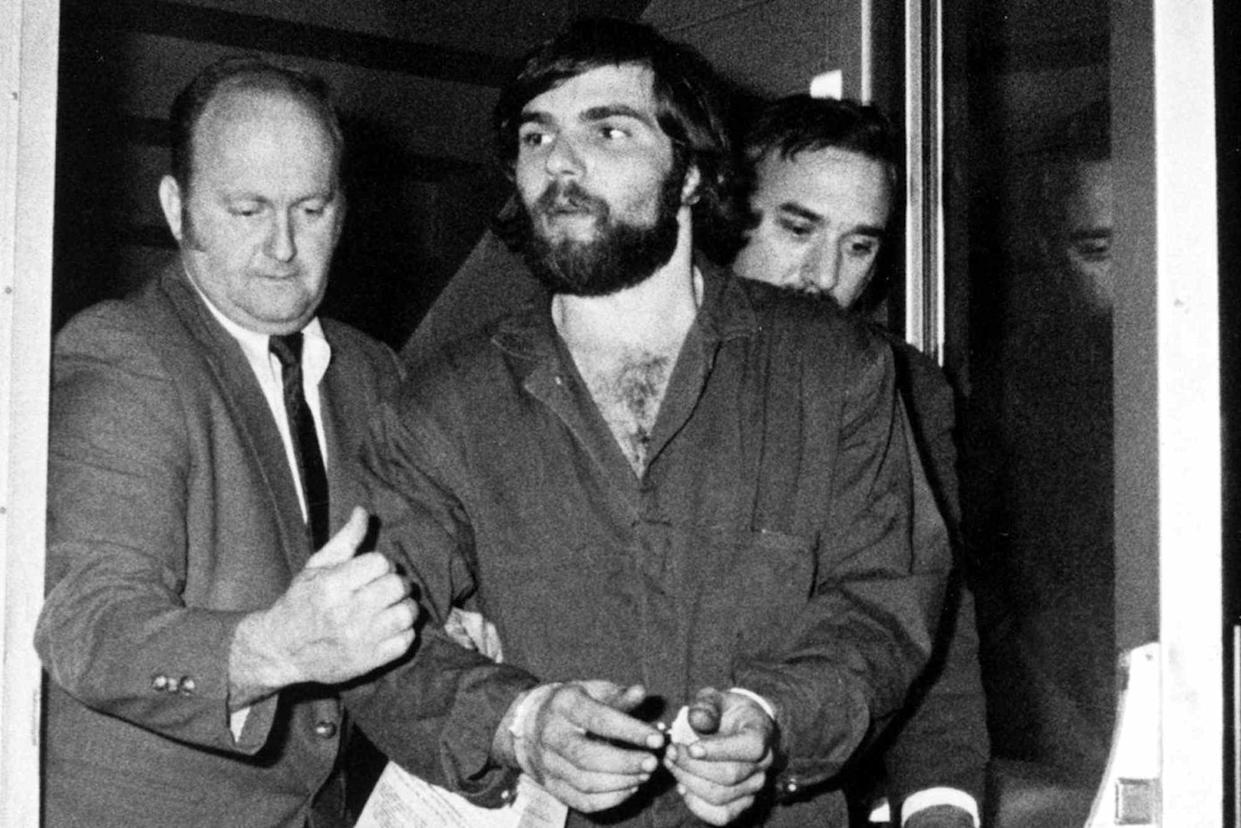
Six bodies, each in a bed, in a house on Ocean Avenue.
The morning was November 13, 1974, in Amityville, New York.
The dead were a father, a mother, two brothers, and two sisters.
The eldest son, Ronald DeFeo Jr., said outside intruders did it.
He said that first.
Then he confessed.
The house at 112 Ocean Avenue would not stay a crime scene for long.
It became the set for a book, then a film, then a franchise.
The story sold was one of paranormal activity, of a house that drove a man to kill.
Those claims were widely disputed.
The defense attorney, William Weber, later said the haunting was fabricated.
A hoax, he said, one he helped create.
So the question sits there, unanswered in the record: a real massacre, six shots fired in beds, and the story that stuck was the ghost.
The rifle was a .35-caliber, the confession said.
The exact make and model is not established; reports vary.
That is the gap where the legend grew.
The address itself was later changed to 108 Ocean Avenue, to keep the curious away.
A house can be renumbered.
The narrative was not so easily moved.
THE CONFESSION AND THE TRIAL
Police were called to the DeFeo home on the morning of November 13, 1974, after a neighbor reported a disturbance.
Officers found six victims, each shot in their beds.
Ronald DeFeo Jr. first claimed outside intruders had done it.
Under questioning, he changed his story.
He confessed to the lead detective, saying he used a .35-caliber rifle, was under the influence of drugs, and heard voices.
The exact details of that drug use and those voices are not independently verified in the record.
The trial began in October 1975.
DeFeo pleaded not guilty by reason of insanity.
The prosecution, led by the Suffolk County district attorney, argued the murders were premeditated.
DeFeo had planned the attack, the prosecutor said, and had told others he intended to kill his family.
The defense argued DeFeo was insane at the time of the killings.
Two stories, one house.
The jury heard both.
The jury rejected the insanity defense.
They found DeFeo guilty of six counts of first-degree murder.
Judge Thomas M. Stark sentenced him to six consecutive terms of 25 years to life.
Six terms, one after another.
The weight of the evidence was enough.
The voices were not.
TWO STORIES, ONE HOUSE

The prosecution called it premeditation.
DeFeo had planned the attack, prosecutors argued, and he had told others he intended to kill his family.
The defense, led by attorney William Weber, argued the opposite.
DeFeo suffered from a severe mental illness, Weber said, and was not responsible for his actions.
The defense cited DeFeo’s claims of drug use and hearing voices.
The jury heard both stories.
They sided with the prosecution.
The insanity defense was rejected, and DeFeo was convicted on six counts of first-degree murder.
That was the legal reality.
The other story came later.
The haunting narrative, popularized by a book and film franchise, turned the house on Ocean Avenue into a supernatural landmark.
The paranormal claims were widely disputed.
Weber himself later acknowledged the ghost story was a hoax he helped create.
Not because the record proved it false in court.
But because the man who defended DeFeo said so.
What remains unclear is the exact nature and extent of DeFeo’s mental illness at the time of the murders.
That is not established beyond the trial testimony.
The testimony was enough for a conviction.
It was not enough to explain the voices.
The voices were not enough for the jury.

The house got the haunting.
The trial got the facts.
The two stories never quite merged.
THE HOAX AND THE RECORD
The house got the haunting.
The trial got the facts.
The two stories never quite merged.
The haunting narrative is a viral claim, not a fact established by the record.
It is a story told in a book and a film franchise.
It is also a story the defense attorney later called a hoax he helped create.
That admission came from William Weber, the man who represented DeFeo at trial.
He said the ghost story was fabricated.
He said he helped make it.
What the record does not establish is the exact mechanics of that fabrication.
Who else was involved, how the details were invented, when the decision was made — none of that is in the record.
Only Weber's admission is.
The documented record is narrower and plainer.
Six people were shot and killed in their beds on November 13, 1974.
DeFeo confessed to the murders.
He was convicted on six counts of first-degree murder.

He was sentenced to six consecutive terms of 25 years to life.
That is the record.
The book and the film popularized the haunting claim.
Those claims were widely disputed.
They remain disputed.
The house at 112 Ocean Avenue was sold and changed hands several times.
It was later renovated.
Its address was changed to 108 Ocean Avenue.
The purpose was to deter curiosity seekers.
It is a house now.
It is also a story now.
One is documented.
The other was admitted to be made up.
That would require evidence.
AND THE STORY STILL ISN'T OVER
He was denied parole multiple times.
His last parole hearing was in 2019.
He died of natural causes at the Sullivan Correctional Facility in Fallsburg, New York, on March 12, 2021.
He was 69.
The house at 112 Ocean Avenue was sold.

It has changed hands several times.
Its address was changed to 108 Ocean Avenue to deter curiosity seekers.
The surviving relatives have largely stayed out of the public eye.
Their current whereabouts and activities are not in the record.
The case remains one of the most notorious in American criminal history.
Not because of the six convictions.
But because of the haunting narrative that followed.
That narrative was later acknowledged as a hoax by the defense attorney who helped create it.
The record holds the murders, the trial, the sentence, the denials, the death.
It holds a house that was renamed.
It holds a story that was admitted to be made up.
No pending legal actions are in the record.
Nothing is left to resolve in court.
The story continues in public memory.
It continues in the house's legacy.
It continues because the line between what happened and what was invented never fully closed.
DeFeo is gone.
The house still stands.
The hoax was admitted.
The unease remains.
Advertisement
You may also like
A wedding ring left on the dresser — and the confession that followed it
The ring sat on the bedroom dresser. Shanann Watts had returned home that morning, August 13, 2018, from a business trip to Arizona. Her…
The car trunk odor that haunted Casey Anthony's trial — and the verdict that followed
The odor came from the trunk of an abandoned car. In July 2008, investigators impounded the vehicle that Casey Anthony had left behind in…
The juror dismissed in 2004 — and the penalty order that vanished 16 years later
The juror raised a hand during the penalty phase in 2004. The juror said something about the death penalty, expressed doubt about it. The…
The truck axle that cracked the Oklahoma City bombing case open
The rear axle of a Ryder truck lay in the rubble, still attached to its differential. Within hours of the April 19, 1995 explosion,…
After 46 years in prison, what happens to the Manson Family now?
The housekeeper, Winifred Chapman, arrived at 10050 Cielo Drive the morning after the first night of killings and found the bodies. She found actress…
The fishing boat Scott Peterson bought days before Laci vanished — and the lie that unraveled
He bought the boat in the days before Laci vanished. He did not mention it when he called police on December 24, 2002, to…