The letter that sent the Trailside Killer to a dead end
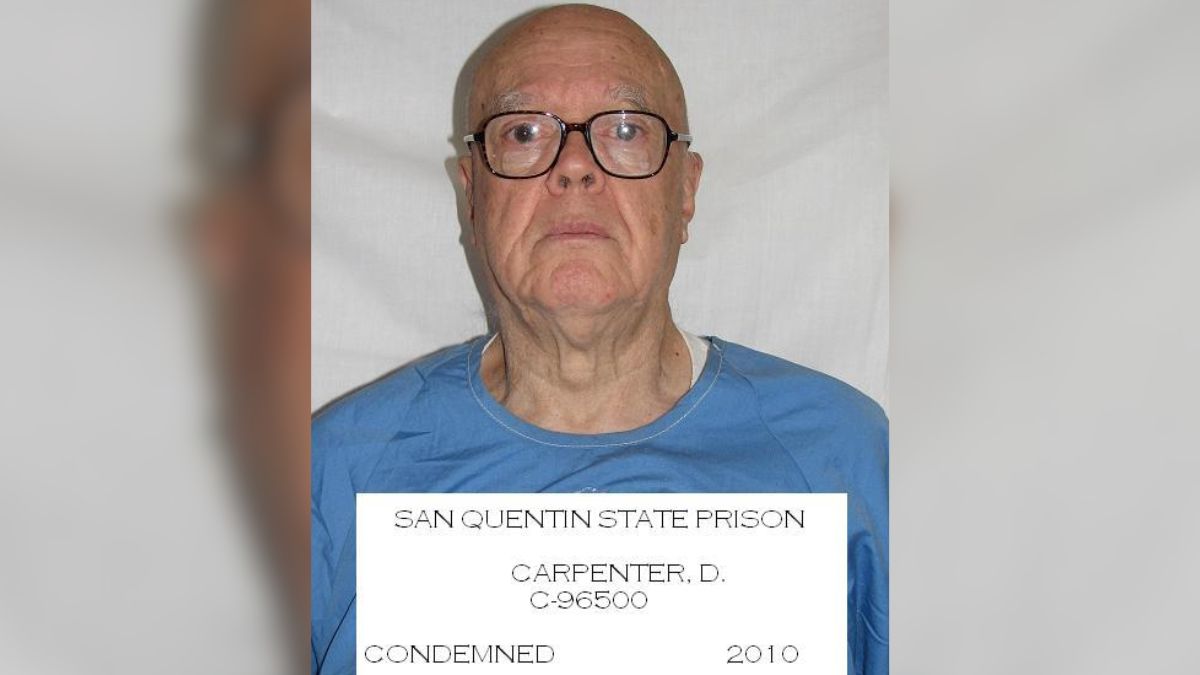
A letter arrived for the authorities during the Trailside Killer investigation.
It was threatening.
It was taunting.
Handwriting analysis linked it to the killer, the source says.
That is all the record establishes.
Detectives could not trace it to a sender.
It became a dead end.
Online, the letter is often cited as a taunt from the killer himself.
The record does not confirm who wrote it.
The letter's author is not established.
Only the handwriting analysis connects it, and that is a link, not a confirmation.
The first known victim was killed in October 1979.
The letter's exact date is not in the record.
So the sequence is unclear.
Did the taunt come before the first body, or after?
Was it a boast from the man who walked the trails, or a cruel hoax from someone else entirely?
That would require evidence.
The record offers none.
A threatening letter, a dead end, and a case that already had too many questions.
The trails kept their own silence.
THE TRAILS
The first known victim was killed in October 1979.
She was a hiker on a trail in the Santa Cruz Mountains.
In November 1980, two young women were murdered at Point Reyes National Seashore.
In March 1981, two more women were killed in the Santa Cruz Mountains.
The final victim was murdered in May 1981.
All of them were hikers or joggers.
Most of them were women.
They were attacked on remote trails, where the woods swallowed sound and the ground gave no quick answers.
The case became known as the Trailside Killer case.
The perpetrator was later identified as David Joseph Carpenter.
But in those early months, the trails offered no name.
The investigation was hampered by jurisdictional issues.
The murders spanned multiple counties.
Each sheriff’s department held its own piece of the map.
Each piece was a separate case, a separate file, a separate silence.
The pattern was visible only in hindsight.
Not because the killings were random.
But because the trails made them look that way.
Exact dates of each murder are not specified in the source.
What is specified is the rhythm: October, November, March, May.
A season of violence, then a pause, then violence again.
The victims’ families spoke publicly during the investigation.
They expressed grief.
They sought justice.
The trails kept their own silence then, too.
THE BREAK
The survivor did not flinch.
She had been attacked, and she had lived, and in the courtroom she pointed at David Carpenter.
That identification broke the case open.
Carpenter was arrested in May 1981 after a traffic stop.
His van was searched.
The record does not detail exactly what investigators found inside the van.
But the search yielded evidence linking him to the crimes.
Investigators matched ballistics and fiber analysis across the murder scenes.
They used handwriting analysis to connect Carpenter to threatening letters sent to authorities.
Those letters had taunted the investigation.
The record does not establish that the letters came from the killer.
Carpenter was a former merchant seaman with a prior conviction for attempted murder.
He was charged with multiple murders.
His wife testified during the proceedings.
Her testimony carried its own weight.
The families of the victims watched from the gallery.
They had expressed grief.
They had sought justice.
Now they saw a name attached to the trails.
A survivor's memory.
A van's contents.
A handwriting sample.
The relief was real.
The tension was real, too, because the evidence had to hold.
Ballistics can be argued.
Fibers can be questioned.
A survivor's certainty can be challenged.
But the arrest was made, and the charge was laid.
The trails had given up one of their secrets.
The rest would come out in court.
TWO STORIES
The prosecution told a story of a serial killer who stalked remote trails.
Carpenter, they said, murdered hikers and joggers, mostly women, and left them on the ground where they fell.
The jury in Marin County heard that story in 1984.
They convicted him of two murders and sentenced him to death.
Four years later, in Santa Cruz County, a second jury heard it again.
They convicted him of two more murders and sentenced him to death again.
A fifth murder conviction followed.
The survivor of an attack was the hinge.
She identified Carpenter as her assailant, and that identification carried the weight of a life.
The defense told another story.
Carpenter's attorney, Douglas Horngrad, argued that the evidence was circumstantial or flawed.
What exactly he argued is not in the record.
The source does not detail the defense's case.
That is not established.
The letter, if it came from the killer, would have shown a man taunting the police who hunted him.
But it was never traced to Carpenter.
The defense could have said that.
It could have said the letter was a dead end, a loose thread, a thing that proved nothing.
The record does not say what it said.
It only shows the convictions.
It shows the survivor's certainty.
It shows the juries' verdicts.
And it shows a letter that went nowhere.
Not because it was innocent.
But because the record does not connect it to the man on death row.
The two stories sit side by side.
One ends in a death sentence.
The other ends in a question.
That would require evidence.
AND THE STORY STILL ISN'T OVER
David Carpenter remains on death row at San Quentin State Prison.
No execution date has been set.
Executions in California have been halted since 2006, blocked by legal challenges to the lethal injection protocol.
His appeals have run for decades, and the courts have upheld his convictions each time.
The next concrete step — a hearing date, a ruling, a motion — is not specified in the record.
That would require evidence.
The victims' families have spoken over the years.
They have described the loss in interviews and in courtrooms, naming what was taken from them.
They have described the long wait for closure, the way the calendar keeps turning without an end.
They have watched documentaries and read books about the case, seeing their loved ones reduced to a chapter, a segment, a name on a list.
The families have often expressed frustration with the prolonged legal process.
Not because the convictions are in doubt.
But because the waiting itself is a second sentence.
They asked for justice; they received a process.
They asked for answers; they received appeals.
They asked for an ending; they received a pause that has lasted nearly two decades.
The man convicted in their cases remains housed, fed, and represented while the years accumulate.
The families remain outside the walls, marking anniversaries instead of milestones.
The record does not say when that changes.
It says only that he is there, and that the state has not carried out the sentence.
That is the weight of it.
A death sentence pronounced, then suspended indefinitely.
A story that reached its verdict but not its conclusion.
She was on the ground below — that was where the trail ended for one of them.
The rest is a waiting room.
Advertisement
You may also like
The fishing boat Scott Peterson bought days before Laci vanished — and the lie that unraveled
He bought the boat in the days before Laci vanished. He did not mention it when he called police on December 24, 2002, to…
The note scrawled in a Watertown boat that still haunts the Tsarnaev case
He was found in a boat in a Watertown backyard. Dzhokhar Tsarnaev had been hiding there, and when the FBI closed in, he scrawled…
The 1981 mall toy aisle detail that derailed the Adam Walsh case for years
July 27, 1981, in the toy department of the Hollywood Mall in Hollywood, Florida. A six-year-old boy named Adam Walsh was separated from his…
The love letters and calling cards left beside two bodies in Lovers' Lane
The crabapple tree stood in a secluded lane called Lovers' Lane, near the New Jersey border with Pennsylvania. On the night of September 14,…
The $5,800 in D.B. Cooper ransom cash a boy found on a riverbank
The boy was eight years old, playing on a sandbar along the Columbia River in Washington in 1980. He pulled three bundles of cash…
The handwritten confession scrawled on a boat's interior that sealed Dzhokhar Tsarnaev's fate
The boat sat in a Watertown backyard, tarp pulled over it, ordinary as any lawn ornament. On April 19, 2013, Dzhokhar Tsarnaev was found…