The note scrawled in a Watertown boat that still haunts the Tsarnaev case
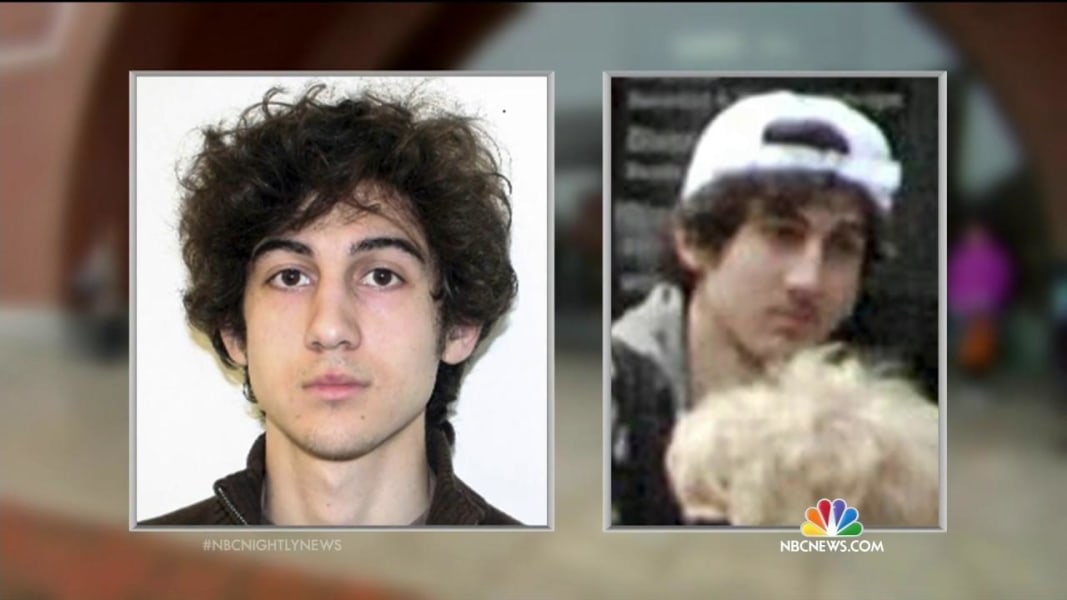
He was found in a boat in a Watertown backyard.
Dzhokhar Tsarnaev had been hiding there, and when the FBI closed in, he scrawled something on the boat's interior.
The note was a real piece of evidence, an exhibit from the investigation.
It was not a viral theory, not a rumor circulated online.
It was a physical object, recovered from the boat where he was captured.
Prosecutors cited the note as evidence of his intent.
They argued it showed why he did what he did.
But the full text of the note has never been publicly released.
Its exact wording is not in the record.
What it said, word for word, remains a matter of legal interpretation.
Defense attorneys and prosecutors read it differently in court filings.
The note's meaning is still debated in legal circles today.
Some online theories claim to know what it says.
Those theories are not established by the record.
The record shows only that the note existed and that prosecutors pointed to it.
It is a documented piece of evidence.
It is also a mystery.
What did the note say?
What did it prove?
Why does it still matter?
That would require evidence, and the evidence is sealed.

The full content of the note is not in the record.
That is where the case stands.
THE BOMBS AND THE MANHUNT
The bombs were in backpacks, and they were pressure cookers.
Two of them exploded near the finish line on Boylston Street on April 15, 2013.
They detonated about 12 seconds apart.
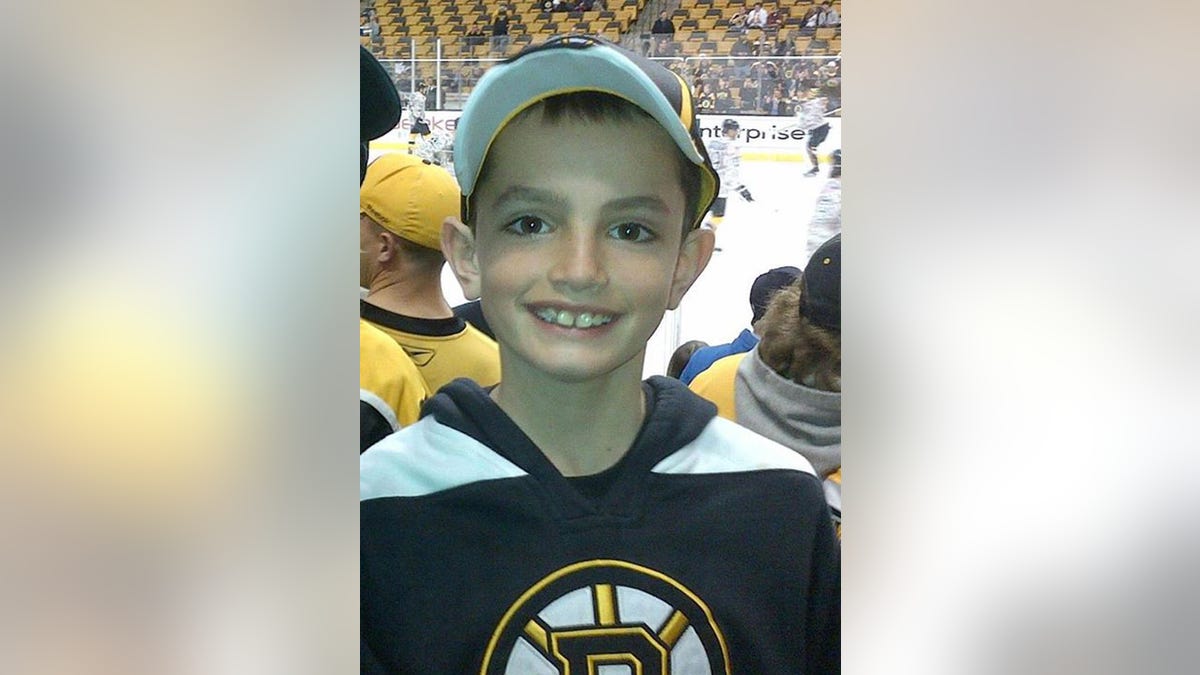
Three people were killed: Krystle Campbell, Lingzi Lu, and Martin Richard, an 8-year-old boy.
More than 260 others were injured.
The scene was treated as a terrorist attack immediately.
Surveillance footage from department stores and other cameras on Boylston Street helped identify the two suspects.
The FBI released images of the two men on April 18, 2013.
The public helped identify them.
That same night, the brothers killed MIT police officer Sean Collier.
The exact sequence of events on the night of April 18–19 is not fully detailed in the source.
The manhunt ended with Tamerlan's death during a confrontation with police.
Dzhokhar was captured later that day, hiding in a boat in a Watertown backyard.
The evidence gathered was heavy.
There were pressure-cooker bomb fragments.
There was a carjacked vehicle.
There were Dzhokhar's own writings, including the note scrawled inside the boat where he was found.
Prosecutors cited that note as evidence of his intent.

The note is a documented piece of evidence.
It is not a rumor, and it is not a theory.
Its full content is not in the public record.
That is where the evidence stands.
TRIAL AND TWO READINGS
The prosecution, led by Carmen Ortiz, argued that the boat note showed intent.
The defense, led by Judy Clarke, did not dispute the facts of the bombing.
Clarke challenged the sentence on procedural grounds.
Dzhokhar Tsarnaev was charged with 30 federal counts, including conspiracy and use of a weapon of mass destruction.
Seventeen of those counts related to the death of Sean Collier.
He was convicted on all 30 counts in April 2015.
The penalty phase resulted in a death sentence, imposed in June 2015.
The defense appealed.
In 2020, a federal appeals court overturned the death sentence, citing errors in jury selection.
The U.S. Supreme Court reinstated the death sentence in 2022.
The two readings of the case never merged.
One reading is about what the note meant.
The other reading is about how the sentence was reached.
The specific arguments about the boat note's meaning are not detailed in the source.
That remains a matter of legal interpretation, not public record.
Ortiz and Clarke each made their case before Judge O'Toole.
The trial judge's name is not in the public record of this case.
What is documented is the verdict.
What is documented is the sentence.
What is documented is the reversal, and then the reinstatement.
What remains is the question of why.
Was the note a confession of intent, as prosecutors said?
Was the process flawed, as the defense argued?
Or was it both?
That would require evidence.
The conviction stands.
The death sentence stands.
Dzhokhar Tsarnaev remains on federal death row at the U.S. Penitentiary in Florence, Colorado.
That is where the legal record leaves him.
THE NOTE AND THE RECORD
The note scrawled inside the boat is a documented piece of evidence, not a rumor.
Prosecutors cited it as evidence of Dzhokhar Tsarnaev's intent during the trial.
Its full content is not in the public record.
The exact wording remains undisclosed.
Online theories about what the note says are not established by the record.
That is a simple fact, not a dismissal.
The note was one exhibit among many.

Bomb fragments from the pressure-cooker devices were introduced.
A carjacked vehicle was documented.
Surveillance footage from Boylston Street was presented.
Each piece supported the prosecution's case.
The note's role in the trial is documented.
Its meaning is not.
Prosecutors read it one way.
The defense argued another.
What the note literally says, word for word, has never been made public.
That would require a release of the exhibit.
No such release has occurred.
So the record holds a gap.
It holds a piece of evidence with a known existence and an unknown text.
It holds a legal interpretation with no full text to check it against.
It holds a documented artifact surrounded by undocumented claims.
What is established: the note existed.
What is established: prosecutors used it.
What is established: the trial judge admitted it.
What is not established: the note's complete contents.
What is not established: any online theory about those contents.
The line between the two is the line this case keeps drawing.
AND THE STORY STILL ISN'T OVER
He remains at the U.S. Penitentiary in Florence, Colorado.
Federal death row is where Dzhokhar Tsarnaev sits today.
His appeals have been largely exhausted, though his legal team continues to pursue further challenges.
What comes next is not known.
The outcome of those challenges is not established.
Not because the record is silent. Because the record does not reach into the future.
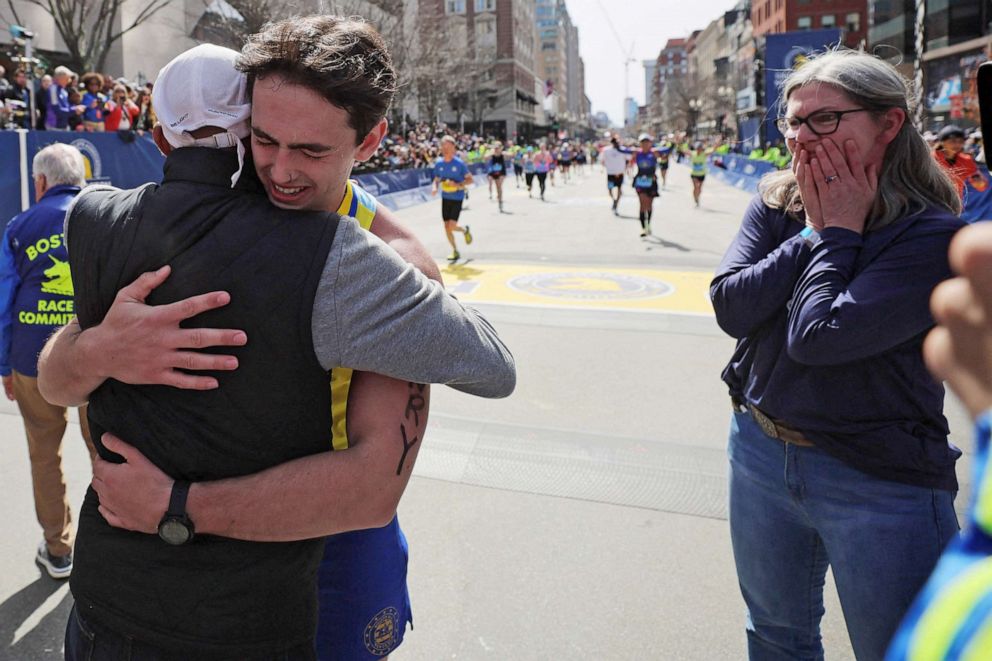
The Boston Marathon has continued each April, with enhanced security measures.
The race goes on. The finish line stays guarded.
The Richard family has turned toward something else.
Through the Martin Richard Foundation, they have become active in community and peace-building work.
It is a response. It is not a closing.
Tamerlan Tsarnaev's widow, Katherine Russell, has not been charged.
She has largely stayed out of public view.
The case is legally settled.
It is also not over.
The next concrete step is the ongoing legal challenges from Tsarnaev's team.
That is where the record stands.
The note is a documented exhibit. The sentence is a documented judgment.
What remains is the weight of what happened, carried by people who did not choose it.
The boat was removed. The city healed in its own time.
Some questions do not get answers.
Some stories do not get endings.
They get continuations.
Advertisement
You may also like
The bloodstain pattern that didn't match Sam Sheppard's story
On July 4, 1954, Dr. Sam Sheppard told police an intruder beat him unconscious and killed his wife, Marilyn, in their Bay Village, Ohio,…
The cellphone video that placed Alex Murdaugh at the kennels — what it revealed
June 7, 2021. Someone calls 911 from Moselle, the family’s hunting estate in Colleton County, South Carolina. The voice belongs to Alex Murdaugh, and…
The traffic stop that freed Winston Moseley days before Kitty Genovese's murder
Days before the murder, Winston Moseley was questioned in a routine traffic stop and released. The investigation record documents the stop. It documents the…
The 2018 interview in which Duane Davis described the Cadillac, the gun, and the handoff — and what detectives did next
In 2018, Duane “Keffe D” Davis sat for an interview. He described being in the white Cadillac that night on the Las Vegas Strip.…
The river stakeout that heard a splash and stopped Wayne Williams — but the bodies kept coming
The Jackson Parkway bridge spans the Chattahoochee River, and on May 22, 1981, police were staked out beneath it. They were waiting for a…
The Green River Task Force's own mistakes let a killer slip through for 20 years
He passed the polygraph in 1984, and the Green River Task Force cleared him. Gary Ridgway walked out of the interview and went back…