The Green River Task Force's own mistakes let a killer slip through for 20 years
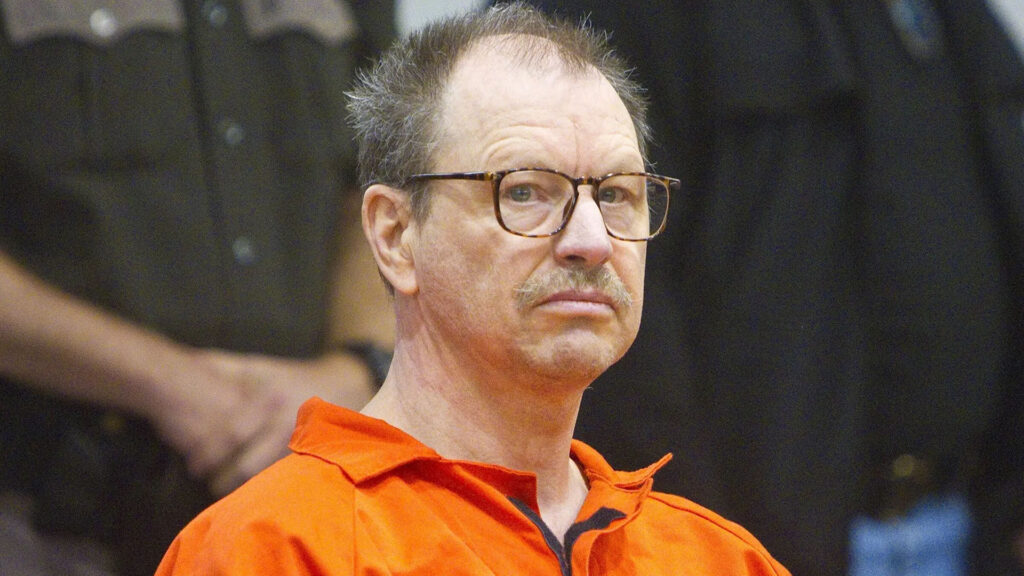
He passed the polygraph in 1984, and the Green River Task Force cleared him.
Gary Ridgway walked out of the interview and went back to his life.
The task force had been formed that same year, one of the largest in U.S. history.
At times it involved dozens of detectives and FBI agents.
They had thousands of leads and thousands of interviews to work through.
Ridgway was not initially a prime suspect.
He was just a man who talked to police, answered their questions, and passed their test.
What did the polygraph ask him?
What did the investigators see in his answers?
What made them decide he was not their man?
The exact questions and the circumstances of the test are not in the record.
The record shows only that he was questioned in 1984, that he passed, and that he was cleared.
He was questioned again in 1987, and again he was not held.
A single test carried that weight.
It let a killer walk for nearly two decades.
THE TASK FORCE'S BLIND SPOTS
The task force was one of the largest in U.S. history, at times involving dozens of detectives and FBI agents.
It was large. It was not, in its early years, effective.
Early mistakes included a failure to prioritize the cases because many victims were sex workers, according to investigation analysis.
A lack of coordination between jurisdictions compounded the problem, according to the same analysis.
What exactly broke down between those jurisdictions?
Which agencies failed to share which records?
When did the gaps cost the investigation time?
That would require evidence, and the record does not detail specific instances of jurisdictional breakdowns.
What the record does show is volume.
The task force interviewed thousands of people.
It followed thousands of leads.
It collected statements, tips, sightings, and names, and it stacked them into one of the largest case files in the state's history.
Gary Ridgway was among the thousands.
He was questioned in 1984.
He was questioned again in 1987.
He was not initially a prime suspect, according to the investigation summary.
Not because the evidence cleared him definitively.
But because the sheer scale of the investigation meant he was one name in a sea of them.
The system that was built to catch the killer could not see him.
A polygraph in 1984 was the weight that held him in place.
The task force moved on.
THE DNA TURNING POINT
The task force moved on.
Ridgway moved on too.
In 2001, DNA evidence from the victims matched Ridgway.
He had been arrested that year on an unrelated charge.
The nature of that charge is not specified in the record.

It is not established what brought him into custody.
It is established what the DNA did.
Forensic technology had advanced enough to do what twenty years of interviews could not.
The match was made possible by those advances, the investigation summary states.
Science found what the task force could not see.
In November 2001, Ridgway was arrested.
He was charged with seven counts of aggravated first-degree murder, the trial records show.
Seven counts.
The task force had cleared him in 1984 after a polygraph.
He was questioned again in 1987.
The system built to catch the killer could not see him.
The lab could.
It is not a story of a single breakthrough, investigators later acknowledged.
It is a story of persistence and the eventual application of DNA testing.
That persistence took nearly two decades.
That application took a swab.
The victims' remains had waited in the Green River area.
The evidence had waited in storage.
The technology finally caught up.
Ridgway was in custody.
The DNA said what the polygraph had not.
The match was not a suspicion.
It was not a theory.
It was a fact of biology.
The task force had followed thousands of leads.
This one was not a lead.
It was an answer.
The arrest came in November 2001.
The charges were seven counts of aggravated first-degree murder.
The relief was real.
The vindication was scientific.
THE PLEA AND THE CONFESSION
In 2003, Ridgway agreed to a plea deal.
He pleaded guilty to 48 counts of aggravated first-degree murder.
The deal bought him life without parole.
It bought him that instead of the death penalty.
The plea deal required Ridgway to cooperate fully with investigators.
That cooperation led to the recovery of remains of several victims.
The exact number of victims' remains recovered through that cooperation is not in the record.
Many victims' families wanted the death penalty.
They wanted the state to take what Ridgway had taken.
Prosecutors argued the deal was necessary.
Necessary to bring closure.
Necessary to find more victims.
Necessary to give the dead back their names.
It is justice. It is also a bargain.
Was the trade worth it?
Was a life sentence enough for 48 murders?
Was closure worth letting him breathe?
That would require evidence of what the families felt, and that evidence is not in the record.
What the record does show is the arithmetic of the deal.
Forty-eight counts. One sentence. No execution.
The trial judge sentenced Ridgway to 48 consecutive life terms.
He remains in prison.
The confession revealed a pattern of targeting vulnerable women.
It revealed a method of strangulation that left little physical evidence.
It revealed what the task force had missed for nearly two decades.
AND THE STORY STILL ISN'T OVER
Gary Ridgway is serving life without parole at the Washington State Penitentiary in Walla Walla.
He has been there since his sentencing in 2003.
The case is considered closed.
Some victims remain unidentified.
The number of unidentified victims is not specified in the record.
That is a fact the record does not establish.
The Green River Task Force was disbanded after Ridgway’s conviction.
Its work is often cited as a model for cold-case investigations.
It is a model because it kept going.
It is a model because DNA, not the task force, broke the case in 2001.
The task force interviewed thousands of people and followed thousands of leads.
It cleared Ridgway after a 1984 polygraph.
It questioned him again in 1987.
The polygraph was wrong.
The DNA was right.
Ridgway confessed to 48 killings as part of a plea deal.
The plea deal required full cooperation.
It led to the recovery of remains.
It led to life without parole instead of the death penalty.
The confession revealed a pattern of targeting vulnerable women.
It revealed a method of strangulation that left little physical evidence.
It revealed what the task force had missed for nearly two decades.
What remains is unquantified.
What remains is unnamed.
What remains is the gap between the closed case and the open count.
A killer is jailed.
A story is not fully resolved.
That would require a number the record does not give.
Advertisement
You may also like
The tarot card left at a D.C. sniper crime scene that said 'Call me God'
The card was on the ground at a crime scene in Montgomery County. A tarot card, face up, with a message written across it:…
The cell phone records that placed a suspect near Leakin Park — but one witness kept changing his story
January 13, 1999, was a school day. Hae Min Lee, an 18-year-old senior at Woodlawn High School in Baltimore County, Maryland, was last seen…
The parole agent who saw a sketch and stopped a car — then Polly Klaas's killer led police to her body
The parole agent saw the car first. A sketch, a tip, and a car on the road — that was the break. On November…
The cellmate tip that cracked the Clutter case after investigators ignored a footprint
The footprint was there on the night of November 15, 1959, inside the farmhouse near Holcomb, Kansas. Four members of the Clutter family were…
The cell tower records that placed Adnan Syed at Leakin Park — and the witness who changed his story
The phone call came on February 12, 1999. Baltimore County police picked up an anonymous tip that day, and the voice on the line…
The jailhouse informant's testimony that could not save Casey Anthony
She sat in the witness box and testified that Casey Anthony had made incriminating statements while in jail. Her name was Robyn Adams, a…