The traffic stop that freed Winston Moseley days before Kitty Genovese's murder
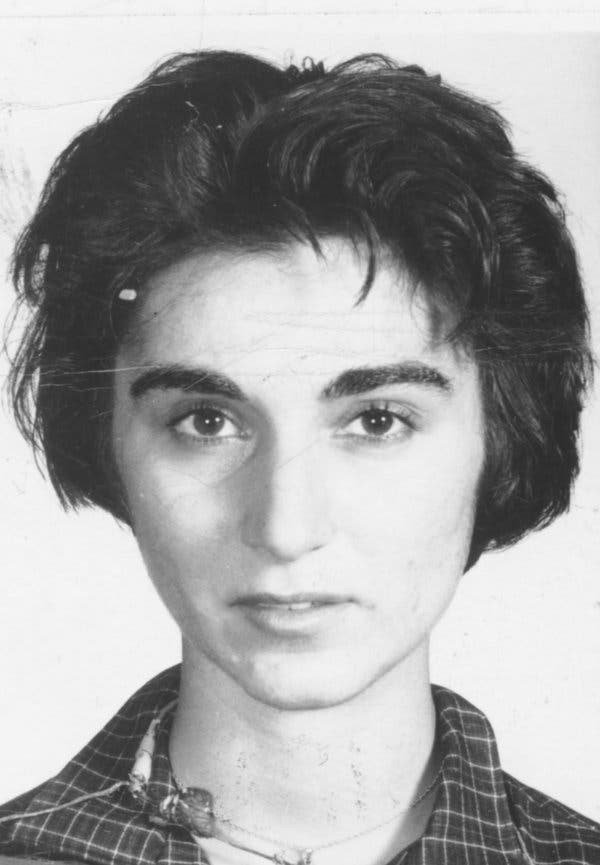
Days before the murder, Winston Moseley was questioned in a routine traffic stop and released.
The investigation record documents the stop.
It documents the release.
What it does not document is what was said.
What was checked.
What was almost seen.
The record shows a man pulled over, a man let go, a man who would be arrested six days after Kitty Genovese's murder while driving a stolen television set.
That arrest record is clear.
The traffic stop is a documented fact, not a theory.
But what exactly was discussed or checked during that stop is not in the record.
That is not established.
It cannot be established.
The killer was in police hands.
He was let go.
What if the officer had looked in the trunk.
What if he had run the plates.
What if he had asked one more question.
That would require evidence.
The record does not provide it.
It provides only the stop, the release, and the six days that followed.
Six days.
A stolen television.
A confession.
A case that turned on what came after, not on what was missed before.
THE MURDER AND THE FIRST MISTAKE
The first call came not from the street, but from a hallway.
In the early hours of March 13, 1964, Kitty Genovese, 28, was stabbed twice in the back near her apartment in Kew Gardens, Queens.
She cried out.
A neighbor shouted from a window, and the attacker fled.
She was wounded, making her way toward her building.
The attacker returned.
He found her in a hallway, stabbed her repeatedly, and sexually assaulted her.
A neighbor found her dying and called police.
Genovese died en route to the hospital.
The attack was over.
The investigation's first mistake had just begun.
Police did not immediately canvass the neighborhood for witnesses.
That is a documented failure in the investigation record.
Officers did not systematically interview residents until after Moseley's arrest, six days later.
When they finally did, they found that many residents had heard screams or seen parts of the attack.
They assumed it was a domestic dispute or a drunken argument.
None realized it was a murder in progress.
The exact number of witnesses who saw or heard the attack is disputed.
The "38 witnesses" claim, published in the New York Times, was later shown to be exaggerated.
Only a handful of people actually saw the attack.
That is what the record establishes.
What was missed in those first hours is what the record does not fully establish.
The horror of the attack is compounded by that failure.
She was on the ground below.
The witnesses were in the windows above.
And the police were not in the building.
THE ARREST AND THE CONFESSION
Six days after the murder, the investigation broke by chance.
Winston Moseley was arrested while driving a stolen television set.
The arrest record is plain: a traffic stop, a stolen set, a man taken in.
It was not the canvass that caught him. It was not the witnesses in the windows.
It was a stolen television.
Once in custody, Moseley confessed.
He confessed to Genovese's murder. He confessed to two other killings.
The lead detective obtained a detailed confession, including details of the crime scene only the killer would know.
Those details matched. The confession was specific. The record holds it as the turning point.
The case file also linked Moseley to the murders of two other women.
He was never tried for those. He was only tried for Genovese.
The exact circumstances of the confession are not detailed in the source.
Whether it was voluntary or coerced is not established.
What is established is the sequence: the stolen television, the confession, the match.
The investigation had not connected him earlier.
Days before the murder, he had been questioned in a routine traffic stop and released.
That stop is documented. What was said or checked during it is not.
The relief is grim. The irony is heavier.
The killer was caught by chance, not by the case.
The killer was caught with a television, not with evidence.
The killer confessed, and the record does not say how that confession came to be.
What remains is the confession itself, and the details only the killer would know.
THE TRIAL AND THE TWO STORIES
The confession was detailed, specific, and matched the crime scene in ways only the killer would know.
The prosecution built its case on that confession.
The defense argued insanity.
Moseley was charged with first-degree murder.
He pleaded not guilty by reason of insanity.
The jury heard the confession.
The jury heard the defense.
The jury rejected the insanity defense and convicted him.
He was sentenced to death.
The sentence did not stand.
In 1967, the U.S. Supreme Court overturned the death sentence on procedural grounds.
The record does not detail those specific procedural grounds.
Moseley was resentenced to life in prison.
The trial was over.
The two stories were told: a man who confessed, and a man who asked the law to weigh his sanity.
The law weighed it.
The law rejected it.
What remains is the gap between the confession and the sentence.
A confessed killer sat in a courtroom and heard his own words read back.
He heard the details only he would know.
He heard the jury say the details were not enough to spare him.
Then he heard the Supreme Court say the process was not enough to execute him.
The confession did not settle it.
The verdict did not settle it.
The appeal did not settle it.
What would have settled it — what was said during that traffic stop days before the murder, what was checked, what was missed — that would require evidence the record does not provide.
AND THE STORY STILL ISN'T OVER
He escaped in 1968.
He escaped again in 1969.
During those escapes, the prison record states, he committed additional crimes: a hostage-taking, a rape.
He was recaptured each time.
He remained in prison for the rest of his life.
He died in 2016 at age 81, according to the death record.
The story still was not over, because the story's most famous detail was wrong.
The "38 witnesses" narrative — the claim that 38 people watched and did nothing — was later corrected by journalists.
Later reporting showed that claim was largely inaccurate.
The full extent of that inaccuracy is not quantified in the source; only that it was "largely inaccurate."
What is established: only a handful of people actually saw the attack, and none realized it was a murder in progress.
What is not established: the precise number who heard something, saw something, or understood what they were witnessing.
That would require evidence the record does not provide.
The apartment building where the murder occurred was later demolished.
A property record marks its absence.
No plaque marks the hallway where she was found.
No building marks the spot where the traffic stop happened either.
The traffic stop was documented. The confession was detailed. The conviction stood.
The verdict did not settle it.
The appeal did not settle it.
The escapes did not settle it.
The correction of the record did not settle it.
What remains is a case that keeps slipping, the way the killer kept slipping.
She was on the ground below.
Advertisement
You may also like
The tarot card left at a D.C. sniper crime scene that said 'Call me God'
The card was on the ground at a crime scene in Montgomery County. A tarot card, face up, with a message written across it:…
The cell phone records that placed a suspect near Leakin Park — but one witness kept changing his story
January 13, 1999, was a school day. Hae Min Lee, an 18-year-old senior at Woodlawn High School in Baltimore County, Maryland, was last seen…
The parole agent who saw a sketch and stopped a car — then Polly Klaas's killer led police to her body
The parole agent saw the car first. A sketch, a tip, and a car on the road — that was the break. On November…
The cellmate tip that cracked the Clutter case after investigators ignored a footprint
The footprint was there on the night of November 15, 1959, inside the farmhouse near Holcomb, Kansas. Four members of the Clutter family were…
The cell tower records that placed Adnan Syed at Leakin Park — and the witness who changed his story
The phone call came on February 12, 1999. Baltimore County police picked up an anonymous tip that day, and the voice on the line…
The jailhouse informant's testimony that could not save Casey Anthony
She sat in the witness box and testified that Casey Anthony had made incriminating statements while in jail. Her name was Robyn Adams, a…