The 1993 raid on a Texas ranch that left four ATF agents dead — and the fire's origin still disputed
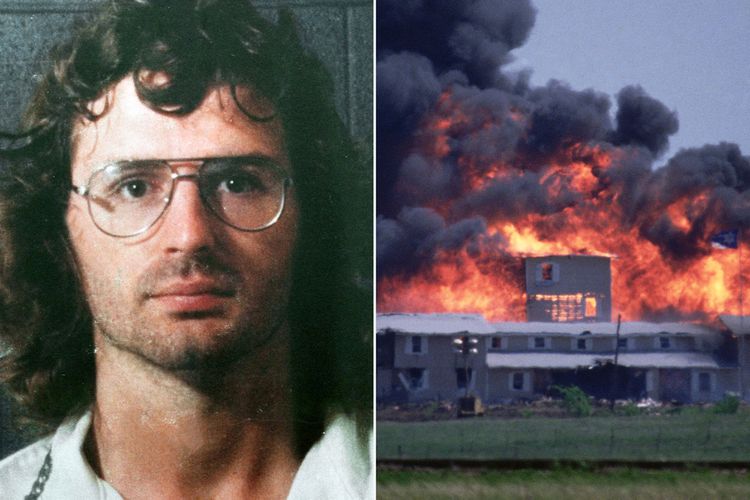
He called himself David Koresh, though he was born Vernon Wayne Howell.
He was the self-proclaimed prophet and leader of the Branch Davidians at the Mount Carmel Center ranch near Waco, Texas.
The ranch was home to a religious sect, a community that lived under his teaching.
The Bureau of Alcohol, Tobacco, and Firearms began investigating the group in 1992.
The focus was on illegal weapons purchases and modifications.
The specific details of those modifications are not in the record beyond that general focus; what exactly was altered, and how, remains unestablished.
The initial raid on February 28, 1993, was based on warrants for firearms violations.
The warrants were for search and arrest.
The government's attention had settled on the prophet's arsenal.
A prophet with a cache of guns, a compound full of followers, and a federal warrant.
What kind of man leads a flock to a ranch called Mount Carmel, arms it, and draws the ATF to his gate?
What did the agents expect to find when they came with those warrants?
And what did Koresh expect when they arrived?
THE GUN BATTLE
The warrants were for firearms violations.
ATF agents moved on the Mount Carmel Center ranch on February 28, 1993, to execute search and arrest warrants.
It was a raid led by agents on the ground.
A gun battle erupted.
Four ATF agents were killed.
Six Branch Davidians were killed.
The exact sequence of who fired first is not in the record.
What the agents expected to find at the gate is documented in the warrants; what they met was gunfire.
The raid was meant to be an arrest and a search.
It became a siege.
After the shooting stopped, a 51-day standoff followed.
The FBI assumed control of the ranch from the ATF.
Negotiators took over where the raid had failed.
The dead were counted, the wounded were treated, and the compound sat under watch.
The standoff would last 51 days.
The raid had been the opening act; the siege was the long, waiting second.
No one at the gate that morning planned for four agents to die.
No one in the compound planned for six of their own to fall.

The warrants were for firearms violations.
The outcome was a standoff that would end in fire.
THE 51-DAY STANDOFF
The FBI assumed control the same day the gunfire stopped.
Negotiators included Byron Sage, who sat at a phone table for weeks.
The content of those negotiations is not in the record.
What was said between Sage and the Branch Davidians inside Mount Carmel was never documented in full.
What is documented is the length: 51 days, from February 28 to April 19.
What is documented is the posture: the FBI Hostage Rescue Team surrounded the ranch, armored vehicles in place, military-style tactics approved.
David Koresh had a lawyer during the standoff.
Dick DeGuerin represented him, and he spoke to the press, and he tried to move the talks toward surrender.
DeGuerin's presence was public. The negotiations themselves were not.
The standoff stretched into weeks of phone calls, statements, and waiting.
It is a siege. It is also a waiting room.
The waiting ended with a decision.
Attorney General Janet Reno authorized the final assault on April 19, 1993.
The order was for tear gas, not for fire.
The order was for a tactical entry, and the record does not say what the tear gas would ignite.
Reno approved the plan. The Hostage Rescue Team executed it.
The compound stood on a flat Texas plain, and the phones were still connected at dawn.
That would require evidence. The record does not have it.
THE FIRE AND THE DISPUTE
April 19, 1993, began with tear gas.
The FBI's Hostage Rescue Team pushed the canisters into the compound, and then the fire came.
Seventy-six people died in the flames, including David Koresh and more than twenty children.
The FBI maintained that the Branch Davidians started the fire themselves.
Survivors and some independent experts argued the opposite: that the tear gas canisters, or other FBI actions, may have ignited it.
Two narratives. One official, one from the people who walked out of the smoke.
The official position was a claim. It was not a finding.
The record does not establish whether the Branch Davidians or the FBI's actions caused the fire.
That single question — who lit the match — remains open.
Federal investigators conducted a lengthy forensic examination of the scene afterward.
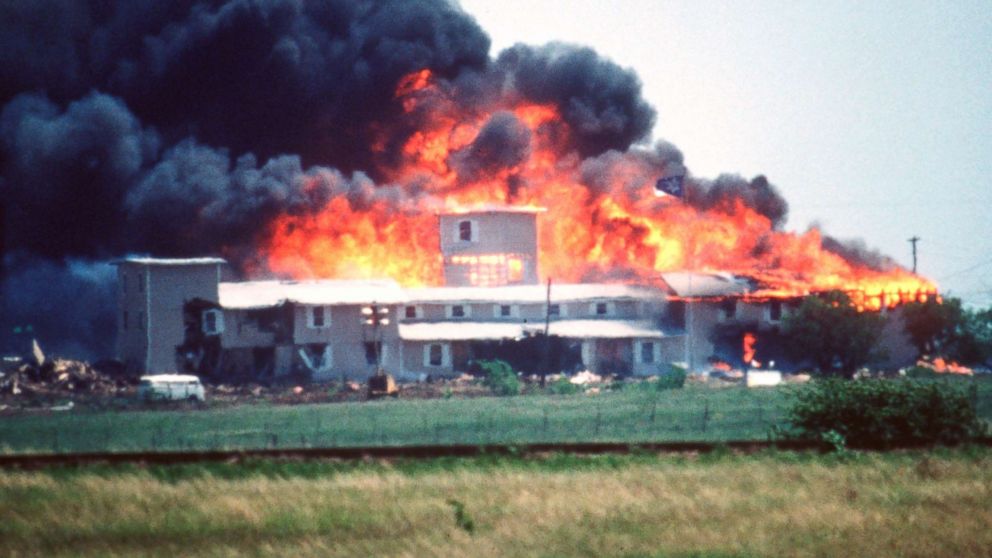
They could not fully account for the fire's origin.
The investigation itself drew heavy criticism for its handling of the siege.
Critics pointed to the military-style tactics. They pointed to the failure to explain the fire.
Why use armored vehicles to punch holes in a building full of children?
Why deploy tear gas when the siege had already lasted fifty-one days?
The answers are not in the record.
The fire's origin is disputed. The cause is unproven.
What is documented is the outcome: the compound burned, and the people inside burned with it.
The FBI's version stands as a position. The survivors' version stands as a protest.
Neither has been settled by evidence.
The record closes the case. The record does not close the question.
AND THE STORY STILL ISN'T OVER
In 1994, a federal grand jury indicted 11 surviving Branch Davidians.
The charges included conspiracy to murder federal officers, murder, and weapons charges.
The trial was held in San Antonio before a federal judge.
Several defendants were acquitted on all charges.
Clive Doyle was one of them.
Others were acquitted of the most serious murder charges but convicted of lesser offenses, such as voluntary manslaughter or weapons violations.
Sentences ranged from probation to 40 years in prison.
No defendant was convicted of murdering the ATF agents.
Not one.
The last Branch Davidian prisoner was released in 2007.
The federal government paid out over $1 million in settlements to survivors and families of the dead.
The specific details of those settlements are not in the record beyond that figure.
The site remains privately owned, and a memorial stands near the compound.
The current ownership of the site is not established in the record.
The case continues to be cited in debates over federal law enforcement tactics.
It is cited as a warning. It is cited as a justification.
The trials produced verdicts. The settlements produced payments.
The fire's origin produced neither.
The FBI's position stands as a position. The survivors' protest stands as a protest.
That would require evidence the record does not provide.
The case is closed. The question is not.
Advertisement
You may also like
The Green Beret doctor who told MPs a hippie cult killed his family — and the pajama fibers that changed everything
The call came in on February 17, 1970, from the residence of Captain Jeffrey MacDonald, a Green Beret physician at Fort Bragg, North Carolina.…
Adnan Syed's 2024 freedom is secure, but the conviction status remains in legal limbo as the Lee family fights on.
It began with a voice. In 1999, an anonymous phone call pointed police toward Adnan Syed—no name given, no evidence offered, just a voice…
The letter that sent the Trailside Killer to a dead end
A letter arrived for the authorities during the Trailside Killer investigation. It was threatening. It was taunting. Handwriting analysis linked it to the killer,…
The letter Erik allegedly wrote about abuse — and why the Menendez brothers' appeals keep failing
A letter Erik allegedly wrote sits inside a 2023 habeas corpus petition filed by the brothers’ attorneys. It describes the abuse, the petition says.…
The parole officer's alert that led authorities to Richard Allen Davis
A woman reported a suspicious man near the Klaas home on the night of October 1, 1993. Her description pointed to Richard Allen Davis,…
The tarot card left at a crime scene — and the message that still haunts detectives
The card was left on the ground at one of the crime scenes. It was a tarot card, and on it someone had written…