The Green Beret doctor who told MPs a hippie cult killed his family — and the pajama fibers that changed everything
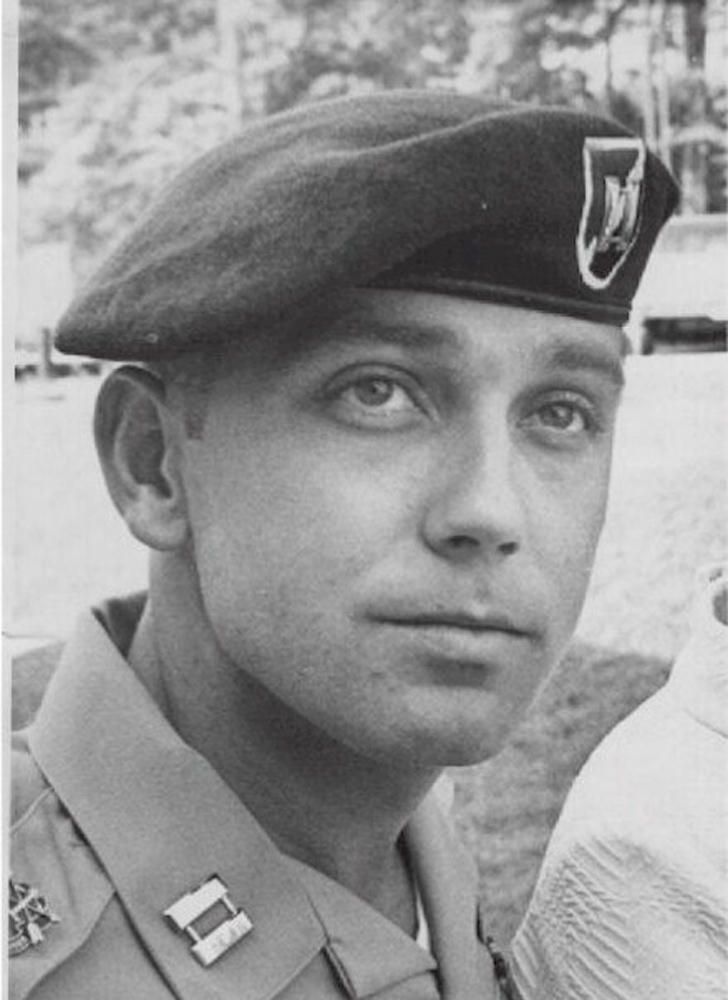
The call came in on February 17, 1970, from the residence of Captain Jeffrey MacDonald, a Green Beret physician at Fort Bragg, North Carolina.
Military police entered the home.
They found Colette MacDonald, the captain's wife, dead.
They found 5-year-old Kimberley and 2-year-old Kristen, the couple's daughters, dead.
They were bludgeoned and stabbed.
The crime scene showed signs of a struggle.
Jeffrey MacDonald was alive.
He was injured, but his wounds were superficial.
He told the MPs a group of hippies had attacked the family.
They chanted, he said, and they killed his wife and daughters.
He survived.
That is his claim.
Whether those hippie attackers existed is not established — the record contains only MacDonald's account.
The question hangs over everything that follows.
How did a Green Beret doctor, a man trained for combat, walk away with minor injuries while his family was slaughtered?
It is a question the scene itself seemed to ask.
The physical evidence did not match the story he told.
Blood spatter told one version.
Fibers told another.
There were no signs of forced entry.
MacDonald was initially treated as a victim.
Suspicion soon turned toward him.
THE GREEN BERET DOCTOR
He was an Army captain and a physician, a Green Beret.
Jeffrey MacDonald had been trained to treat wounds, to save lives, to operate under pressure.
The victims were his wife, Colette, and their two daughters, Kimberley, 5, and Kristen, 2.
MacDonald was alive. He was injured.
But his injuries were superficial compared to the brutality inflicted on his wife and daughters.
He told investigators that a group of hippies had attacked the family.
He said the attackers chanted "acid is groovy" and killed his family.
The Army's Criminal Investigation Division focused on MacDonald's account of intruders.
Inconsistencies emerged.
A trained physician and soldier who survived an attack that killed his family.
The exact motive is not established. The source suggests possible marital discord, but it does not confirm it.
What is documented is the contrast: the healer and the harm.
Not because the record answers it. But because the record leaves it open.
His story was the first version. It was not the last.
THE EVIDENCE
The pajama fibers did not match the story.
Neither did the blood spatter.
Forensic experts testified about bloodstain patterns, and the patterns did not fit four intruders moving through the rooms.
They fit one person moving with purpose.
There were no signs of forced entry.
No broken lock, no damaged door, no window forced open.
The hippies MacDonald described had left no trace of themselves.
Not a footprint. Not a fingerprint. Not a single sign that they had been there at all.
His own injuries were superficial.
The record is precise about the contrast: the wife and daughters were bludgeoned and stabbed; the doctor had scratches.
The Army charged MacDonald in 1970.
The charges were dropped in 1971.
Insufficient evidence, the Army said.
Then the case was reopened.
The victim's mother pressured the Department of Justice, and in 1975 a federal grand jury indicted him.
The prosecution argued MacDonald killed his family in a rage.
Possibly triggered by marital discord.
The exact nature of that discord is not detailed in the source.
It is not established.
What is established is the physical record: the fibers, the blood, the absence of entry.
Each piece pointed the same way.
The official story was crumbling.
The hippie claim was not surviving contact with the evidence.
THE TRIAL
Nine years after the night at Fort Bragg, Jeffrey MacDonald sat in a federal courtroom in Raleigh, North Carolina.
The trial began in 1979.
The prosecution’s case was circumstantial.
It was built on fibers.
Fibers from MacDonald’s pajamas, found at the crime scene.
Fibers that did not belong where they were found.
The prosecution also pointed to his inconsistent statements.
What he said, then what he said again.
The story shifted.
The defense argued the opposite.
Intruders did this.
Hippies, strangers, someone else.
The jury heard the evidence.
They heard the physical findings.
They heard the claims.
The verdict took the weight of the room.
The jury convicted MacDonald of three counts of first-degree murder.
Three counts.
Three lives.
The judge sentenced him to three consecutive life terms.
The conviction went to appeal.
It was upheld.
In 1982, the Supreme Court declined to overturn it.
That is the record.
The finality is there.
The weight of it is there.
But what remains is a question.
Did he do it?
The record does not establish that beyond the jury’s verdict.
MacDonald has maintained his innocence.
He has said it for decades.
The courts have not agreed.
The conviction stands.
The question does not.
AND THE STORY STILL ISN'T OVER
Jeffrey MacDonald has been incarcerated since his conviction in 1979.
He has maintained his innocence and filed numerous appeals, all unsuccessful.
He remains in federal prison.
The case has been the subject of books and documentaries, with some arguing his innocence.
No court has exonerated him.
That is the record: a legal verdict, not a settled truth.
Whether MacDonald is guilty or innocent is not established beyond that verdict.
The victim's mother died in 2013, having spent decades advocating for the conviction.
She believed the Green Beret doctor killed her daughter and granddaughters.
The courts agreed with her.
The appeals did not.
The documentaries keep asking.
The books keep arguing.
The fibers, the blood spatter, the chanting claimed and never corroborated — they all sit in the record, unresolved.
MacDonald still says a hippie cult did it.
The jury said he did.
The Supreme Court declined to overturn it.
That would require evidence the defense never produced.
It is a closed case with an open wound.
He is in prison.
She is in the ground.
The question does not go with either of them.
Advertisement
You may also like
The note scrawled in a Watertown boat that still haunts the Tsarnaev case
He was found in a boat in a Watertown backyard. Dzhokhar Tsarnaev had been hiding there, and when the FBI closed in, he scrawled…
The 1981 mall toy aisle detail that derailed the Adam Walsh case for years
July 27, 1981, in the toy department of the Hollywood Mall in Hollywood, Florida. A six-year-old boy named Adam Walsh was separated from his…
The love letters and calling cards left beside two bodies in Lovers' Lane
The crabapple tree stood in a secluded lane called Lovers' Lane, near the New Jersey border with Pennsylvania. On the night of September 14,…
The $5,800 in D.B. Cooper ransom cash a boy found on a riverbank
The boy was eight years old, playing on a sandbar along the Columbia River in Washington in 1980. He pulled three bundles of cash…
The handwritten confession scrawled on a boat's interior that sealed Dzhokhar Tsarnaev's fate
The boat sat in a Watertown backyard, tarp pulled over it, ordinary as any lawn ornament. On April 19, 2013, Dzhokhar Tsarnaev was found…
The glove that fit one hand in court but not the other — O.J. Simpson's trial
In June 1995, in a Los Angeles courtroom, O.J. Simpson struggled to pull on a pair of leather gloves. One appeared to fit. The…