The unserved 1955 arrest warrant for Carolyn Bryant, found in a courthouse basement, and the family still seeking answers
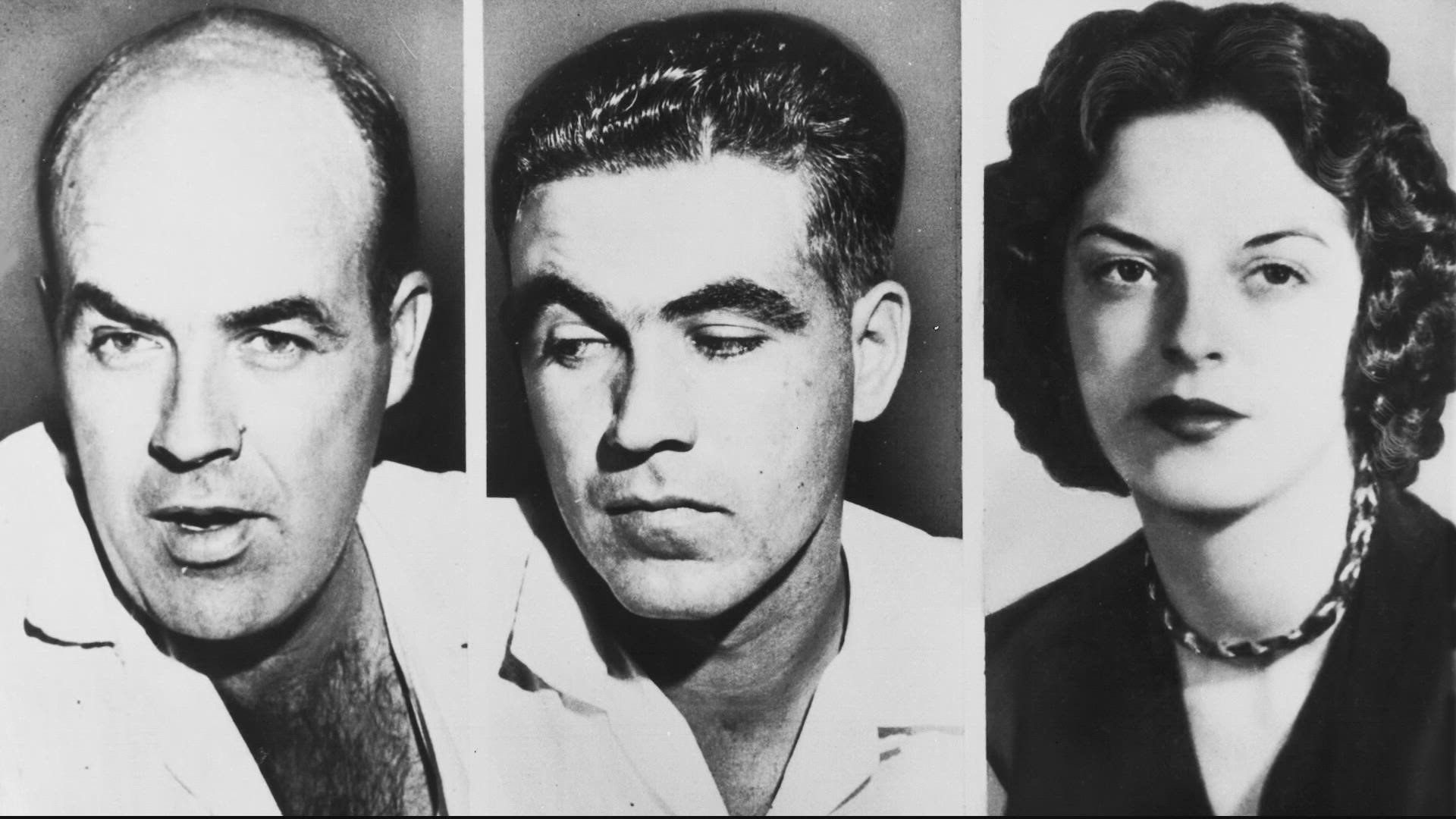
The warrant was folded, typed, and dated 1955, and it was found in 2018 in a courthouse basement.
It named Carolyn Bryant, the woman at the center of the alleged incident with Emmett Till.
It was an arrest warrant, and it had never been served.
No action was taken after the discovery.
The Department of Justice formally closed the case in 2021, and again in 2023, citing the deaths of all involved parties.
Why the warrant was never served is not in the record.
Why no action followed the 2018 discovery is also not in the record.
A paper trail with no destination.
A name on a document that sat for sixty-three years.
The case was closed, the warrant was not.
It remains a question with no answer in the file.
That would require evidence.
The family still asks what the warrant meant.
The basement held a piece of 1955 that never reached a courtroom.
It is a document.
It is also unfinished business.
THE WHISTLE AND THE ABDUCTION
The whistle, if there was one, was never proven.
Four days before the murder, Emmett Till had allegedly whistled at or spoken to Carolyn Bryant, a white woman who worked at a local grocery store.
Allegedly.
The record does not establish what happened in that store, or whether Till said or did anything at all.
He was 14 years old, a Black teenager from Chicago visiting relatives in Money, Mississippi.
In the early hours of August 28, 1955, Roy Bryant, Carolyn’s husband, and his half-brother J.W. Milam abducted Till from his great-uncle’s home.
They came in the dark.
They took him away.
On August 31, Till’s body was found in the Tallahatchie River.
It was weighted down by a cotton gin fan tied to his neck with barbed wire.
His face was mutilated beyond recognition.
He was identified by a ring bearing his father’s initials.
That ring was the proof.
That ring was the answer to what had been done to him.
No one else could say his name from his face.
The horror is not in the summary.
The horror is in the sequence: the whistle, the abduction, the river, the fan.
What did Till say?
What did he not say?
What did Carolyn Bryant tell her husband?
What did she not tell him?
The source material says "allegedly whistled at or spoken to."
That is all it says.
That is all the record holds.
THE TRIAL AND THE CONFESSION
The trial began September 19, 1955, in Sumner, Mississippi.
The courtroom was packed.
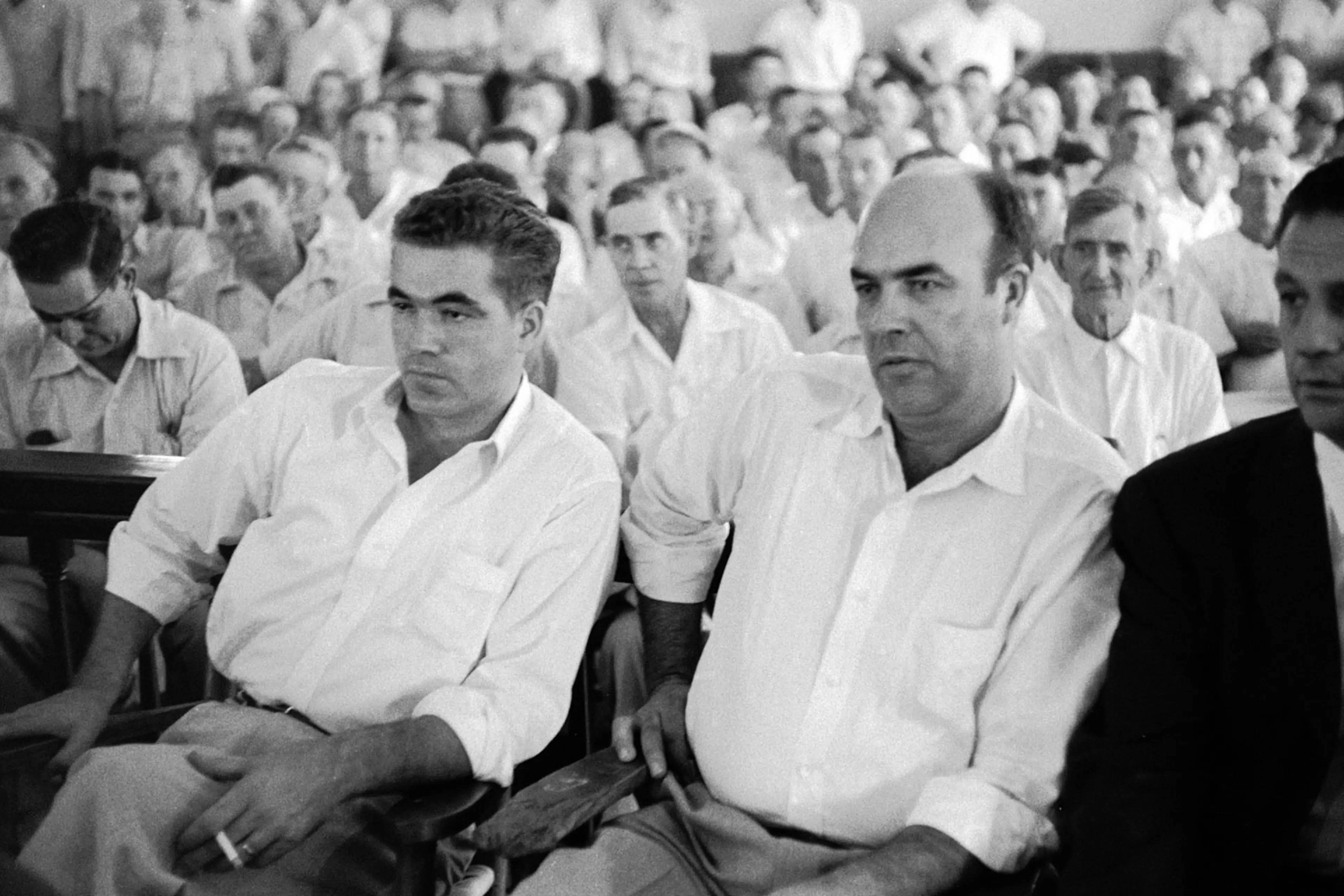
The jury was all-white and all-male.
The defendants were Roy Bryant and J.W. Milam, both white men, both charged with murder.
The victim was Emmett Till, 14 years old, from Chicago.
His great-uncle, Moses Wright, took the stand.
He pointed at the two men and identified them as the ones who came for the boy at night.
The jury deliberated for 67 minutes.
That is not a long time.
One juror reportedly said they took a soda break to make the deliberation seem longer.
The verdict was acquittal.
Both men walked out.
Double jeopardy protected them from a retrial.
That is the law.
The defense did not have to prove anything.
The prosecution could not try them again.
So the men sold their story instead.
Bryant and Milam sold the account to Look magazine for $4,000.
In 1956, journalist William Bradford Huie published their admission.
They admitted to the murder.
They were paid for it.
No one was retried.
The record holds that much.
It also holds what it does not hold: the weapon used to beat Till was not conclusively identified in court records.
That is not established.
In 2017, historian Timothy Tyson published "The Blood of Emmett Till."
In it, Carolyn Bryant admitted she had lied.
She said Till never grabbed her.
She said he never made verbal threats.
She had said otherwise before the trial.
The trial had already happened.
The acquittal had already happened.
The men had already confessed and been paid.
The law did not move again.
THE REOPENING AND THE CLOSING
The FBI reopened the case in 2004.
That came after the release of the documentary “The Murder of Emmett Till.”
No new charges were filed.
Roy Bryant and J.W. Milam were dead.
In 2007, a grand jury in Leflore County declined to indict anyone else.
The case was formally closed by the Department of Justice in 2021.
No further prosecutions were possible.
In 2023, the Department of Justice closed the case definitively.
The reason cited was the deaths of all involved parties.
Why did the FBI reopen it in 2004?
Was it the documentary alone?

Was there something else in the file?
The specific reasons for the 2004 reopening are not detailed in the source.
That is not established by the record.
What is established is the sequence.
A reopening.
No charges.
A grand jury that said no.
A formal closing.
Then another closing.
The law moved, and then it stopped.
It is a documented fact that the case was reopened.
It is a documented fact that it was closed.
What remains is the space between those two facts.
That space is where the frustration sits.
The men who confessed were gone.
The woman at the center of the alleged incident lived until 2023.
The warrant for her, found in 2018, was never served.
No action was taken.
The case is closed.
The family is still asking.
AND THE STORY STILL ISN'T OVER
Roy Bryant died of cancer in 1994.
J.W. Milam died in 1980.
Carolyn Bryant died in 2023.
Mamie Till-Mobley died in 2003.
The men who stood trial are gone.
The woman at the center of the alleged incident is gone.
The mother who insisted on the open casket is gone.
The case was closed by the Department of Justice in 2021.
It was closed again in 2023, definitively, citing the deaths of all involved parties.
Any specific next legal steps are not in the record.
No pending actions are in the record.
That would require evidence.
In 2022, the Emmett Till Antilynching Act was signed into federal law.
It made lynching a federal hate crime for the first time.
It is a law named for a boy who never saw a courtroom conviction.
Till’s family, including his cousins, continue to advocate for remembrance and justice.
They keep asking.
The Emmett Till Interpretive Center in Sumner, Mississippi, preserves the courthouse.
It tells the story where the trial happened.
It is a building.
It is also a record.
The unserved warrant sits in a courthouse basement.
No action was taken.
The family is still asking.
The story is not over because they will not let it be over.
Advertisement
You may also like
Adnan Syed's 2024 freedom is secure, but the conviction status remains in legal limbo as the Lee family fights on.
It began with a voice. In 1999, an anonymous phone call pointed police toward Adnan Syed—no name given, no evidence offered, just a voice…
The letter that sent the Trailside Killer to a dead end
A letter arrived for the authorities during the Trailside Killer investigation. It was threatening. It was taunting. Handwriting analysis linked it to the killer,…
The letter Erik allegedly wrote about abuse — and why the Menendez brothers' appeals keep failing
A letter Erik allegedly wrote sits inside a 2023 habeas corpus petition filed by the brothers’ attorneys. It describes the abuse, the petition says.…
The parole officer's alert that led authorities to Richard Allen Davis
A woman reported a suspicious man near the Klaas home on the night of October 1, 1993. Her description pointed to Richard Allen Davis,…
The tarot card left at a crime scene — and the message that still haunts detectives
The card was left on the ground at one of the crime scenes. It was a tarot card, and on it someone had written…
The ransom note on a windowsill — then a 72-day wait that ended in a woods
The nursery was quiet. It was the evening of March 1, 1932, and Charles Lindbergh Jr., the 20-month-old son of aviator Charles Lindbergh and…