The Green Beret's call about 'acid is groovy' intruders that unraveled
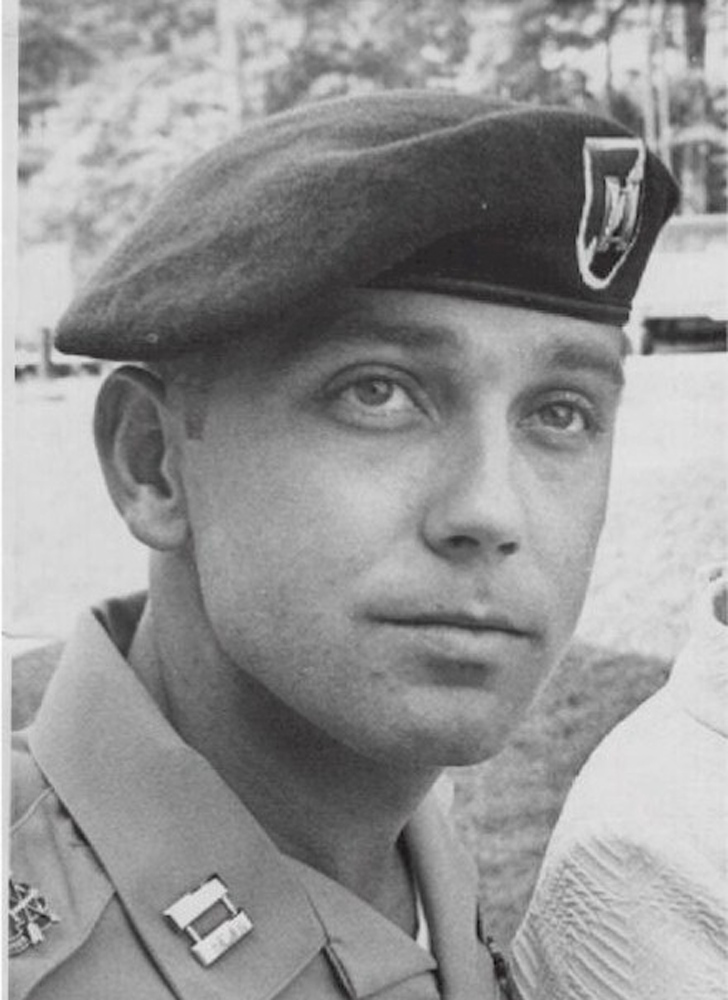
The phone call came just after 3 a.m. on February 17, 1970.
Military police at Fort Bragg, North Carolina, were dispatched to 544 Castle Drive, the off-post apartment of Army Captain Jeffrey MacDonald.
MacDonald, a Green Beret physician, told authorities that four intruders — men and women — had broken in and attacked his family.
He said they were chanting "acid is groovy."
"Acid is groovy."
Who says that in a crisis?
Who remembers the chant, verbatim, while his wife and daughters lie dead?
When MPs arrived, they found Colette MacDonald dead.
They found 5-year-old Kimberley dead.
They found 2-year-old Kristen dead.
MacDonald had superficial wounds.
He was taken to Womack Army Hospital for treatment.
The chant was his report to authorities.
That is the only source for the chant.
Whether any intruder actually existed, or chanted anything at all, is not established by the record.
The record establishes only that MacDonald reported it.
He was the sole survivor.
He was the one who made the call.
The chant was eerily specific.
It was also, at that moment, unverifiable.
The MPs had no intruders in custody.
They had no witnesses but MacDonald.
They had three bodies.
The phrase would linger.
It would be repeated in reports, in briefs, in the press.
It would be scrutinized against the physical record.
It would not match.
THE SCENE AT 544 CASTLE DRIVE
The MPs found Colette MacDonald beaten and stabbed repeatedly.
Her daughters, five-year-old Kimberley and two-year-old Kristen, were also stabbed.
MacDonald himself had superficial wounds.
He was taken to Womack Army Hospital for treatment.
The murder weapons — a knife and an ice pick — were never found.
Their location remains not in the record.
Military investigators found no evidence of forced entry.
No lock was broken. No door was sprung. No window was forced.
MacDonald's story was of four intruders, a group of men and women chanting "acid is groovy."
The initial investigation accepted that story.
But inconsistencies emerged.
Investigators deemed MacDonald's wounds superficial and self-inflicted.
The physical record did not match the account of a struggle with intruders.
The Army charged MacDonald in July 1970.
In October 1970, the charges were dropped.
Insufficient evidence, the Army said.
The case closed.
The identity of any intruder remains not in the record.
If four intruders broke in, why no forced entry?
If they attacked in a rage, why leave the sole survivor with only superficial wounds?
If they took the weapons, where did the weapons go?
That would require evidence.
The record does not provide it.
THE CASE REOPENS
The case was reopened after pressure from Colette MacDonald's mother, who pushed for prosecution.
She wanted the case tried.
In 1974, a federal grand jury indicted MacDonald.
The prosecution's case relied on physical evidence, including fibers and blood spatter analysis.
Forensic experts testified that the wounds and crime scene were inconsistent with an intruder attack.
The wounds were too many, the scene too staged, the story too neat.
The prosecution argued MacDonald killed his family in a rage, then staged the scene to look like an intruder attack.
He was the only one alive.

He was the only one who could have done it.
The defense maintained MacDonald's innocence and pointed to the lack of a murder weapon and the absence of physical evidence linking him to the crime.
No knife was found.
No ice pick was found.
No fingerprints, no footprints, no proof.
The fibers matched his pajamas.
The blood spatter suggested a single attacker.
But did the fibers prove he did it?
Did the blood spatter prove the intruders were invented?
That would require evidence.
That would require a jury to choose between experts.
Whether the fibers and blood spatter conclusively prove MacDonald's guilt is a matter of competing expert testimony, not a settled fact in this record.
The federal grand jury thought the case was strong enough to indict.
The trial would decide the rest.
THE TRIAL AND THE VERDICT
The trial began in July 1979 in Raleigh, North Carolina.
MacDonald was charged with three counts of first-degree murder.
The prosecution argued he killed his family in a rage, then staged the scene to look like an intruder attack.
The defense maintained his innocence, pointing to the missing murder weapon and the absence of physical evidence linking him to the crime.
The jury deliberated.
On August 29, 1979, the jury convicted MacDonald on all three counts.
He was sentenced to three consecutive life terms.
MacDonald appealed.
In 1980, the Fourth Circuit Court of Appeals upheld the conviction.
Subsequent appeals and motions for a new trial were denied.
The verdict is on the record.
The conviction was upheld.
Whether MacDonald is guilty or innocent is not for this article to decide, the record shows conviction and upheld appeals.
What the record does not establish is proof beyond the jury's finding.
The knife and the ice pick were never found.
That remains true after the verdict.
The trial decided the case.
The appeals confirmed the decision.
The story did not end there.
AND THE STORY STILL ISN'T OVER
Jeffrey MacDonald has been incarcerated since the conviction.
He has maintained his innocence throughout, filing numerous appeals and habeas corpus petitions.
All of them unsuccessful.
In 2006, the Fourth Circuit denied his latest appeal.
He remains in federal prison.
The story did not end with the verdict.
It did not end with the appeals.
It is still being told.
The case has been the subject of extensive media coverage.
A 1983 book argued for MacDonald's guilt.
Later books and documentaries have questioned aspects of the case.
They have asked the same questions the jury heard.
They have asked whether the physical evidence fit the prosecution's story.
They have asked what happened to the murder weapons.
They have asked whether the chant was ever real.
The record does not establish that it was.
The record establishes the conviction.
MacDonald, as of recent reports, continues to seek relief from prison.
Decades have passed since the night at 544 Castle Drive.
He has spent those decades in prison.
He has spent them filing papers.
The courts have spent them saying no.
Whether MacDonald will ever be released or granted a new hearing is not in the record.
That would require a decision.
That decision has not come.
Advertisement
You may also like

NBA League Pass student deal: 40% off, but is it the best stream?
The 40% off is real. The fine print is a different beast entirely. Students are being handed the keys to the kingdom — every…

NBA fans' data at risk as league tracks everything you do
Your phone knows where you sit. Your wallet knows what you buy. And the NBA—the league you cheer for every single night—has been quietly…

NBA's Colorado Privacy Statement Hides a Shocking Data Sale Clause
The NBA's own privacy page just admitted it — they're selling your data, and Colorado residents are the first to see the fine print.…
The 18-year-old athlete whose family says the legal system forgot
January 13, 1999, was a school day. Hae Min Lee, an 18-year-old senior at Woodlawn High School, did not come home that evening. Her…
The detective's rogue-LAPD theory that never got a courtroom test
The SUV stopped at a red light at Wilshire Boulevard and South Fairfax Avenue. It was shortly after midnight on March 9, 1997. A…
Her wedding rings on the nightstand — and the truck leaving
The wedding rings sat on the nightstand. The purse and phone were still inside the home. Shanann Watts, 34, was gone. It was the…