The handwritten note Tsarnaev left inside the boat before capture
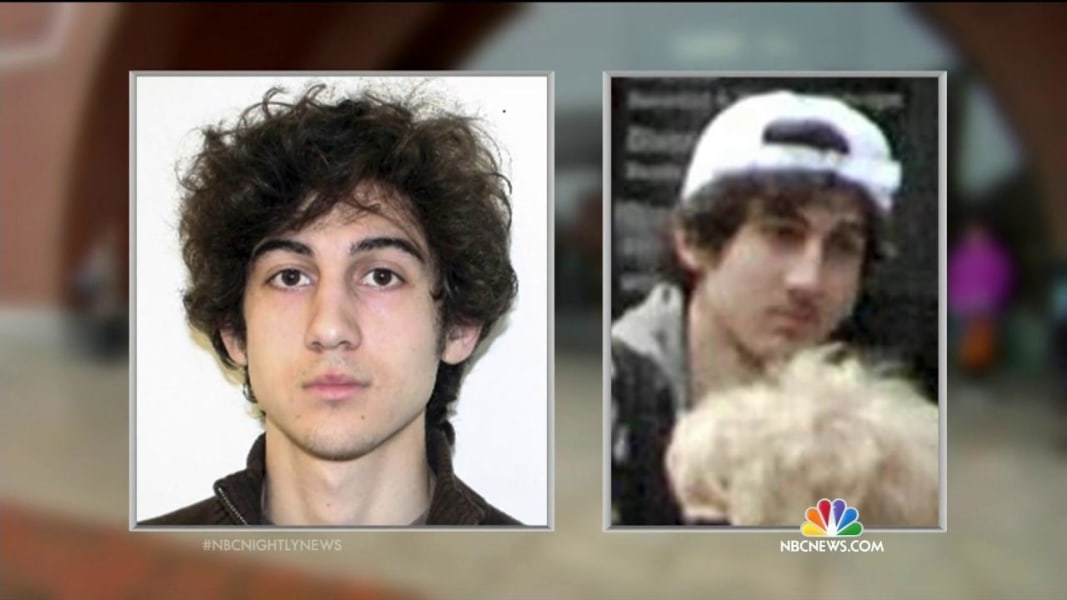
The boat sat in a Watertown backyard, dry-docked and winter-covered, on the morning of April 19, 2013.
Inside it, police found Dzhokhar Tsarnaev, hiding after a manhunt that had shut down the Boston area.
They also found a handwritten note.
Investigators described the note as a confession.
Its full text has never been publicly released.
That is the documented record: a note exists, was found in the boat, and was described as a confession.
What exactly he wrote, in his own words, is not fully established by the record.
Online theories about the note’s contents circulate.
They fill the gap with certainty.
The record does not.
It is a rare artifact: a confession the public can name but cannot read.
Why does that matter?
Because a confession is supposed to explain.
It is supposed to answer the question of why.
It is supposed to close the case.
This one does not.
The note was part of the evidence at trial, but its wording remains locked in the case file.
He was captured in that boat, bleeding, and he wrote something.
What he wrote has been described, quoted in fragments, and theorized about endlessly.
The full document has not been shown.
That is the line between what went viral and what is documented.
The note is documented.
Its meaning is not.
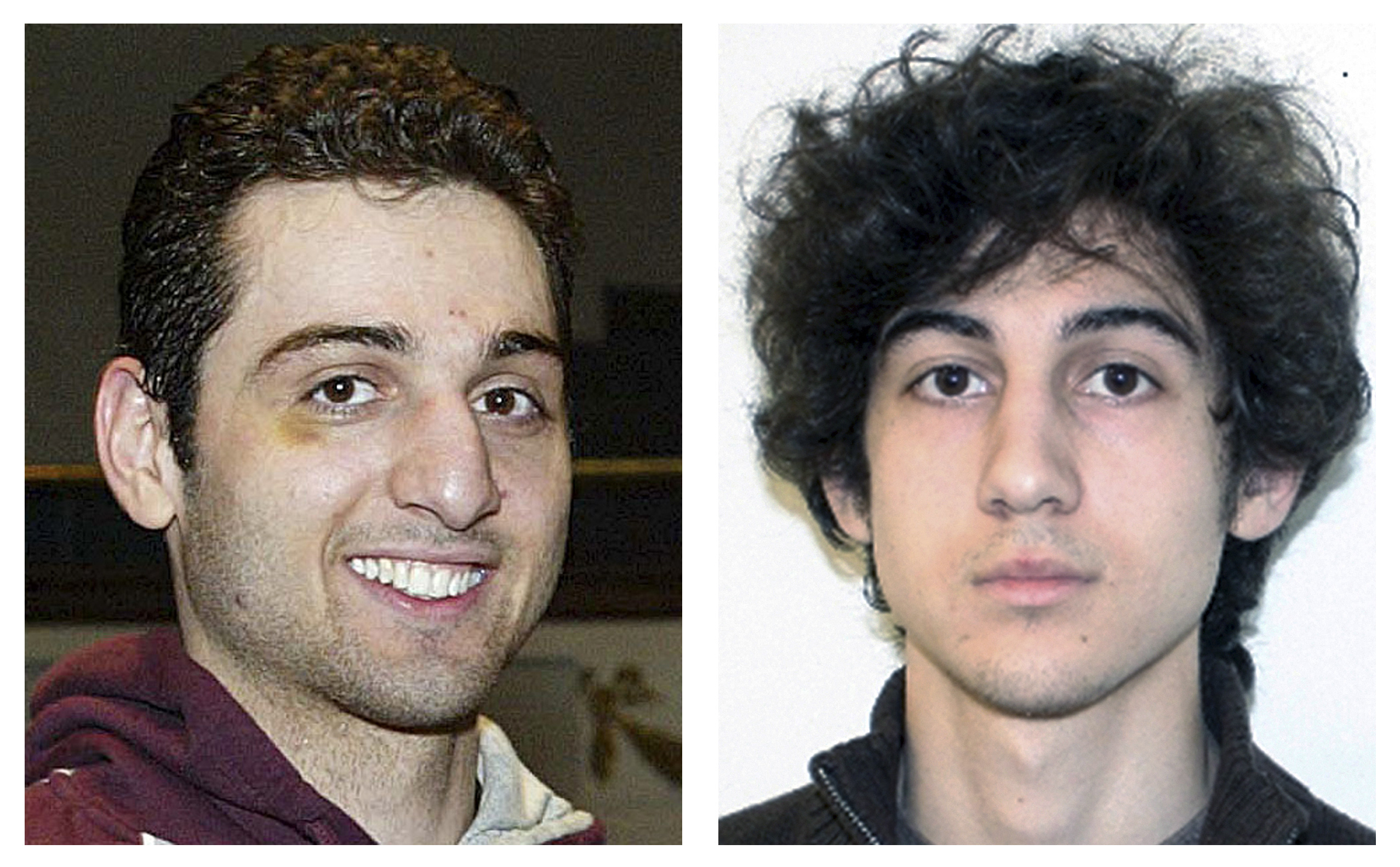
THE BROTHERS
The two men were brothers.
Tamerlan Tsarnaev was 26. Dzhokhar Tsarnaev was 19.
On April 15, 2013, two pressure-cooker bombs exploded near the finish line of the Boston Marathon.
The explosions killed three people and injured more than 260 others.
The bombs were placed in backpacks and detonated remotely.
The brothers' motivations are not established in the record.
Three days later, on April 18, the FBI released images of two suspects.
The images came from surveillance footage and photographs along the marathon route.
The FBI, led by Richard DesLauriers, special agent in charge of the Boston field office, analyzed that footage.
They looked at store cameras. They looked at news footage. They looked at public tips.
The brothers were identified.
Tamerlan was the older one. Dzhokhar was the younger one.
They were brothers before they were suspects.
They were suspects before they were fugitives.

The timeline moves fast now.
April 15, the bombs. April 18, the faces. April 19, the manhunt.
What happened between the bombing and the release of the images is documented.
What led the brothers to that finish line is not.
The record establishes what they did.
It does not establish why.
THE MANHUNT
The FBI had released the images two nights before.
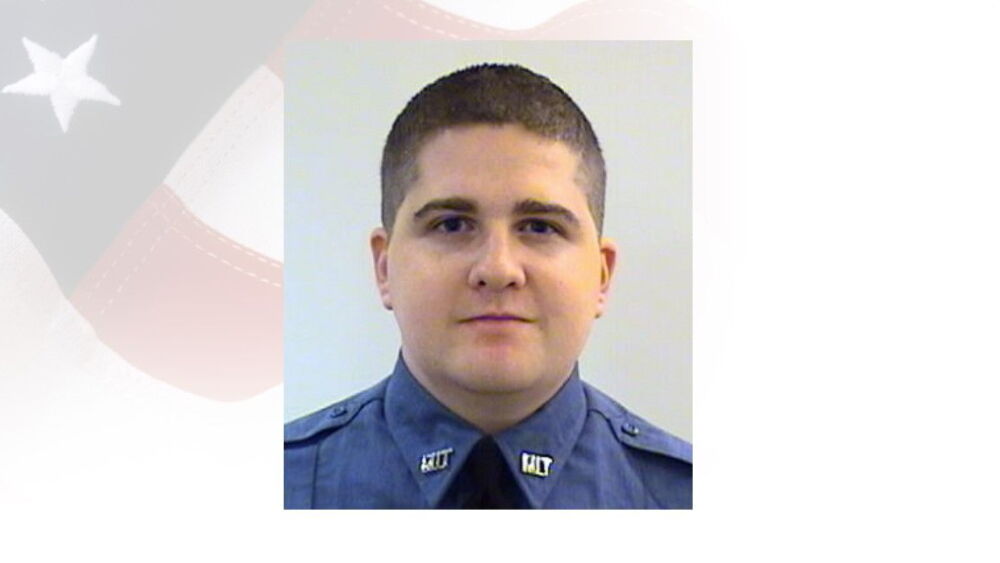
Then, in the early hours of April 19, the suspects killed a Massachusetts Institute of Technology police officer, Sean Collier, 26.
They carjacked a Mercedes-Benz SUV during their escape.
A massive manhunt shut down the Boston area.
It was a lockdown, a city holding its breath.
Police tracked the suspects to Watertown, a suburb just west of Boston.
There, a shootout occurred.
Tamerlan Tsarnaev was killed in that exchange.
Dzhokhar Tsarnaev escaped.
The exact sequence of events during the shootout is not fully detailed in the record.
What is documented is the pressure closing in.
The hunt narrowed to a single backyard.

Later that day, police found Dzhokhar hiding in a boat.
The boat was in a backyard in Watertown.
He was 19.
His brother was dead.
The city was still on edge.
The manhunt was over.
The record establishes where they ran.
It does not establish every step of how it ended.
THE NOTE AND THE TRIAL
The note was inside the boat when investigators found him.
It was part of the evidence, according to the investigation and evidence record.
The note has been called a confession.
Its full text has not been publicly released.
Its role in the verdict is not specified in the record.
That is not established.
Dzhokhar Tsarnaev was charged with 30 federal counts.
The counts included conspiracy to use a weapon of mass destruction and bombing a public place.
The prosecution, led by Carmen Ortiz, sought the death penalty.
The defense, led by Judy Clarke, argued something else.
Clarke argued that Dzhokhar was influenced by his older brother.
Was he a mastermind?
Was he a follower?
Was he both?
The record does not answer that.
It establishes what he was charged with.
It establishes what he was convicted of.
He was convicted on all 30 counts in April 2015.
He was sentenced to death in June 2015.
The prosecution said the note showed intent.
The defense said the note showed a young man under his brother's control.
The note is a documented exhibit.
It is also a contested one.
The jury heard the arguments.
The jury reached its verdict.
The note's place in that verdict remains unclear.
That would require evidence the record does not provide.
AND THE STORY STILL ISN'T OVER
The jury reached its verdict, and the sentence was death.
Dzhokhar Tsarnaev is on federal death row at the U.S. Penitentiary in Florence, Colorado.
In 2022, the U.S. Supreme Court declined to hear his appeal, leaving the death sentence in place.
The legal battle is over.
The human story is not.
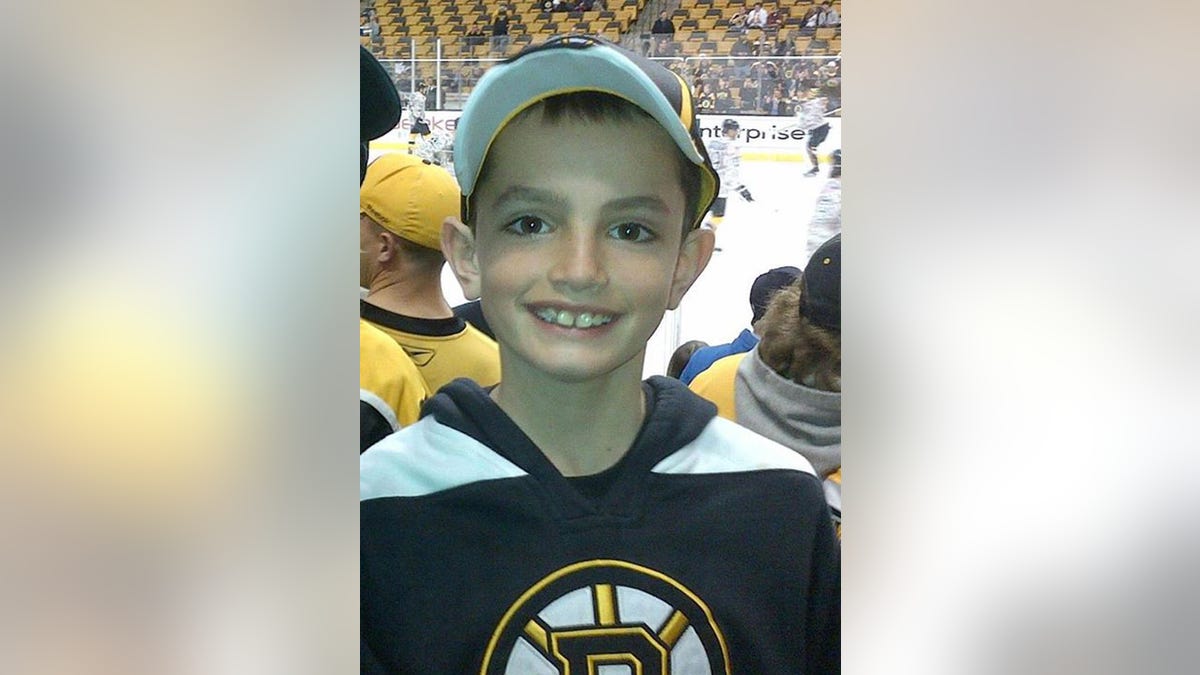
Bill and Denise Richard have advocated against the death penalty.
They argued that a lengthy appeals process prolongs their pain.
Their son was eight years old.
The Martin Richard Foundation, established by Bill and Denise Richard, works on community-building programs in Boston.
It is a different kind of legacy.
It is also a continuing one.
The Tsarnaev parents have returned to Russia.
The brothers' uncle, Ruslan Tsarni, spoke publicly during the manhunt.
What he said was reported.
What the family knows now is not.
Any future legal steps are not specified in the record.
That would require evidence.
The note's place in the verdict remains unclear.
That, too, would require evidence.
The boat is gone from the backyard.
The city rebuilt.
The foundation builds.
The sentence stands.
The story does not end.
It only waits.
Advertisement
You may also like
The fishing boat Scott Peterson bought weeks before his pregnant wife vanished
The boat was 14 feet of aluminum, and Scott Peterson bought it in late November 2002. That was weeks before his pregnant wife Laci…
The bloody glove that didn't fit: how a detective's tape destroyed the prosecution's case
He held them up for the jury to see. Two leather gloves, dark against his hands. One found on Bundy Drive, where Nicole Brown…
The 1947 clipping found near Elizabeth Short that led nowhere
The morning of January 15, 1947, began with a woman walking her daughter past a vacant lot at 39th Street and Norton Avenue. She…
The gun that put Keffe D in the Cadillac — and the plea deal he says should free him
The motion landed in February 2025, in a Clark County courtroom, and it hinged on a piece of paper filed nearly two decades earlier.…
The 340-symbol cipher cracked in 2020 — and the message that still names no one
In December 2020, a team of codebreakers announced they had cracked the 340-symbol cipher. David Oranchak, a software developer, and Sam Blake, a mathematician…
The misread clue that derailed the Tate murder probe for months
Five people were found dead at 10050 Cielo Drive in Benedict Canyon on the morning of August 10, 1969. Among them was actress Sharon…