The lipstick message near the Black Dahlia scene that police never linked to a killer
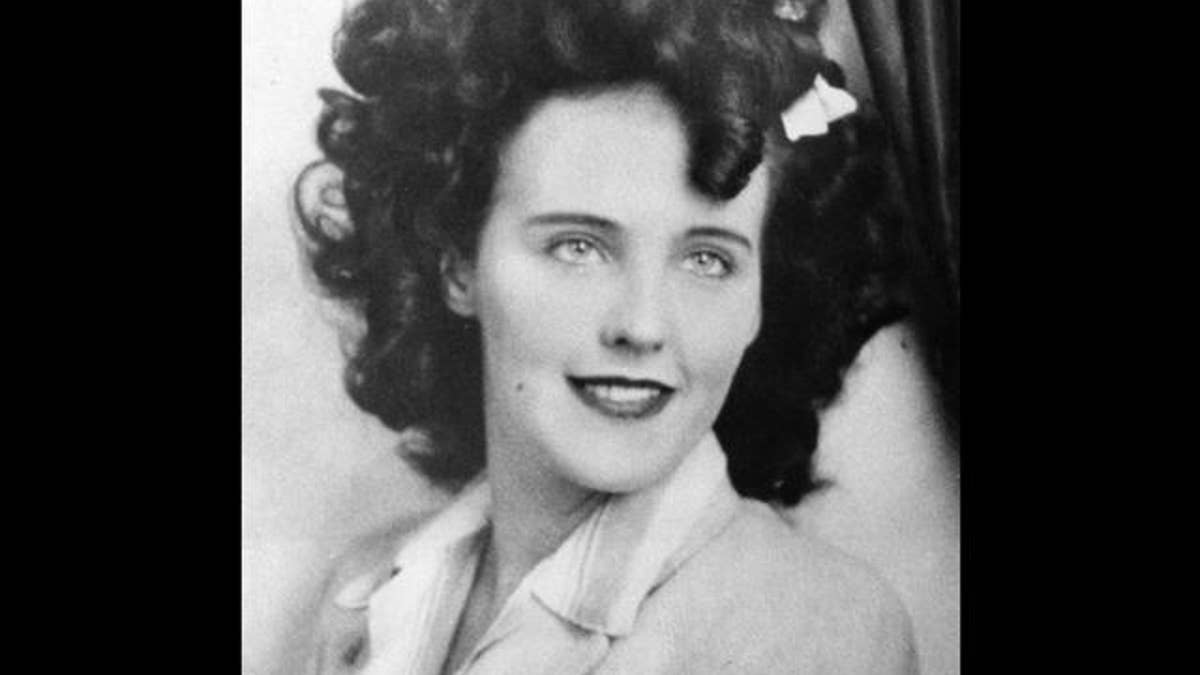
A woman walking with her young daughter saw something pale in the grass of the vacant lot on Norton Avenue.
She thought it was a mannequin at first.
It was the body of Elizabeth Short, cut in half at the waist, drained of blood, and posed.
The morning was January 15, 1947.
The lot sat in the Leimert Park area of Los Angeles.
Near the scene, on the sidewalk, someone had scrawled a message in lipstick.
The police photographed it.
They logged it.
They never conclusively linked it to the killer.
What did the message say?
Who wrote it?
Did it come from the person who left the body?
That would require evidence.
The record does not contain the exact wording.
The record contains only a description: a message scrawled in lipstick.
Not a name.
Not a confession.
Not a clue that led anywhere.
It is a documented piece of the scene.
It is also a dead end.
The woman and her daughter walked on, then stopped, then called for help.
The body lay in the open, visible to the street.
The lipstick message sat on the concrete, exposed to the same morning light.
One was the subject of one of the largest manhunts in the history of the LAPD.
The other was a few words in rouge, never tied to any hand.
The case would become known as the Black Dahlia murder.
The message would become a footnote.
THE DISCOVERY AND THE FIRST HOURS
The discovery came first.
On the morning of January 15, 1947, a woman walking with her young daughter saw something in a vacant lot on Norton Avenue.
She initially thought it was a mannequin.
It was the body of Elizabeth Short, a 22-year-old aspiring actress.
The body had been cut in half at the waist.
It had been drained of blood.
It had been posed.
The case would become known as the Black Dahlia murder, a nickname derived from a film, *The Blue Dahlia*, and Short's dark clothing and hair.
The lead detective on the case was Detective Harry Hansen, who worked with his partner, Detective Finis Brown.
They arrived to a scene that offered little.
The body had been washed clean of blood.
No fingerprints were found.
The killer had posed the body in a manner that suggested deliberate staging.
The exact time of discovery is not in the record.
The initial response details are not in the record.
What is in the record is the confusion.
Detectives Hansen and Brown had a victim, a location, and a body that had been cleaned of its evidence.

They had no weapon.
They had no witnesses.
They had no fingerprints.
They had a nickname and a vacant lot.
The manhunt would be one of the largest in LAPD history.
But the first hours were quiet, forensic, and empty.
The body was posed.
The lot was empty.
The message in rouge was nearby, never tied to any hand.
THE MANHUNT AND THE CONFESSIONS
The LAPD launched one of the largest manhunts in its history.
Detectives interviewed hundreds of people.
They spoke with Short's acquaintances. They spoke with her former boyfriends.
One man, Robert "Red" Manley, had been among the last to see her alive.
He was questioned extensively. He was cleared.
Others came forward with confessions.
Several people confessed, according to the record.
All were deemed false. All were deemed unreliable.
How many confessed? The number is not in the record.
Who they were? Their names are not in the record.
The investigation drowned in tips.
False leads piled on false leads.
There was no forensic technology to sort them. No DNA. No databases. Just paper, telephones, and shoe leather.
The body had been washed clean of blood. No fingerprints were found.
The killer had staged the scene deliberately.
The message in rouge sat on the sidewalk near the lot.
It was documented. It was never tied to any hand.
The manhunt was vast. The case was already slipping.
Every confession collapsed under questioning. Every promising lead turned to air.
Manley walked away cleared.
The detectives kept working. The pile kept growing.
They had hundreds of interviews and nothing to hold.
The killer had left a message and a body.
He had left nothing else that could be traced.
The chaos was the case. The volume was the wall.
THE TWO READINGS OF THE SAME FACTS
There was no trial.
No suspect was ever arrested or charged with the murder of Elizabeth Short.
The Los Angeles County District Attorney’s office reviewed the case.
It found insufficient evidence to prosecute anyone.
Over the years, several people confessed.
Several more were named as suspects.
None were prosecuted.
Among the most prominent suspects publicly discussed was Dr. George Hodel, a physician whose son later claimed Hodel committed the murder.
Another was Fred Sexton, a former journalist.
Neither was ever charged.
The medical examiner who performed the autopsy was Dr. Frederick Newbarr.
He testified about the nature of the injuries.
The specific content of that testimony is not in the record.
Only the fact of his testimony is established.
That is the shape of the case: a body, a message, a confession here, a name there.
No charge.
No verdict.
No judge to address.
The public theories are loud.
The official record is silent.
The district attorney’s office could not move forward.
The confession s were false or unreliable.
The named suspects were not prosecuted.
The lipstick message was never linked to any killer.
That would require evidence.
There is none in the record.
So the case holds two readings at once.
One is the story of a solved puzzle, told in books and films.
The other is the story of a file that never became a case.
It is a famous murder.
It is also an open one.
AND THE STORY STILL ISN'T OVER
The case file remains open with the LAPD.
It is considered cold.
The LAPD has periodically reviewed the case, but no charges have ever been filed.
The evidence was eventually lost or destroyed.
The lipstick message, the autopsy findings, the witness notes — gone.
Not because a court ordered it. Because the file sat, and files sit.
Elizabeth Short's mother, Phoebe Short, died in 1982.
Her father died in 1968.
Neither testified at any trial, because there was no trial.
There was no prosecution. There was no defence. There was no judge.
Several individuals have been posthumously accused.
Dr. George Hodel was one of them.
His son, Steve Hodel, a former LAPD detective, published a book in 2003 claiming his father was the killer.
That claim is a theory.
The record does not establish it.
No charges were ever filed against Hodel, or against anyone else.
The next concrete step is not in the record.
No hearing date. No motion. No decision pending.
The case is simply open.
It is a famous murder.
It is also an open one.
The file sits.
The evidence is gone.
The story still isn't over, because it never became a case to close.
Advertisement
You may also like
A name nobody claimed: the only identified victims of the Torso Killer
Between 1934 and 1938, at least twelve people were murdered in Cleveland's Kingsbury Run area. Most of them were never identified at all. Among…
The gyroscope that may have doomed Buddy Holly's flight in 1959
The Sperry F-3 gyroscope was the attitude indicator installed in the 1947 Beechcraft Bonanza 35, registration N3794N, chartered from Dwyer's Flying Service. The pilot…
Five Gainesville students found dead in four days — then a knife sheath changed everything
The friend knocked. No answer. The door was locked, so the friend found a way in. Inside the apartment, on August 27, 1990, the…

81 minutes inside the Gardner Museum, and the one frame that still waits for its painting
The museum's security cameras were on that night. They were recording nothing. The tape rolled inside the Isabella Stewart Gardner Museum in Boston in…
The fishing boat purchase that put Scott Peterson at the center of a missing-pregnant-wife case
The clerk remembered the man who bought the fishing boat in December 2002. He said he planned to use it for fishing in the…
The truck that returned home, and the timeline that fell apart
The blue Ford Escape came back to the house before dawn on August 13, 2018. A neighbor's security camera caught it pulling into the…