A man mailed Elizabeth Short's birth certificate to a newspaper — the sender was never identified
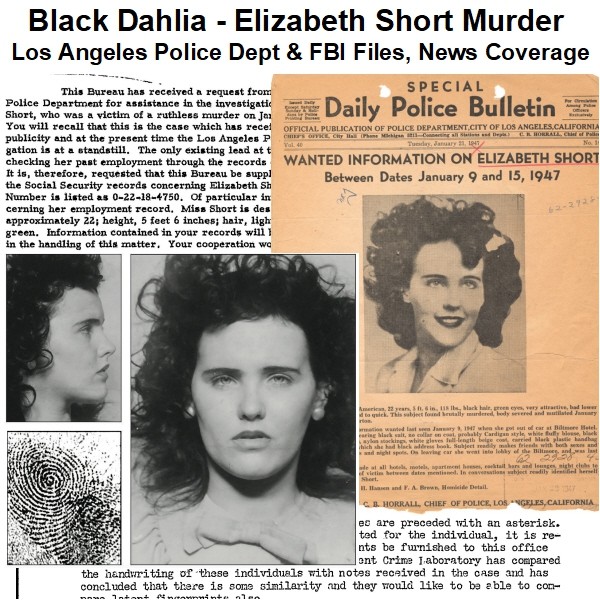
A package arrived at a Los Angeles newspaper office in the weeks after the body was found.
Inside were Elizabeth Short's belongings: her birth certificate, her address book.
A man had mailed them, according to the investigation record.
He did not include a name.
He did not include a return address.
The sender was never identified.
The package arrived during the intense media attention that followed the discovery of her body on the morning of January 15, 1947.
Investigators described the act as bizarre.
Who sends a dead woman's documents to a newspaper?
Who keeps them in the first place?
Who decides, after the body is found, that the press should have them?
The record does not say.
The exact date of the mailing is not specified in the investigation record.
Whether the package contained anything else is not established.
The sender's identity is not established.
The motive is not established.
It is a documented fact that the package arrived.
It is a documented fact that the sender was never identified.
Everything beyond that is what the record leaves open.
The belongings were mailed after the body was found.
That is all the record places with certainty.
The man who mailed them remains a name without a face, a gesture without a reason.
The package sits inside the case file like a loose page.
It was part of the investigation.
It solved nothing.
THE DISCOVERY
The morning of January 15, 1947, a woman's body was discovered in a vacant lot at 39th Street and Norton Avenue in Leimert Park.
The victim was Elizabeth Short, a 22-year-old aspiring actress.
Her body had been severed at the waist.
It had been drained of blood.
It had been posed.
The case became known as the "Black Dahlia" murder, a name derived from a film noir title and popularized by the press.
The body had been cleaned and posed, suggesting a methodical killer.
The exact time of death is not established.
The location where the murder occurred is not established.
The lot was not the scene of the crime.
It was the scene of the display.
She was on the ground below.
The pose was deliberate.
The cleaning was deliberate.
The severing was deliberate.
A methodical killer, the investigation analysis concluded.
A killer who took time.
A killer who left nothing behind.
The press gave the case a name.
The name gave the case a life.
The life outlasted the investigation.
It outlasted every lead.
It outlasted every suspect.
The body was found on a Wednesday.
It was found by a woman walking her child, according to the case record.
The police arrived.
The photographers arrived.
The crowd arrived.
The case record notes the body had been posed to look staged.
It was staged.
It was also real.
She was 22.
She was an aspiring actress.
She was Elizabeth Short.
The lot at 39th and Norton became the fixed point of the story.
Everything else moved.
The tips moved.
The suspects moved.
The case never moved.
THE TIPS AND CALLS
The tips arrived by mail, by telephone, by telegram.
The LAPD received hundreds of them, according to the investigation record.
Many proved to be hoaxes.
A man claiming to be the killer called the police multiple times.
The calls were never traced successfully, the record states.
Each call promised a solution.
Each call delivered nothing.
The sheer volume of publicity and false confessions overwhelmed the investigation, according to the record.
The lead detective led the case.
The lead detective had no clear suspect to chase.
The LAPD later admitted the investigation suffered from a lack of coordination, according to the LAPD admission.
So the tips piled up.
The confessions piled up.
The dead ends piled up.
Forensic techniques of the time were limited, the investigation record states.
Blood could be typed.
Fingerprints could be lifted.
But a body cleaned and posed left little for the lab to hold.
Was the caller the killer?
Was any of the hundreds of tips genuine?
Was any confession real?
The record does not establish that any of them were.
It does not establish that any of them were not.
The detective took statements.
The detective ran down leads.
The detective had a telephone that rang with strangers claiming the murder.
The case was not solved by the tips.
It was not solved by the calls.
It was not solved at all.
The noise did not break the case open.
The noise buried it.
THE LAST SIGHTING AND THE SUSPECTS
The salesman was the last known person to see her alive.
He met her days before the body was found.
He took her to a hotel, then left her in the lobby of a department store.
That was the last place anyone placed her.
He passed polygraph tests.
He produced a credible alibi.
The investigation record says he was cleared.
It says the salesman was seen with Short shortly before her death.
It does not say he was charged.
It does not say anyone else was either.
Another name surfaced in the coverage.
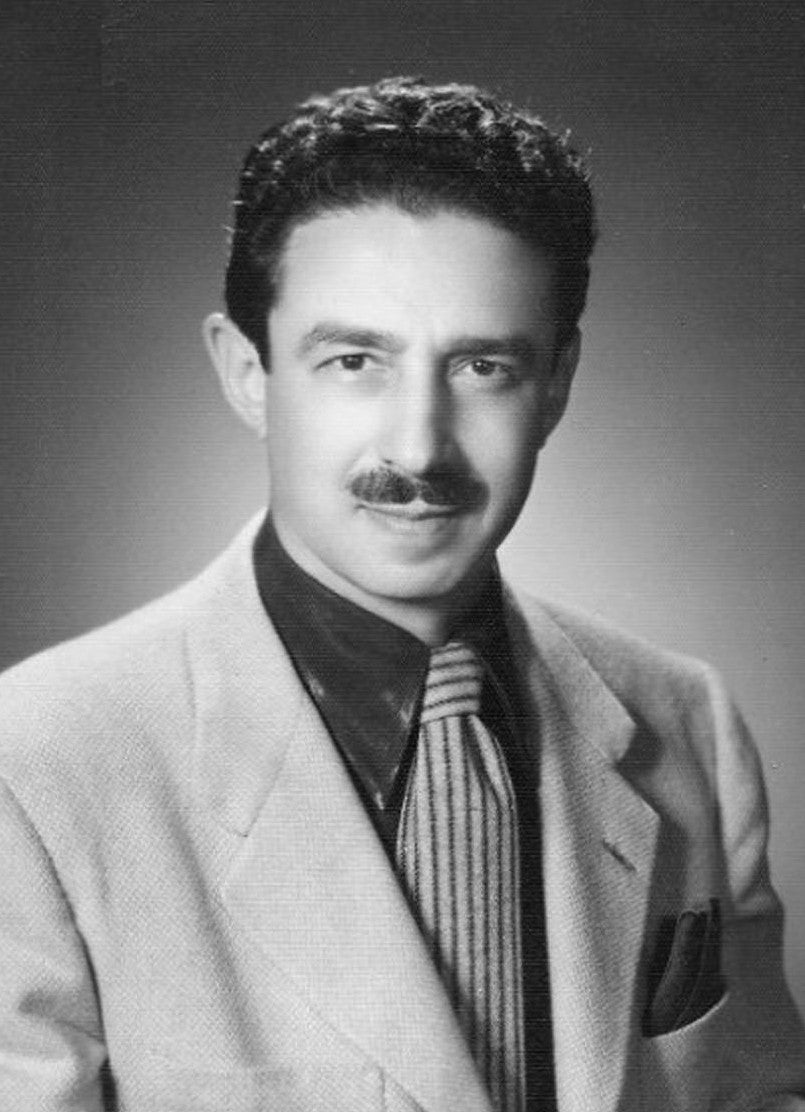
A physician, a prominent Los Angeles doctor.

He was publicly suspected.
He was never charged.
Whether he was ever formally investigated is not established by the record.
That is what the record leaves open.
In 2003, the physician's son published a book.
He claimed his father was the killer.
The book was titled *Black Dahlia Avenger*.
The LAPD reviewed the claims.
The LAPD did not reopen the case.
The physician died in 1999, never having been charged.
The salesman died too, his name cleared in the record.
One suspect walked away with an alibi.
Another was suspected and left there, uncharged.
No one was prosecuted.
No one was ever charged.
The case remains open but inactive.
The district attorney's office reviewed it multiple times.
Each review found insufficient evidence to prosecute.
A near-miss, then another near-miss.
That is what the record shows.
AND THE STORY STILL ISN'T OVER
There was no trial.
No one was ever charged with the murder of Elizabeth Short.
The case remains officially open, but it is inactive.
The district attorney's office reviewed the case multiple times, according to the DA's office.
Each review found insufficient evidence to prosecute.
That is the record.
Elizabeth Short's mother died in 1984.
Her father died in 1968.
The physician who was publicly suspected died in 1999, never having been charged.
His son wrote a book arguing the physician was the killer, and the LAPD reviewed the claims but did not reopen the case.
The murder has inspired books, films, and documentaries.
No definitive resolution has ever been reached.
The sender of the mailed belongings was never identified.
That identity is not established.
The killer's identity is not established.
Whether the case will ever be reopened is not established.
The record does not answer those questions.
It only shows the near-misses.
It only shows the reviews.
It only shows the quiet end of a busy investigation.
The lot at 39th and Norton is empty now, in the way cases go empty.
She was on the ground below, and then she was a name.
A name that keeps being retold.
A story that keeps asking.
Who mailed the birth certificate?
Who made the calls?
Who walked away?
That would require evidence.
The record has none.
It has a mother who died in 1984.
A father who died in 1968.
A physician who died in 1999.
A case that remains open but inactive.
Memory holds it.
The file holds nothing new.
Advertisement
You may also like
31 days passed before a missing 2-year-old was reported — the case that split a family
The 911 call came on July 15, 2008. Cindy Anthony told the dispatcher her 2-year-old granddaughter, Caylee Marie Anthony, was missing. Thirty-one days had…
The parking ticket that broke the Son of Sam case open
On the night of July 31, 1977, a woman in Brooklyn heard the shots. She looked out and saw a man running to a…
The neighbor's shout that made Kitty Genovese's attacker flee — then return
A window opened above 82-70 Austin Street, and a man named Robert Mozer shouted into the dark. The shout went out in the early…
One parolee's tip led police to Polly Klaas's body — but a key detail was missed
The slumber party was supposed to be a sleepover. Twelve-year-old Polly Klaas and two friends were at her mother's home in Petaluma, California, on…
Scott Peterson's boat: the 14-footer that made a fishing trip impossible to prove
A 14-foot aluminum fishing boat. That was the boat Scott Peterson said he took to the Berkeley Marina on the morning of December 24,…
The FBI's 17-year hunt for a bomber hinged on one brother's phone call — why did it take so long?
The manifesto ran 35,000 words. In 1995, the Unabomber sent it to The New York Times and The Washington Post, demanding publication. The Post…