The Mississippi murder trial where a witness pointed at two men — and the jury still walked them free

The courtroom in Sumner, Mississippi, was quiet.
Moses Wright stood and raised his arm.
He pointed at Roy Bryant.
He pointed at J.W. Milam.
"They took him," he said — the great-uncle naming the two white men who came for his great-nephew in the dark.
The men were on trial for the murder of Emmett Till, a 14-year-old from Chicago.
Wright's finger was the prosecution's core evidence.
It was a Black sharecropper in 1955, standing in a Mississippi courtroom, pointing at two white men.
That took something.
The jury deliberated for 67 minutes.
They acquitted both men.
Sixty-seven minutes.
Was the identification not enough?
Was it too much — a Black man's word against a white man's freedom?
Or was the verdict already written before Wright stood?
The defense offered another story.
The body pulled from the Tallahatchie River was not Till, they argued.
Too decomposed, too mutilated, too heavy with a cotton gin fan tied to its neck.
That claim was a theory raised in court.
The record does not establish it.
The body was identified by a ring bearing the father's initials.
The jury heard Wright's testimony anyway.
They heard the medical evidence.
They heard the defense's theory.
Then they walked out and came back with nothing.
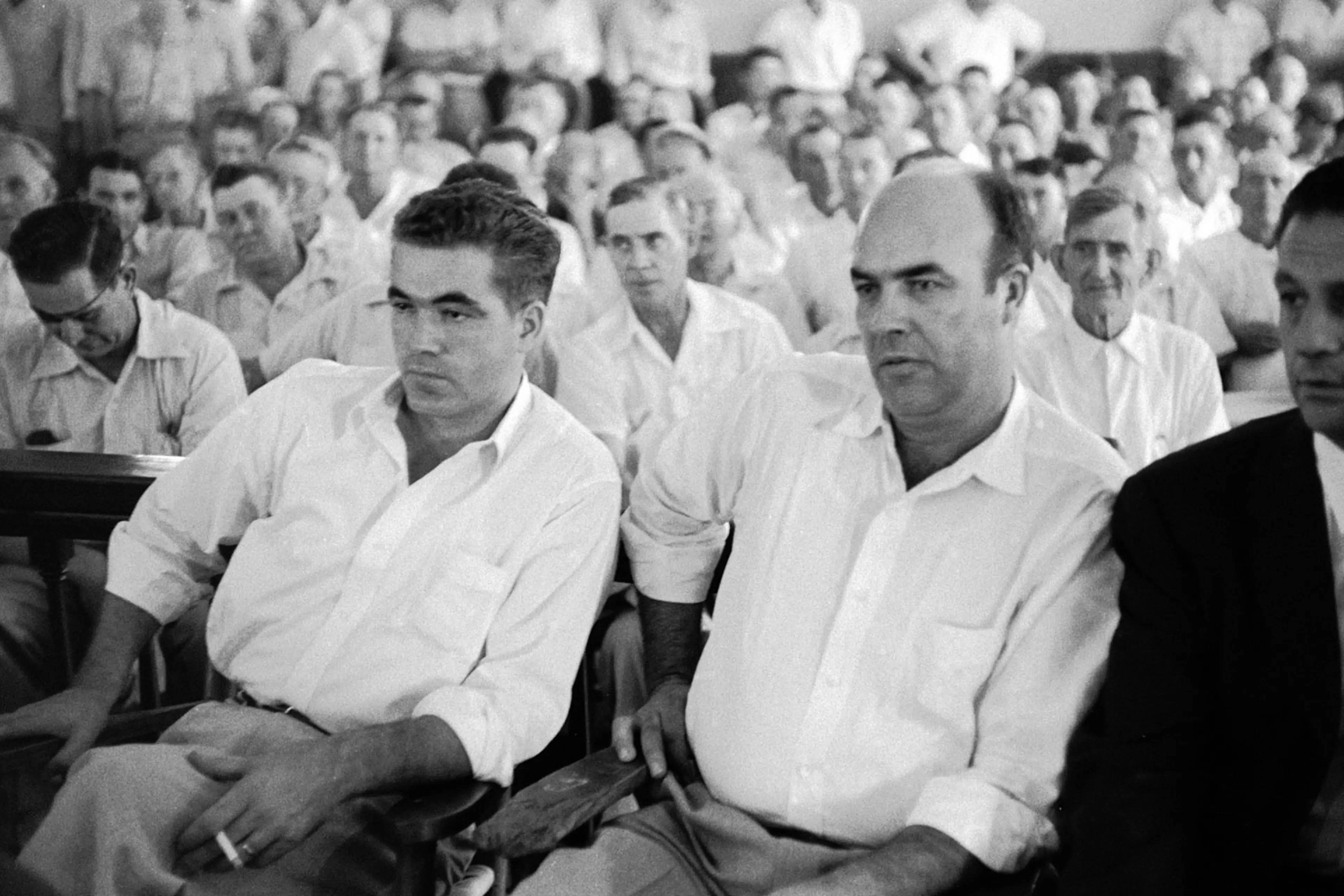
Not guilty.
Not because the evidence was thin.
Because the finger pointed at the wrong kind of men — or so the jury decided.
Wright stood and pointed.
The courtroom watched.
The jury chose not to see.
THE ERRAND AND THE ABDUCTION
In August 1955, Emmett Till, 14, was visiting relatives in Money, Mississippi.
He was from Chicago, a city boy in the Delta.
On August 24, Till entered Bryant's Grocery and Meat Market.
Inside the store, he allegedly whistled at or made a remark to Carolyn Bryant, the white storekeeper's wife.
What exactly Till said or did inside that store is not established; the record only supports the allegation.
Four days passed.
On August 28, in the early morning hours, two white men came to his great-uncle's home.
They took Till.
His body was found on August 31 in the Tallahatchie River.
A cotton gin fan was tied to his neck with barbed wire, weighing him down.
His face was mutilated beyond recognition.
He was identified by a ring bearing his father's initials.
The sheriff initially arrested Roy Bryant and J.W. Milam on kidnapping charges.
The speed of it is the thing: a remark, an abduction, a river.
All in four days.
The sheriff who made those arrests later publicly doubted the body was Till's.
That doubt would find its way into the courtroom.
THE TRIAL AND THE DEFENSE
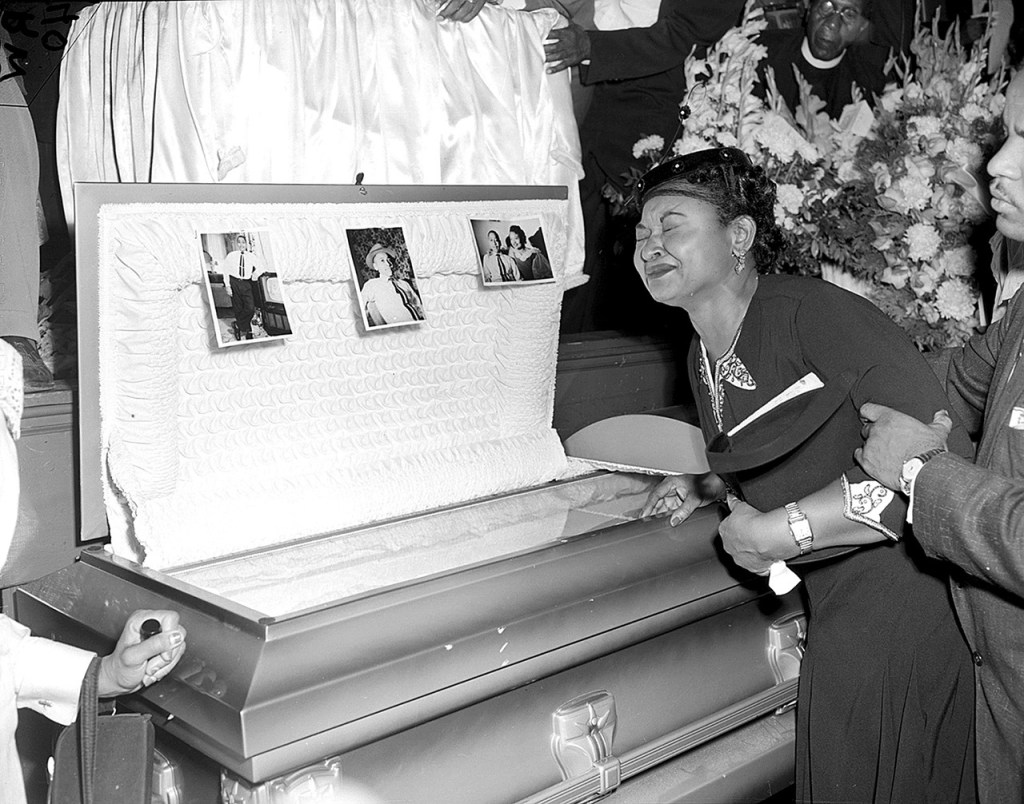
The trial began September 19, 1955, in Sumner, Mississippi.
Roy Bryant and J.W. Milam were charged with murder.
The prosecution presented Moses Wright's identification.
Wright stood in the courtroom and pointed at the two men.
He testified they came to his home in the early morning hours and took Till.
The prosecution also presented medical testimony about the body.
The defense argued the body was not Till.
Too decomposed to identify, they said.
The prosecution had failed to prove identity, the defense argued.
The sheriff had publicly claimed the same thing before the trial.
He said the body was too decomposed to be Till.
The defense echoed that position in the courtroom.
Carolyn Bryant testified at trial.
She was not charged.
The content of her testimony is not in the record.
Only that she testified.
The all-white jury deliberated for just over an hour.
Sixty-seven minutes.
They returned a verdict of not guilty for both men.
Not because the identification was weak.
Not because the medical testimony was inconclusive.
Not because the body was proven to be someone else's.
But because the jury accepted the defense's version.
That the body was not Till.
That the prosecution had not met its burden.
The record does not support the claim that the body was not Till.
The body was found in the Tallahatchie River.
A cotton gin fan was tied to it.
It was identified by a ring bearing Till's father's initials.
The jury walked them free anyway.
THE TWO STORIES
The prosecution laid out two facts and one conclusion.
Moses Wright stood in the courtroom and pointed at the two men.
He testified they were the ones who took Till from his home in the early morning hours.
The body, the prosecution said, was Till's — identified by a ring bearing his father's initials.
The cotton gin fan tied to the body was not an accident; it was physical evidence of murder.
The defense offered a different story, and it was shorter.
The body was not Till.
It was too decomposed to identify, the defense argued.
The prosecution had not met its burden of proof.
That was the whole case for the defense: a denial of identity and a claim of insufficient evidence.
The jury accepted the defense's version.
They deliberated for 67 minutes.
They returned a verdict of not guilty for both men.
The exact nature of the jury's reasoning is not in the record.
Only the verdict and the deliberation time remain.
The acquittal sparked national and international outrage.
Then, in January 1956, Bryant and Milam — protected by double jeopardy — admitted to the killing.
They told the story in a paid interview with Look magazine.
The title was "The Shocking Story of Approved Killing in Mississippi."

They could admit it because they could never be tried again.
The courtroom identification stood.
The body in the river stood.
The confession came months later, outside any courtroom, and it changed nothing legally.
It was a confession. It was also a boast.
AND THE STORY STILL ISN'T OVER
Roy Bryant and J.W. Milam were never retried.
Both men died in the 1980s — Milam in 1980, Bryant in 1994.
In 2004, the U.S. Department of Justice reopened the case after new information emerged.
In 2007, a grand jury in Mississippi declined to indict anyone else.
No one else was ever charged.
Carolyn Bryant died in 2023.
Years earlier, historian Timothy Tyson published an account in which she admitted she had lied about Till grabbing her.
She later disputed the accuracy of that account.
The accuracy of that admission is disputed in the record.
It is not established.
In 2022, the Emmett Till Antilynching Act was signed into federal law, making lynching a federal hate crime.
The law arrived sixty-seven years after the jury walked.
It arrived long after the men who confessed were gone.
What remains is the record: the pointed finger, the body in the river, the verdict.
It is a record of what a jury was willing to accept.
It is also a record of what the law could not reach.
The case is not closed.
It is incomplete.
The search for justice continues.
Advertisement
You may also like

The 1976 Sacramento rapes that led to a 40-year hunt for a serial predator
It began with reports of a man who slipped through bedroom windows in the Sacramento area of California. The first rapes were reported in…

The fiber evidence that linked a photographer to two river murders — and the trial that hinged on it
The officers were on a bridge over the Chattahoochee River when they heard the splash. It was May 22, 1981, and they saw a…
The jailhouse confession that cracked the Manson case — and the witness who changed everything
Somewhere in the Los Angeles County jail, a woman named Susan Atkins started talking. She was jailed on unrelated charges, a member of the…
Why the defense said Muhammad wasn't at the scene — and the jury still convicted
The Chevrolet Caprice was parked at a rest stop near Myersville, Maryland, when police arrested two men sleeping inside. In the trunk, officers found…

The dog kennel video that shattered a lawyer's alibi in the Murdaugh murders
It begins with a dog kennel. Investigators obtained cellphone video from the kennel on the Murdaugh family’s hunting estate in Colleton County, South Carolina.…
The folded pajama top that unraveled a Green Beret doctor's story of intruders
The pajama top was folded. That is the detail that does not fit. On February 17, 1970, at Fort Bragg, North Carolina, army physician…