The jailhouse confession that cracked the Manson case — and the witness who changed everything
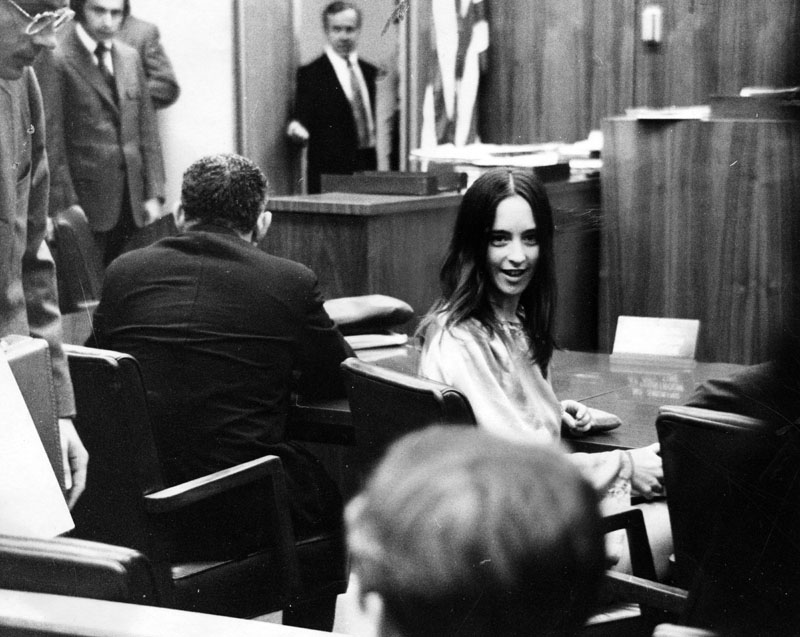
Somewhere in the Los Angeles County jail, a woman named Susan Atkins started talking.
She was jailed on unrelated charges, a member of the group led by Charles Manson.
She told cellmates about the murders.
One cellmate, Veronica Graham, and another inmate, Virginia Graham, reported her statements to authorities.
That is what the investigation record shows: she told them, and they reported it.
The exact wording of what Atkins said is not in the record.
Only that she said something, and that something rewired a stalled investigation.
Before that, the case was going elsewhere.
The investigation initially focused on drug deals.
It chased a rumour connecting the Tate murders to a film industry figure.
Neither lead broke the case.
At the time of Atkins's statements, the murders at 10050 Cielo Drive and the LaBianca home were not yet linked to Manson's group.
Five people dead in Benedict Canyon on August 9, 1969.
Two more dead in Los Feliz the following night.
No connection, not yet.
Then a jailhouse boast.
A random confession from a cellblock.
The case summary says her statements helped break the case.
It is a sudden pivot.

Not a forensic breakthrough.
Not a witness at the scene.
A woman talking in jail, and two inmates who listened.
That would require evidence to verify.
The record gives the report, not the words.
The pivot is documented.
The rest would come later, in testimony.
TWO NIGHTS, SEVEN DEATHS
Two nights. Seven dead.
On the night of August 9, 1969, five people were murdered at 10050 Cielo Drive in Benedict Canyon.
Actress Sharon Tate, eight months pregnant, was among them. Jay Sebring was among them. Three others died in that house.
The following night, August 10, Leno and Rosemary LaBianca were murdered in their Los Feliz home.
Two separate crime scenes. Seven victims. One group.
According to the case summary, the killings were carried out by members of a group led by Charles Manson.
Manson directed the attacks, the record states, but did not participate in them.
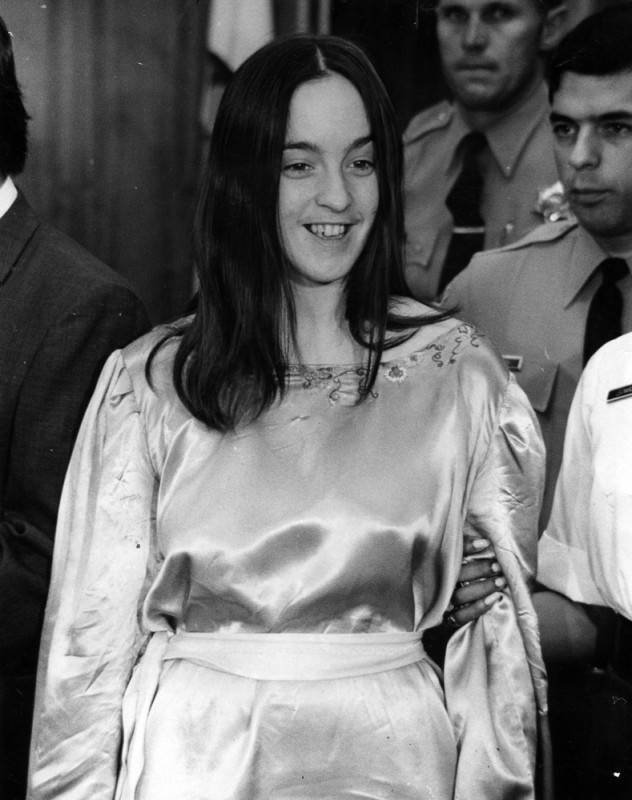
The direct perpetrators were Tex Watson, Susan Atkins, Patricia Krenwinkel, and Linda Kasabian, who drove the car.
Leslie Van Houten participated in the LaBianca murders.
The crimes were discovered the following morning.
The Tate housekeeper, Winifred Chapman, found the bodies at Cielo Drive.
The LaBiancas' son found his parents.
The exact sequence of events inside each house is not detailed in the source.
Only the victims, the locations, and the perpetrators are on the record.
What happened between the front door and the discovery remains in testimony.
What was said, what was done, in what order — that would require evidence.
The record gives the scene. The record gives the names.
The record does not give the minutes.
That would come later, in a courtroom, from a witness who was there.
THE WITNESS WHO CHANGED EVERYTHING
She drove the car on both nights.
That is what the record shows, and that is what she said.
Linda Kasabian was charged alongside Charles Manson, Susan Atkins, Patricia Krenwinkel, and Leslie Van Houten.
All five were charged with first-degree murder and conspiracy when the trial began in June 1970.
Kasabian was granted immunity in exchange for her testimony.
She became the prosecution's key witness.
Her testimony detailed the planning and execution of both nights of killings, according to the investigation record.
The prosecution's case rested heavily on her word.
One witness carried the entire case.
The defence argued that the prosecution's witnesses were unreliable.
:max_bytes(150000):strip_icc():focal(749x0:751x2)/patricia-krenwinkel-then-now-060225-d0f0385812db48c2b07c7ce904cf8004.jpg)
The defence argued that Manson had not been present at the murders.
That would require evidence, and the record does not give the specific content of Kasabian's testimony beyond planning and execution.
Not the minutes.
Not the words.
The trial gave the scene.
The trial gave the names.
What Kasabian said from the stand is not established in the record.
It is a witness's account, and the defence said it was not enough.
She was there.
She drove.
She spoke.
The jury deliberated for nine days.
That is the weight of a single witness's word.
THE TRIAL'S TWO STORIES
The prosecution told one story: Manson directed the attacks but did not take part.
Linda Kasabian's testimony placed him at the centre of the planning, and Susan Atkins's jailhouse statements to cellmates backed her up.
The defence told another story.
The prosecution's witnesses were unreliable, the defence argued, and Manson had not been present at the murders.
Whether Manson was physically present at either murder scene is not established.
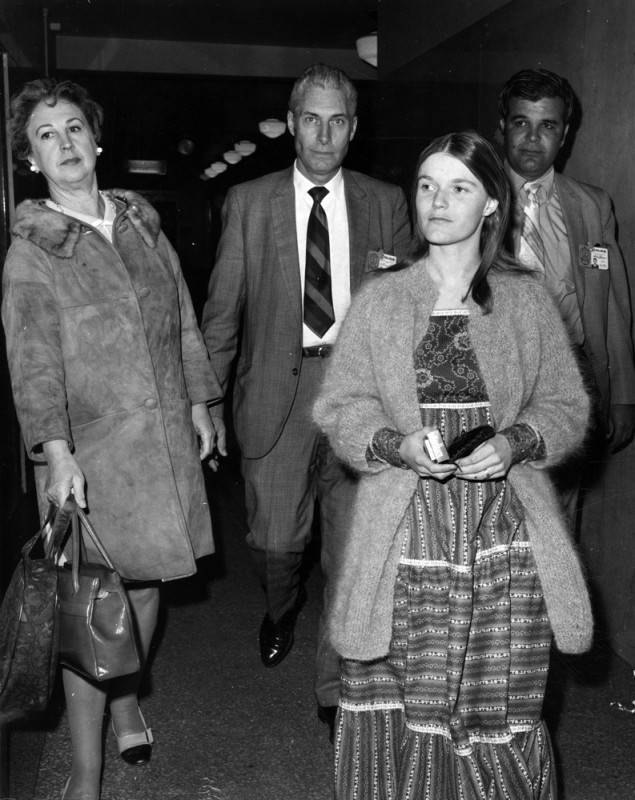
The defence's claim is recorded, not proven.
The trial was not quiet.
Manson and the female defendants appeared in court with X's carved on their foreheads.
The judge kept order; the record does not say how.
The jury heard both stories.
They deliberated for nine days.
Then they convicted Manson, Atkins, Krenwinkel, and Van Houten on all counts.
Kasabian, granted immunity, was not convicted.
She was the witness who changed everything, and she walked free.
She died in 2020.
The two stories never fully merged.
One said direction.
One said absence.
The jury chose direction, and that choice rests on testimony, not on physical proof.
It is a case built on words.
It is also a case that ended in convictions.
The record holds both, side by side, and asks you to weigh them.
AND THE STORY STILL ISN'T OVER
The four convicted — Manson, Atkins, Krenwinkel, and Van Houten — were sentenced to death.

In 1972, the California Supreme Court abolished the death penalty.
Their sentences were commuted to life with the possibility of parole.
The long tail began there.
Charles Manson died of natural causes on November 19, 2017, at Corcoran State Prison.
Susan Atkins died in prison on September 24, 2009.
Patricia Krenwinkel and Leslie Van Houten remain in prison.
Van Houten's parole was granted in 2023.
Governor Gavin Newsom blocked it.
Tex Watson was convicted separately in 1971 and sentenced to death, later commuted to life.
He remains incarcerated.
Linda Kasabian, granted immunity, died in 2020.
The witness who changed everything is gone.
The cellmate whose tip cracked the case is gone.
The man who directed the attacks is gone.
What remains is the record.
It is a record of hearings and denials, of releases granted and blocked, of deaths inside the walls.
It is also a record of testimony weighed and argued over decades.
The next concrete step — a future parole hearing date — is not specified in the source.
That would require evidence.
The trial ended in convictions.
The story did not.
Advertisement
You may also like
The body drained of blood and posed — and the only clue was a name
The morning of January 15, 1947, in a vacant lot at 39th Street and Norton Avenue in Leimert Park, Los Angeles. A woman's body…
The 1995 bomb that killed 168 — and the trailer axle that cracked the case
The rear axle of the Ryder truck was a twisted piece of metal, recovered from the rubble within hours. It carried a vehicle identification…
The Green River Killer confession that led detectives to 48 counts — but how many bodies are still missing?
The first bodies were found in 1982, in and around the Green River south of Seattle. Dozens of women disappeared or were found dead…
Manson's follower turned jailhouse informant: the words that cracked the Tate case
She was in jail for something else. Susan Atkins, twenty-one years old, sat in a Los Angeles County cell and told her cellmate, Virginia…
The 340 cipher that took 51 years to crack — and still named no killer
The 340 cipher sat unsolved for fifty-one years. On December 5, 2020, a team of codebreakers—David Oranchak, Sam Blake, and Jarl Van Eycke—announced they…
The fishing trip alibi that unraveled Scott Peterson's story — what did he say to his neighbor?
He told police he had gone fishing at the Berkeley Marina that morning. He told a neighbor something else. According to investigation records, Scott…