The body drained of blood and posed — and the only clue was a name
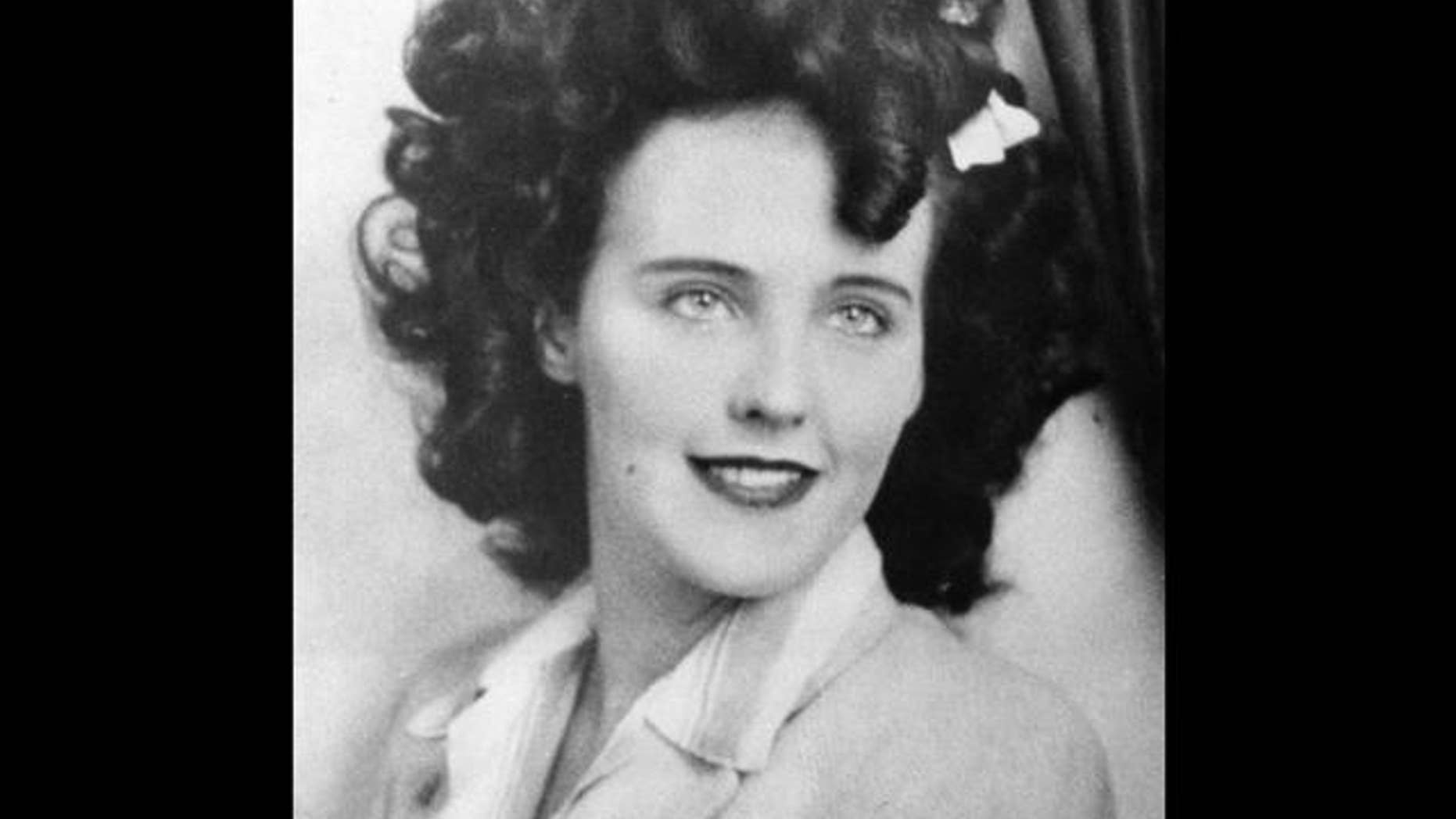
The morning of January 15, 1947, in a vacant lot at 39th Street and Norton Avenue in Leimert Park, Los Angeles.
A woman's body lay there.
The body was severed at the waist, drained of blood, and posed.
The victim was later identified through fingerprints as Elizabeth Short, a 22-year-old aspiring actress.
The case became known as the "Black Dahlia" murder.
A nickname reportedly derived from the film *The Blue Dahlia* and Short's dark clothing and hair.
Reportedly.
The record does not establish the nickname's origin beyond that report.
Nor does it establish who killed her.
No one was ever charged.
The murder was never solved.
The body had been cleaned and posed, suggesting careful staging.
No weapon was ever found.
No reliable witnesses came forward.
She was on the ground, in the lot, in the morning.
Who was she before that?
Who posed her after?
Who cleaned her and drained her and left her there?
The record does not say.
It says she was Elizabeth Short, 22, an aspiring actress.
It says she was identified through fingerprints.
It says the case became famous, and the case went cold.
It is one of the most extensive investigations in Los Angeles history at the time.
It is also a file with no charge, no trial, no conviction.
The identity of the killer is not established.
That is the fact the record leaves open.
THE LAST KNOWN SIGHTING
Robert "Red" Manley was the last known person to see Elizabeth Short alive.
He had driven Short to Los Angeles in early January 1947.
She was alive when he dropped her off.
That is where the record ends.
What happened after Manley left her is not in the record.
No reliable witnesses came forward.
Manley was questioned extensively by investigators.
He was cleared.
The investigation was one of the most extensive in Los Angeles history at the time.
The LAPD and the District Attorney's office ran parallel investigations.
They interviewed hundreds of people.
They received thousands of tips.
They examined Manley's story.
They checked his movements against the timeline.
They found no connection.

He was a promising lead.
It collapsed.
The case started to slip in those first weeks.
A man who drove her across the state, who was the last to see her alive, walked away with nothing against him.
Not because he was cleared by proof.
Because the evidence was not there.
The body had been cleaned and posed.
The killer left no weapon.
The killer left no witnesses.
The killer left only a name in the newspapers: the Black Dahlia.
And a man who said goodbye.
No charge followed Manley.
No trial followed anyone.
The file stayed open, and the lead stayed dead.
THE CONFESSIONS THAT WEREN'T
The confessions arrived in a stream.
Dozens of people walked into police stations and said they had done it.
One by one, they were interviewed, checked, and released.
None of the confessions were credible.
Each one was a dead end, and the detectives walked back to the same empty file.
The body itself offered little to hold onto.
It had been cleaned and posed, the work of someone careful with time.
That staging suggested planning, but it suggested nothing about who planned it.
No weapon was ever found.
No reliable witnesses came forward.
The lot at 39th and Norton gave up nothing else, and neither did the city.
The case went cold within months.
It was revisited periodically over the decades, each reopening a fresh look at the same silence.
Later speculation named several individuals.
One name, a doctor, surfaced in the talk that followed.
No evidence ever linked anyone to the crime.
That is not established, and the record does not suggest otherwise.
The detectives interviewed hundreds of people.
They received thousands of tips.
They followed the leads until the leads stopped being leads.
No charge followed Manley, and no charge followed anyone else.
There was no trial.
No suspect was ever charged with the murder of Elizabeth Short.
The file stayed open, and the lead stayed dead.
THE TWO STORIES OF THE SAME BODY
The prosecution's case — had there been one — would have begun with the body itself.
The body was cleaned, drained, severed, and posed.
That is a fact, and it is a fact that suggests staging.
Staging suggests intent, and intent suggests a person who planned, not a person who panicked.
But the prosecution's case would have needed more than a suggestion.
It would have needed a weapon.
No weapon was ever found.
It would have needed a witness.
No reliable witness ever came forward.
It would have needed a link — a thread of evidence tying one named person to the scene.
No such link was ever produced.
The defense's case — had there been one — would have been built from that absence.
No weapon.
No witness.
No physical connection to any suspect.
The defense would have said: the staging is real, but its meaning is not known.
The staging is a fact.
The identity of the killer is not established, and the record does not establish who posed the body or why.
It is a story the body tells.
It is also a story the body cannot finish.
The DA's office and the LAPD ran parallel investigations, each chasing the same dead end.
Neither produced a charge.
There was no trial.
No suspect was ever charged with the murder of Elizabeth Short.
What remains is the gap between what the body suggests and what the record proves.
That gap is where a verdict should sit.
It sits empty.
AND THE STORY STILL ISN'T OVER
The case remains officially unsolved.
The Los Angeles Police Department has periodically reopened the investigation, but no arrest has ever been made.
The LAPD has stated the case remains open.
That is the whole of the record: an open file, a cold trail, a name.
Elizabeth Short was buried in Mountain View Cemetery in Oakland, California.
Her mother, Phoebe Short, died in 1982.
The case has been the subject of numerous books, films, and documentaries, but no definitive resolution has ever been reached.
The books offer suspects. The films offer endings. The documentaries offer theories.
None of them offer a charge.
The next concrete step is not in the record. The case is open, but no active lead is documented.
That would require evidence.
The decades sit between the lot at 39th and Norton and the present day. The file sits between the detectives who worked it and the ones who inherit it.
It is a famous case. It is also a closed one, in every way that matters except the official sense.
The body was drained. The story was not.
The gap between what the body suggests and what the record proves remains exactly where it was in 1947.
It sits empty.
It has sat empty for more than seventy years.
Advertisement
You may also like
The cell tower records that placed Adnan Syed near Leakin Park — and the defense that tore them apart
The note was found in Hae Min Lee's car, and it read "I'm going to kill." Prosecutors argued Adnan Syed wrote it. The defense…
The 2002 fishing trip that Scott Peterson said explained everything — and the boat anchor that didn't match
December 24, 2002, and Scott Peterson reports his eight-months-pregnant wife Laci missing from their Modesto home. He says he spent that morning fishing at…
The 3:15 a.m. attack that 38 neighbors reportedly heard — but the timeline has a hole
She was almost home. Catherine "Kitty" Genovese, 28, had walked from her job at Ev's 11th Hour Bar to her apartment building at 82-70…
The white Cadillac witness said he was inside — 27 years later, one man faces trial
A white Cadillac pulled alongside a BMW sedan on the Las Vegas Strip. It was September 7, 1996, and gunfire erupted. The BMW carried…
The phone call that made a friend dial police — and the interview that followed
The missed appointment was a doctor’s appointment, and the phone went unanswered. On August 13, 2018, in Frederick, Colorado, a friend called police to…
The smiley-face confession that made a sister call the police
The note was found in March 1995, near a woman's body in Oregon. It was handwritten, a confession. It was signed with a smiley…