The smiley-face confession that made a sister call the police
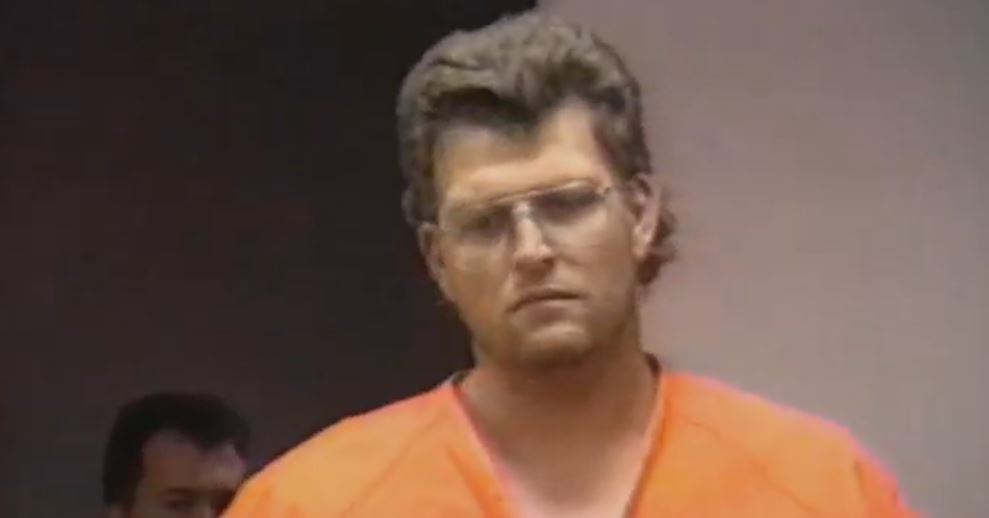
The note was found in March 1995, near a woman's body in Oregon.
It was handwritten, a confession.
It was signed with a smiley face.
That small drawing, a curve and two dots, became the symbol of a case that would capture national attention.
The letter claimed responsibility for the murder.
It was sent to a local newspaper.
It was also sent to the district attorney.
The confession was not from the man already convicted of the crime.
It was from someone else entirely.
Someone who had watched the case from the outside.
Someone who wanted to be known.
The smiley face was the signature.
That is what the record shows.
It is not established as a taunt, not proven as a joke, not explained as a code.
Online, a theory circulated that the smiley face was a taunt.
The record only shows it was a signature.
The media picked up the image quickly.
A smiley face on a murder confession.
It was strange.
It was unsettling.
It was the kind of detail that made the story national.
Who draws that?
Who signs a confession with a smile?
That would require evidence.
The record does not provide it.
The note itself was the first crack in what authorities believed.
A woman had already given a detailed confession.
She and her boyfriend were in prison.
The smiley-face letter contradicted all of it.
It pointed elsewhere.
Somewhere no one had looked.
THE FIRST ARREST
Before the smiley-face letter surfaced, authorities already had their killers.
A woman had given a detailed confession to the murder.
Her confession was specific enough to convince investigators, and she was arrested.
Her boyfriend was arrested too.
They were both convicted and sent to prison.
The case, as far as the public knew, was closed.
The confession made headlines in Oregon.
It read like the work of someone who had been there.
It read like the truth.
Then the smiley-face letter arrived at the district attorney's office.
It contradicted the woman's account in ways the official record could not ignore.
It pointed to someone else entirely.
But the woman and her boyfriend remained in prison.
The conviction stood.
The letter was sent to a local newspaper first.
The media picked it up, and the public began to ask questions.
How could a handwritten note from a stranger undo a closed case?
How could a detailed confession be wrong?
How could the real killer be walking free while two people sat in cells?
The record does not say when the woman gave her false confession.
The record does not name her.
What the record shows is that the letter forced the case to be reopened.
The lead detective in Oregon worked for the Multnomah County Sheriff's Office.
His name is not in the record.
The letter did what the original investigation had not: it pointed somewhere else.
THE SISTER'S CALL
His sister recognised the handwriting before anyone else did.
She read the confession letter, saw the loops and the slant, and she knew.
She contacted the authorities, and the call broke the case open.
The name she gave them was Keith Hunter Jesperson.
He was a long-haul truck driver.
He met women at truck stops and bars along his routes, and the routes ran across the country.
DNA evidence matched him.
Corroborating details in his letters matched the record.
The letters themselves matched the man.
He was arrested, and the case that had already produced one conviction suddenly had a different shape.
Jesperson admitted to additional killings.
California, Washington, Wyoming, Florida — the states stacked up as he talked.
He became known as the Happy Face Killer, named for the smiley face he drew on his confession letters.
The media picked up the name and ran with it.
The public saw the letters in the papers and heard the story on the news.
A sister had turned in her own brother.
That was the detail that stayed.
Not because the police had solved it.
But because a family member recognised what the investigation had missed.
The record does not establish the sister's name.
It establishes only the call, the recognition, and what followed from it.
THE CONFESSION VS. THE RECORD
The smiley face was read as a taunt, a signature, a joke on the system.
Online theories have speculated about what the drawing meant — a mark of pride, a mockery of the hunt, a clue to some deeper ritual.
The record shows only one thing: it was how he signed his name.
He signed it the way another man might sign a cheque.
The letters themselves were the evidence that mattered.
Jesperson sent confessions to media outlets and to the district attorney, and each envelope carried the same looping face.
Those letters contained details only the killer could know.
They matched the scene, the body, the timing.
When he finally stood in an Oregon courtroom in 1998, he pleaded guilty to the first murder.
He pleaded guilty to several murders in other states as well, trading admissions for life sentences instead of the death penalty.
The woman who had given the false confession was released when her conviction was overturned.
Her boyfriend was released too.
Both were later exonerated.
Jesperson has admitted to more killings than he has been convicted of.
Some cases remain unsolved.
Some remain unconfirmed.
The exact number of unconfirmed killings is not in the record.
That would require evidence.
The public at the time saw the smiley face on the news and made it the story.
The record makes it something smaller.
It is a signature.
It is also a confession.
AND THE STORY STILL ISN'T OVER
Jesperson is serving multiple life sentences in Oregon.
He has continued to correspond with journalists from prison.
The woman who was exonerated died in 2021. Her boyfriend, also exonerated, died in 2019.
They were released after their convictions were overturned. They were cleared after Jesperson's confession became the record.
His case has been the subject of documentaries and books.
The smiley face remains in those pages.
It is a symbol. It is also a man still writing letters.
No pending hearings are in the record. The case is closed, but his admissions keep the story alive.
That would require evidence.
What remains is the gap between what he has admitted and what he has been convicted of.
Some cases remain unsolved or unconfirmed. The full truth may never be known.
He pleaded guilty to several murders to avoid the death penalty. He received additional life sentences in other states.
The record holds his convictions. It does not hold the count of everything he has claimed.
The woman and her boyfriend were freed before they died. They died exonerated.
Jesperson remains incarcerated.
The letters kept coming. The smiley face kept signing.
It is a confession. It is also unfinished.
Advertisement
You may also like
The cell tower records that placed Adnan Syed near Leakin Park — and the defense that tore them apart
The note was found in Hae Min Lee's car, and it read "I'm going to kill." Prosecutors argued Adnan Syed wrote it. The defense…
The 2002 fishing trip that Scott Peterson said explained everything — and the boat anchor that didn't match
December 24, 2002, and Scott Peterson reports his eight-months-pregnant wife Laci missing from their Modesto home. He says he spent that morning fishing at…
The 3:15 a.m. attack that 38 neighbors reportedly heard — but the timeline has a hole
She was almost home. Catherine "Kitty" Genovese, 28, had walked from her job at Ev's 11th Hour Bar to her apartment building at 82-70…
The white Cadillac witness said he was inside — 27 years later, one man faces trial
A white Cadillac pulled alongside a BMW sedan on the Las Vegas Strip. It was September 7, 1996, and gunfire erupted. The BMW carried…
The phone call that made a friend dial police — and the interview that followed
The missed appointment was a doctor’s appointment, and the phone went unanswered. On August 13, 2018, in Frederick, Colorado, a friend called police to…
The body drained of blood and posed — and the only clue was a name
The morning of January 15, 1947, in a vacant lot at 39th Street and Norton Avenue in Leimert Park, Los Angeles. A woman's body…