The 2002 fishing trip that Scott Peterson said explained everything — and the boat anchor that didn't match
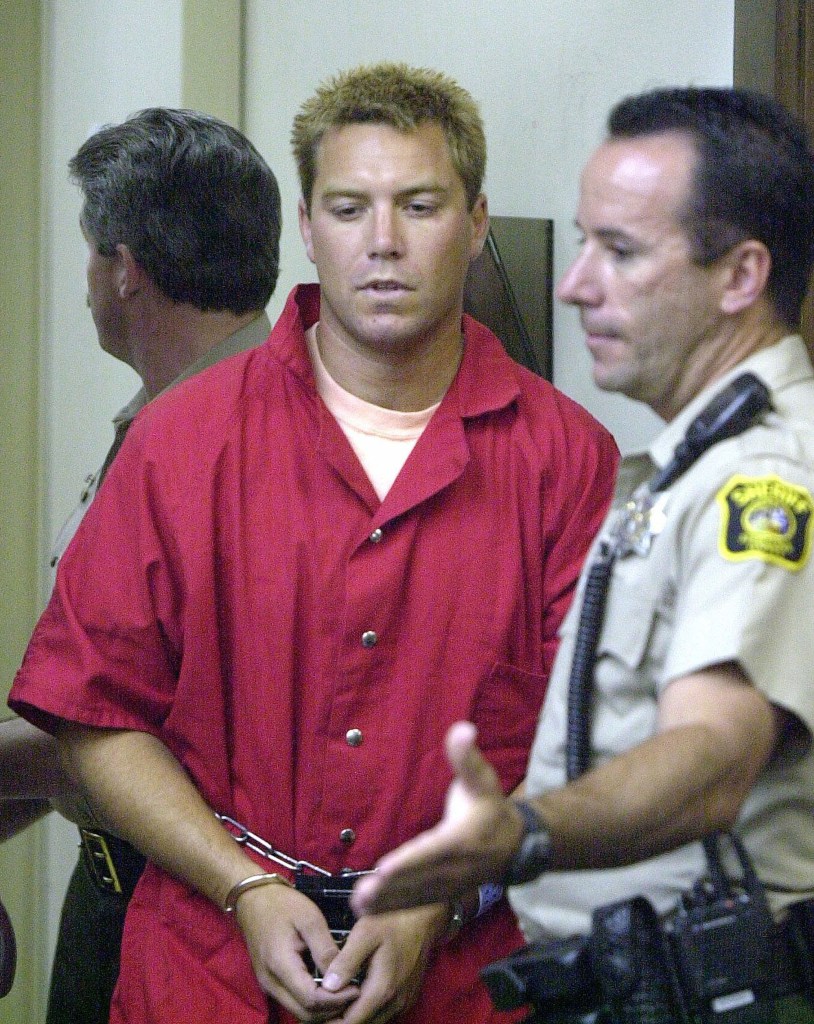
December 24, 2002, and Scott Peterson reports his eight-months-pregnant wife Laci missing from their Modesto home.
He says he spent that morning fishing at the Berkeley Marina.
The public and the media latched onto that story immediately.
Why would a man with a missing pregnant wife go fishing?
Why would he choose that particular morning?
Why would he anchor a boat in a bay on Christmas Eve?
The answer, the record shows, is that whether Scott Peterson actually went fishing that morning is not independently verified.
It is a claim.
Investigators found the story increasingly implausible, according to the case record.
The public believed it or disbelieved it based on feeling, not proof.
The media repeated the claim, and the repetition made it feel like fact.
But a claim repeated is still a claim.
Then the physical evidence arrived.
In April 2003, Laci Peterson's remains washed ashore in San Francisco Bay.
Investigators found a boat anchor near her body.
That anchor, investigators said, was "consistent with" one from Scott Peterson's boat.
Consistent with.
Not a match.
The word "consistent" describes a possibility, not a certainty.
It is a word that allows for other explanations.
It is a word that does not close the case.
The fishing trip remains Scott Peterson's story.
The anchor is physical evidence.

Neither one, on its own, proves what happened that morning.
The public's belief in either is not proof.
That would require evidence.
THE DISAPPEARANCE AND THE SEARCH
Laci Peterson was reported missing on December 24, 2002, from her Modesto home.
She was eight months pregnant, and her husband said he had been fishing that morning.
The investigation initially treated it as a possible abduction.
Hundreds of volunteers searched the Modesto area, combing parks, canals, and orchards.
Cable news carried the vigils live.
Round-the-clock coverage turned a missing pregnant woman into a national story before anyone knew what had happened to her.
In the weeks after her disappearance, Scott sold his wife's car.
He also changed his appearance.
Neither action was illegal.
Both actions drew attention.
In January 2003, a massage therapist named Amber Frey contacted police.
She had learned that the man she had been seeing was married, and that his wife was missing.
She began cooperating with investigators.
She recorded phone calls with him, calls the prosecution would later describe as incriminating.
The search went on for months.
Then, in April 2003, a woman walking her dog found a body on the shore of San Francisco Bay.
It was Laci.
The remains of her unborn son, Conner, washed ashore separately.
The coroner determined her remains had been in the water for months.

The exact circumstances of her death are not in the record.
That was never established.
The hope that she might be found alive ended on that shoreline.
The public's attention did not end.
It only turned toward her husband.
THE TWO STORIES
Two stories stood in that courtroom.
The prosecutor, Rick Distaso, told the jury that Scott Peterson killed his wife to escape impending fatherhood and his affair with Amber Frey.
The boat was the weapon, the anchor the proof, the bay the dumping ground.
Mark Geragos, the defense attorney, told the jury the opposite.
Laci Peterson was abducted and murdered by strangers while walking her dog.
Scott Peterson was a victim of media persecution, a man tried in the press before he ever faced a jury.
The trial began in June 2004 in Redwood City, moved there because the publicity in Modesto had made a fair hearing impossible.
Both sides used the same facts.
The affair.
The boat.
The location of the bodies.
The prosecution built a narrative of a man shedding his old life.
The defense built a narrative of a man destroyed by a circus.
Which story is true is not established by the record.
The jury found him guilty in November 2004, and the verdict is a legal fact.
It is not proof of motive.
It is not proof of what happened on December 24, 2002.

The public had already chosen its story long before the verdict.
Cable news ran the affair on a loop.
The fishing trip was mocked, the anchor photographed, the pregnant victim mourned on every channel.
The media did not decide the case.
But the media made the case a story with two endings, and the public watched both unfold in real time.
Geragos told reporters his client was innocent.
Distaso told the jury his client was a killer.
They were both speaking about the same man, the same boat, the same stretch of water.
That is the tension the record leaves open.
Two plausible stories, built on the same circumstantial evidence.
One of them is true.
The record does not say which.
THE VERDICT AND THE MEDIA CIRCUS
The jury deliberated, and on November 12, 2004, it found Scott Peterson guilty of first-degree murder for Laci and second-degree murder for Conner.
The courtroom had been moved to Redwood City, far from Modesto, because the publicity had made a fair local trial impossible.
Cable news had covered the case around the clock since Laci disappeared.
Public vigils had been held for her.
Speculation about her fate ran for months before her body washed ashore in April 2003.
The verdict landed inside that noise.
During the penalty phase, the jury recommended death, and the judge sentenced Scott Peterson to death in March 2005.
The defense argued that Scott was a victim of media persecution.
That claim resonated with some in the public.
It is a claim.

Whether the media coverage influenced the verdict is not established in the record.
The verdict itself is in the record.
The sentence is in the record.
The coverage is in the record.
What the coverage did to the jurors is not.
Some people watched the trial and believed the prosecution's circumstantial story.
Some people watched the trial and believed the defense's story of strangers.
Both sides used the same facts.
The affair.
The boat.
The place where the bodies surfaced.
The jury chose one story.
The cameras kept rolling either way.
Scott Peterson was led away in March 2005, sentenced to die.
The vigils had ended.
The cable panels moved on.
The doubt some felt did not move on.
AND THE STORY STILL ISN'T OVER
San Quentin is where he remains.
Death row, a cell, a file that keeps growing.
In 2020, the California Supreme Court overturned his death sentence.
The reason was juror misconduct during the penalty phase.
The court upheld the murder convictions.

That distinction is the whole story now.
The conviction stands.
The sentence does not.
A new penalty phase has not yet been held.
When it will occur is not stated in the record.
Not because the case faded. But because the machinery of appeal moves slowly.
Sharon Rocha still speaks.
Laci's mother has continued to advocate for victims' rights, appearing publicly and telling her daughter's story.
The vigils ended long ago.
The cable panels found other trials.
The case remains one of the most heavily covered criminal trials in American media history.
That coverage left something behind.
A public fascination that does not require a verdict to sustain itself.
Periodic news coverage of the appeals keeps the name in rotation.
Each appeal is a headline.
Each headline is a reminder that the story has a middle but no agreed ending.
The fishing trip claim was never proven.
The anchor was physical evidence, but it was not a confession.
The public believed what it believed.
Belief is not proof.
The conviction is documented.
The sentence is in limbo.
The family waits for a penalty phase that has no date.
The record does not say when it will come.
It says only that it has not happened yet.
She was on the ground below, in the bay, in the cold water.
Her name is in the law books now.
Her mother keeps saying it out loud.
Advertisement
You may also like
The 17-year mail-bomb trail that began with a package in Chicago
The package was found in May 1978 at the University of Illinois at Chicago. It was the first in a series. It was a…

The cell tower records that placed Adnan Syed near Leakin Park — and the defense that tore them apart
The note was found in Hae Min Lee's car, and it read "I'm going to kill." Prosecutors argued Adnan Syed wrote it. The defense…
The 3:15 a.m. attack that 38 neighbors reportedly heard — but the timeline has a hole
She was almost home. Catherine "Kitty" Genovese, 28, had walked from her job at Ev's 11th Hour Bar to her apartment building at 82-70…
The white Cadillac witness said he was inside — 27 years later, one man faces trial
A white Cadillac pulled alongside a BMW sedan on the Las Vegas Strip. It was September 7, 1996, and gunfire erupted. The BMW carried…
The phone call that made a friend dial police — and the interview that followed
The missed appointment was a doctor’s appointment, and the phone went unanswered. On August 13, 2018, in Frederick, Colorado, a friend called police to…
The smiley-face confession that made a sister call the police
The note was found in March 1995, near a woman's body in Oregon. It was handwritten, a confession. It was signed with a smiley…