The 17-year mail-bomb trail that began with a package in Chicago
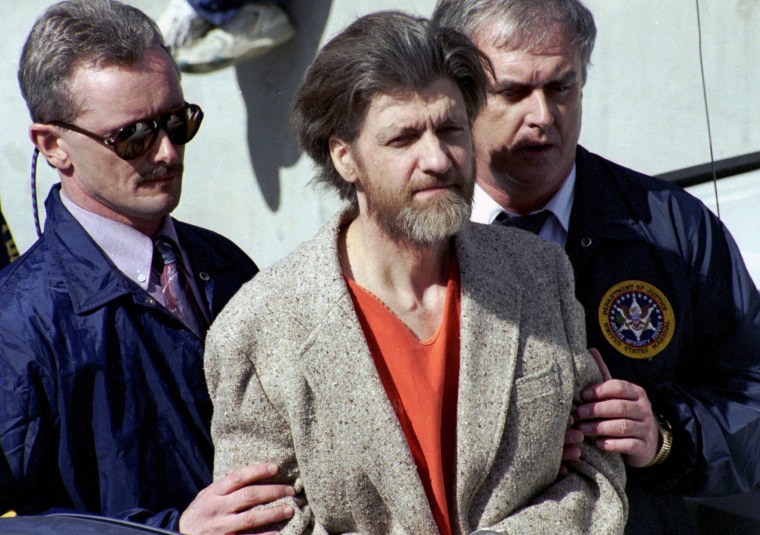
The package was found in May 1978 at the University of Illinois at Chicago.
It was the first in a series.
It was a bomb, though it was found before it detonated.
The case became known as the Unabomber case, a portmanteau of "university" and "airline bomber."
Over 17 years, the bombs killed three people and injured 23 others across the United States.
The attacks targeted universities, airlines, and technology-related businesses.
A theory circulating online — not a fact established by the record — frames the perpetrator as a misunderstood genius.
The documented record shows a campaign of mailed explosives.
The identity of the sender of the first package is not in the record.
Not because the investigation lacked leads.
Not because the package was unremarkable.
But because the record simply does not establish who mailed it that day.
So the trail begins with a package.
One package, found on a campus, in a city, in a year.
What it contained would not be fully understood for nearly two decades.
What it began would not end until three people were dead.
That is the weight of a single parcel.
Curiosity is the right response: how does one package ignite a 17-year manhunt?
It starts here, in Chicago, in May 1978.
The package was the first.
1978–1987: THE FIRST BOMBS
It starts here, in Chicago, in May 1978.
The package was found at the University of Illinois at Chicago. It was the first.
Over the next years, the bombs came in packages. They were mailed or hand-delivered.
They were built from wood, metal, and household materials. They looked ordinary. They were not.
The targets were specific: universities, airlines, and technology-related businesses. The case would take its name from those first two categories.
The attacks escalated. In 1985, a computer store owner was killed. He was the first fatality.
Not the last. But the first.
Then, between 1987 and 1993, the bombs stopped. A pause. A silence that lasted years.
The exact number of bombs in this period is not specified in the record. What is known is the pattern: the packages, the materials, the targets.
Each bomb was a message. Each package was a question no one could answer yet.
The investigators examined the wood. They examined the metal. They examined the household materials.
They found a signature, but not a name.
The pause was not an end. It was a breath.
The man who would later confess to the campaign was still out there. The bombs would return.
But that comes later. For now, the first bomb sat in Chicago, and no one knew what it was.
1993–1995: THE FINAL BOMBS AND THE MANIFESTO
In 1993, a Yale professor and a geneticist were injured in separate bombings.
The specific dates of those 1993 injuries are not in the record.
In 1994, an advertising executive was killed.
In April 1995, the final bombing killed a timber industry lobbyist in Sacramento, California.
The pause between 1987 and 1993 was over, and the bombs had returned with a faster rhythm.
Three dead. Twenty-three injured. Seventeen years.
The FBI's investigation, code-named UNABOM, was one of the longest in bureau history.
Then came the turning point.
In 1995, the Washington Post published the Unabomber's 35,000-word manifesto, "Industrial Society and Its Future," at the urging of the FBI and Attorney General Janet Reno.
The publication was a calculated gamble.
It was a demand met. It was also a trap set.

The manifesto was printed, and the words went out to the public.
Someone would read them.
Someone would recognize the voice.
The bombs had killed, and the manifesto would name the bomber — but not yet.
That would require a reader in a specific place, with a specific memory.
The death toll had risen. The document was in print. The record was about to turn.
THE BROTHER'S CALL AND THE CABIN
The manifesto was in print, and a reader in a specific place had a specific memory.
David Kaczynski read the published text and recognized the writing style.
His wife, Linda Patrik, recognized it too.
They contacted the FBI.
That call turned the investigation, code-named UNABOM, toward a remote cabin in Lincoln, Montana.
The cabin belonged to Theodore “Ted” Kaczynski, a former mathematics professor and David’s older brother.
Forensic analysis of the bombs had already linked the attacks.
Wood and metal components from each device matched, piece by piece.
The FBI’s linguistic analysis of the manifesto was crucial.
An FBI linguistic analyst studied the document’s phrasing and vocabulary.
The analysis pointed to the same man the brother’s call had named.
In April 1996, agents searched the Montana cabin.
They found bomb-making materials.
They found a live bomb.
They found a journal that prosecutors said contained detailed accounts of the attacks.
They also recovered a typewriter used to write the manifesto.
The record does not establish the exact date of the arrest.
It establishes the month, the place, and the man.
Ted Kaczynski lived alone in that cabin, without electricity or running water.
He had been a mathematics professor, then he was not.
He was charged in 1996 with ten counts of illegal transportation, mailing, and use of bombs, plus three counts of first-degree murder.
The suspect was identified. The cabin was searched. The typewriter was found.
The relief was real. The dread was real. The case was no longer a trail of packages; it had a name.
AND THE STORY STILL ISN'T OVER
He was charged in 1996 with ten counts of illegal transportation, mailing, and use of bombs, plus three counts of first-degree murder.
He initially faced the death penalty.
In January 1998, he attempted to dismiss his attorneys and sought to represent himself, but the court denied the request.
On January 22, 1998, he pleaded guilty to all charges, accepting a life sentence without the possibility of parole.
He was sentenced to four consecutive life terms plus 30 years.
He was incarcerated at the federal supermax prison in Florence, Colorado, until 2021, then transferred to a federal medical center in North Carolina.
He died on June 10, 2023, at age 81.
The specific details of his final years are not in the record.
David Kaczynski has spoken publicly about the case and has advocated for mental health awareness.
The cabin where his brother lived was moved to a museum in Washington, D.C., in 2023.
The trail of packages ended not with a verdict but with a plea.
It ended with a name, a cabin, and a sentence measured in lifetimes.
It is a landmark in FBI history. It is also a brother's story.
The linguistic analysis held. The manifesto was published. The record was closed.
What remains is the aftermath.
What remains is a museum artifact and a brother who speaks.
What remains is the question of how a life narrows to a cabin, then to a cell, then to a date.
That question is not answered in the record.
Advertisement
You may also like
The fingerprint on a pillowcase that sealed a killer's fate — and the appeals that keep him alive
The pillowcase was ordinary. It sat in Polly Klaas's mother's home in Petaluma, California, on the night of October 1, 1993. Twelve-year-old Polly was…
The Green Beret's 'intruder' story the media believed — and the torn pajama top that undid it
The pajama top was folded. Not wadded, not dropped, not torn off in a struggle and left where it fell. Folded, and placed in…
A former cellmate's tip that broke a Kansas farmhouse murder case wide open
A former cellmate of one of the perpetrators told prison authorities about a plan to rob the Clutter family. The tip came after the…
A floppy disk sent to a TV station — the clue that would end BTK's 30-year silence
It was a floppy disk. In 2004, after a 25-year silence, the BTK killer sent one to a Wichita television station. A floppy disk.…
The cotton gin fan that pulled a 14-year-old from Chicago into Mississippi's darkest river
On the evening of August 24, 1955, a 14-year-old Black teenager from Chicago walked into Bryant's Grocery and Meat Market, a small country store…
The abandoned white pickup truck that held the clue to Versace's killer
A white Chevrolet pickup truck sat abandoned in a parking garage in Miami Beach. The date was July 15, 1997. Inside the truck, police…