The Green Beret's 'intruder' story the media believed — and the torn pajama top that undid it
The pajama top was folded.
Not wadded, not dropped, not torn off in a struggle and left where it fell.
Folded, and placed in a drawer.
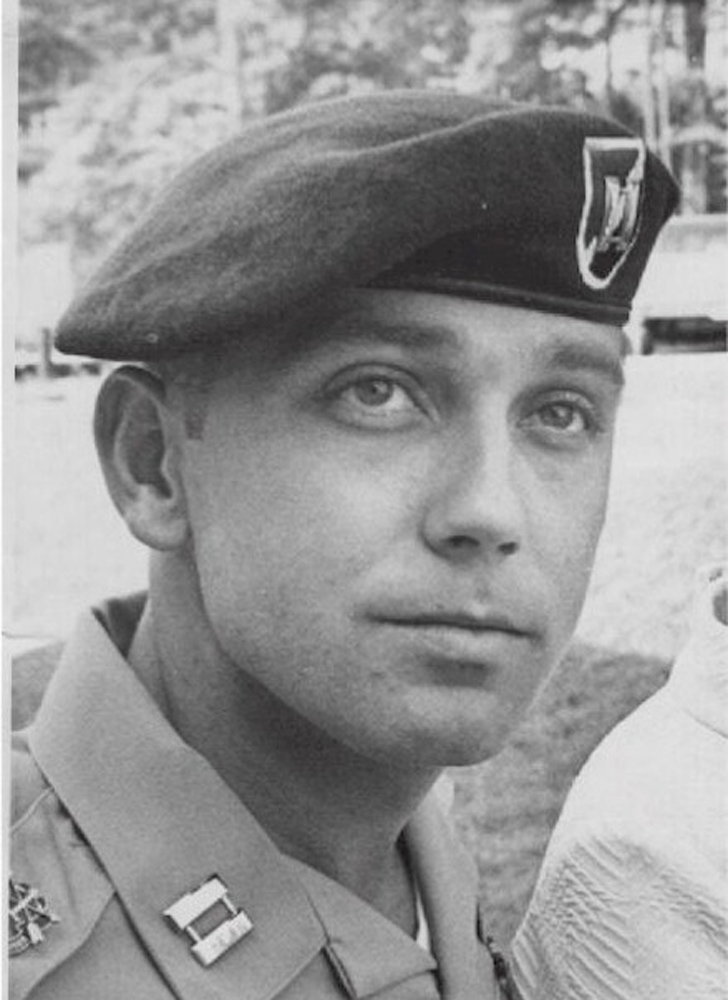
On February 17, 1970, at Fort Bragg, North Carolina, Army Captain Jeffrey MacDonald, a Green Beret physician, reported that four intruders—three men and a woman—attacked his family in their home on the base.
He claimed the intruders chanted "acid is groovy" and "kill the pigs" before attacking.
He said the torn pajama top was from the attack.
Investigators found it folded and placed in a drawer.
That is an inference by investigators.
The exact origin of the fold is not established.
But the fold is where the story begins to bend.
The media at the time framed MacDonald as a grieving husband and a decorated officer.
The intruder story was widely believed.
Newspapers and television repeated it.
A folded piece of clothing does not shout.
It sits in a drawer, patient.
It waits for someone to ask how it got there.
How does a torn pajama top end up neat?
How does a struggle end in a drawer?
How does a national story survive a fold?
That would require evidence.
THE INTRUDER STORY
Military police reached the quarters on the night of February 17, 1970.
They found Colette MacDonald and her daughters, Kimberly and Kristen, dead from multiple stab wounds and blunt-force injuries.
Captain Jeffrey MacDonald, a Green Beret physician, had minor injuries.
He told them four intruders had done it — three men and a woman.
He said they chanted "acid is groovy" and "kill the pigs" before attacking.
The media believed him.
Newspapers and television initially framed MacDonald as a grieving husband and a decorated officer, a victim of a senseless, drug-fueled assault.
The story was a national sensation.
It played into the fears of the era: hippies, drugs, anti-war sentiment, violence reaching into the heart of a military family's home.

Sympathy sat with the captain.
He was a Green Beret, a doctor, a man who had lost everything in a single night.
The public saw a hero.
The public saw a survivor.
The public saw a widower.
The identities of the alleged intruders are not established.
They are part of MacDonald's claim, repeated in headlines and on television, but the record does not name them.
That would require evidence.
The evidence, when it came, did not cooperate.
The military hearing in July 1970 began to pull at the threads.
Inconsistencies emerged in his account.
The story that had gripped the nation started to fray.
Sympathy shifted slowly, then decisively, away.
THE TORN PAJAMA TOP
The torn pajama top was the hinge.
MacDonald said an intruder tore it during the attack.
Investigators found it folded, placed in a drawer.
A folded garment does not fly off in a struggle.
It sits, placed by a hand.
That hand, the prosecution would argue, was his.
The blood evidence did not help his story.
The victims' blood was on MacDonald's clothing.
His account of the attack did not match the physical scene.
The media had believed him; the record began to disagree.
Not because of one dramatic revelation.
But because of a hundred small contradictions, each one folding over like fabric.
In July 1970, a military hearing led by Colonel Warren Rock weighed the evidence.
It found probable cause to charge MacDonald.
Then the Army dropped the charges, citing insufficient evidence.
The public's sympathy, which had clung to the grieving officer, started to pull away.
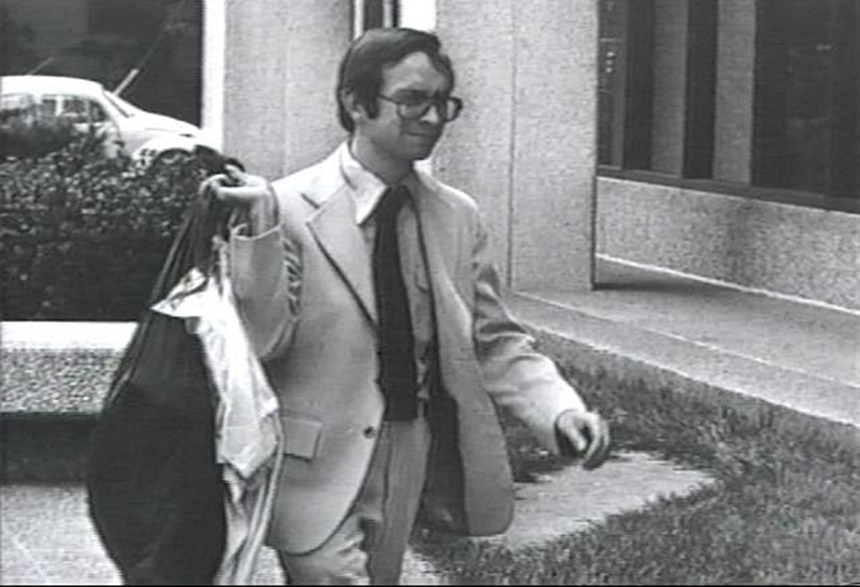
The exact sequence that left the pajama top folded is not established.
It is an inference from the object itself.
That would require evidence of a struggle in the drawer.
There was none.
THE RECANTED WITNESS
Helena Stoeckley said she had been at the house that night.
She said she had visions of the murders.
She was a key witness, and her story was exactly what the defense wanted to hear.
It was also exactly what the record could not hold.
Her testimony shifted. It contradicted itself. It fell apart on the stand.
She later recanted.
That would require evidence of her involvement, and the record does not establish it.
What the record does establish is a case that would not close.
The Army had dropped charges in 1970, citing insufficient evidence.
The public believed the intruder story; the media had framed MacDonald as the grieving husband.
Then the torn pajama top surfaced, and the folded cloth undid the narrative.
The case was reopened in 1974 after a grand jury investigation.
MacDonald was indicted in 1975.
The prosecution argued he killed his family in a rage, possibly triggered by marital discord.
The motive was not definitively established.
The defense argued the evidence was circumstantial.
The defense argued the crime scene was contaminated.
The defense argued the investigation was botched.
She was a woman who said she was there. Then she said she wasn't.
Was she lying the first time? Was she lying the second time?
Was she telling the truth in a vision no one could verify?
That would require evidence.
There was none.
AND THE STORY STILL ISN'T OVER
A federal jury in Raleigh, North Carolina, heard the case in 1979.

MacDonald was charged with three counts of first-degree murder.
The prosecution brought the folded pajama top into the courtroom.
They brought the blood spatter analysis.
They brought the blood of his wife and daughters, found on his clothing.
The defense argued the crime scene was contaminated.
The defense argued the evidence was circumstantial.
The jury deliberated.
They found him guilty on all three counts.
The judge sentenced him to three consecutive life terms.
The verdict was upheld on appeal.
MacDonald has maintained his innocence through every appeal.
He has filed numerous legal motions.
All have been unsuccessful.
He remains in federal prison in Maryland.
The motive was never definitively established.
The prosecution argued a rage, possibly triggered by marital discord.
That was a theory.
The record does not establish it.
MacDonald’s guilt is established by conviction.
His claims of innocence persist.
They persist in filings.
They persist in books.
They persist in documentaries.
The media that once believed the intruder story now covers the folded pajama top.
The public that once grieved with him now questions him.
The case is cited in discussions of forensic evidence.
It is cited in discussions of media influence.
It is both.
The story ended in a courtroom.
The question of what really happened in that house did not end there.
That question remains open.
That would require evidence no one has produced.
Advertisement
You may also like
The rifle that six sleeping DeFeos were shot with — and the son who confessed
The call came on November 13, 1974. A neighbor placed it to the Suffolk County Police Department. Officers arrived at 112 Ocean Avenue in…
The floppy disk trace that unmasked a church leader as BTK after 30 years
A floppy disk arrived at a Wichita newspaper in 2004, sent by someone claiming to be the BTK killer. It was a taunt, a…
The notebook found beside Brian Laundrie's remains that changed the Gabby Petito case
On October 20, 2021, Brian Laundrie's remains were found in the Carlton Reserve in Florida. A notebook lay nearby. Inside that notebook was a…
The anonymous call that shifted the Hae Min Lee case toward Adnan Syed
She was 18. Hae Min Lee left Woodlawn High School on January 13, 1999, and never arrived at the daycare to pick up her…
A parolee's palm print on a bedpost — and the 64-day search that followed
The bedpost stood in a twelve-year-old's room. On the night of October 1, 1993, Polly Klaas was having a slumber party with two friends…

Why 48 life sentences followed a plea deal that spared Gary Ridgway the death penalty
The number stunned even seasoned court observers. In 2003, Gary Ridgway, a truck painter from Auburn, Washington, pleaded guilty to 48 counts of aggravated…