The anonymous call that shifted the Hae Min Lee case toward Adnan Syed
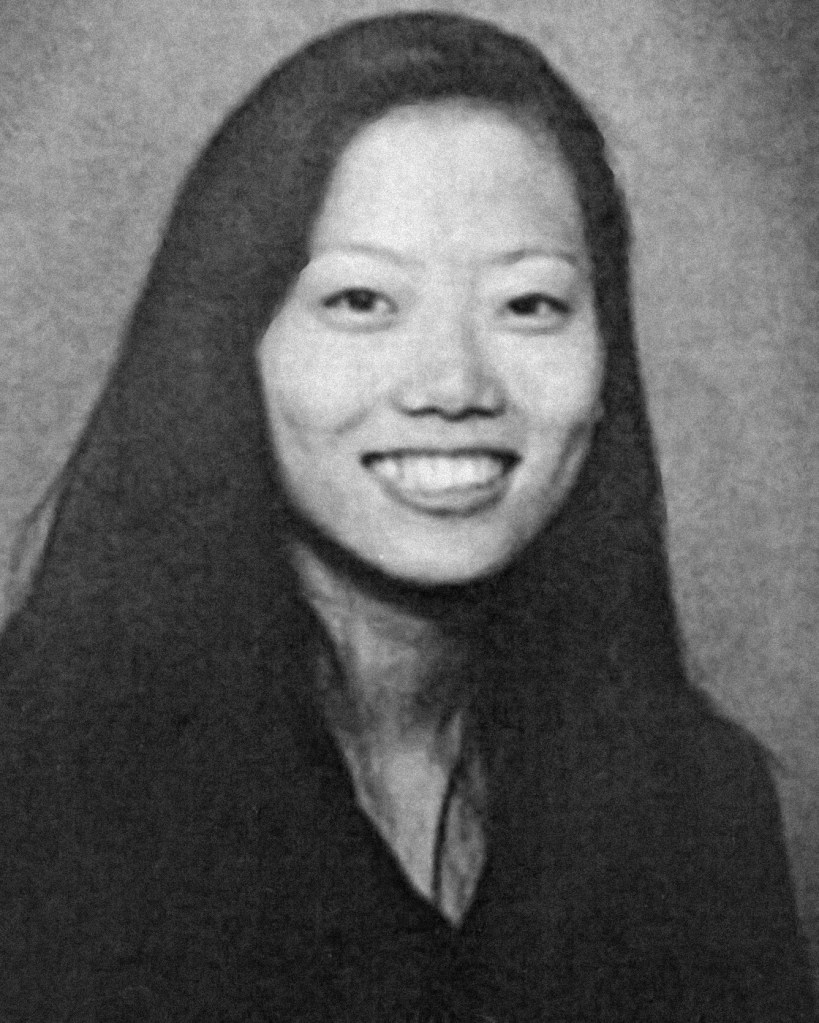
She was 18.
Hae Min Lee left Woodlawn High School on January 13, 1999, and never arrived at the daycare to pick up her cousin.
Police began investigating the moment she failed to show.
They searched.
They asked questions.
They had a missing girl, an abandoned car in a city park, and no suspect.
Then the phone rang.
An anonymous caller pointed detectives toward Adnan Syed.
That is how the investigation shifted.
Not because of a witness who came forward.
Not because of physical evidence at a crime scene.
Not because of a confession.
Because of a voice on the line whose name the record does not contain.
The caller's identity is not established.
The exact words of the call are not established.
What is established is the effect: the focus landed on Lee's ex-boyfriend, and it never really left him.
What did the caller say?
Who was the caller?
Why did police treat that single unnamed tip as a direction?
The record holds no answer.
It holds only the consequence.
An anonymous call redirected a murder investigation.

Everything that followed — the arrest, the trial, the conviction, the decades of dispute — traces back to that one unidentified voice.
That would require evidence.
The record does not provide it.
THE SEARCH AND THE BODY
Her car was found abandoned in a city park.
That was before her body was found.
The body was discovered on February 9, 1999, in Leakin Park in Baltimore.
The medical examiner determined the cause of death was strangulation.
No weapon was recovered.
The exact timeline between Lee's disappearance and the discovery of her body is not fully detailed in the record.
What the record does establish is the role of a single witness.
Jay Wilds, a friend of Syed's, told police that Syed had shown him Lee's body and asked for help burying it.
Wilds led police to Lee's car.
Wilds later led police to her body in Leakin Park.
It is a progression from missing person to confirmed homicide.
It is also a progression that rests on one man's account.
Not on physical evidence tying Syed to the scene.
Not on an eyewitness placing him at the moment of death.
The record shows Wilds's statements, and it shows what those statements produced.
The car was found.
The body was found.
The cause of death was determined.
The investigation turned from a search into a case.
What happened between January 13 and February 9 remains incomplete in the record.
That would require evidence.
The record does not provide it.
THE TRIAL AND THE VERDICT
The trial began in October 1999.
Syed was charged with first-degree murder, kidnapping, robbery, and false imprisonment.
The prosecution built its case on Jay Wilds's testimony and cell phone records.
Wilds told police that Syed had shown him Lee's body and asked for help burying it.
Wilds led detectives to Lee's car, and later to her body in Leakin Park.
Cell phone records, the prosecution argued, placed Syed near the park at the time of the murder.
The defense argued that Syed was innocent.
The defense argued that Wilds was the actual killer.
Cristina Gutierrez led the defense.
Kevin Urick led the prosecution for the Baltimore County State's Attorney's Office.
In February 2000, the jury returned a verdict.
Syed was convicted of first-degree murder.
He was sentenced to life in prison plus 30 years.
The conviction was upheld on appeal.
The reliability of the cell phone records was later questioned.
The trial court's findings on those records are not detailed here.
That would require evidence the record does not provide.
The weight of the case rested on a friend's story and a trail of calls.
For the Lee family, the verdict closed a chapter; for Syed, it opened a long one.
Neither family got the certainty they sought.
The record holds the testimony, the conviction, and the sentence.
It does not hold the whole truth.
THE PODCAST AND THE AFTERMATH
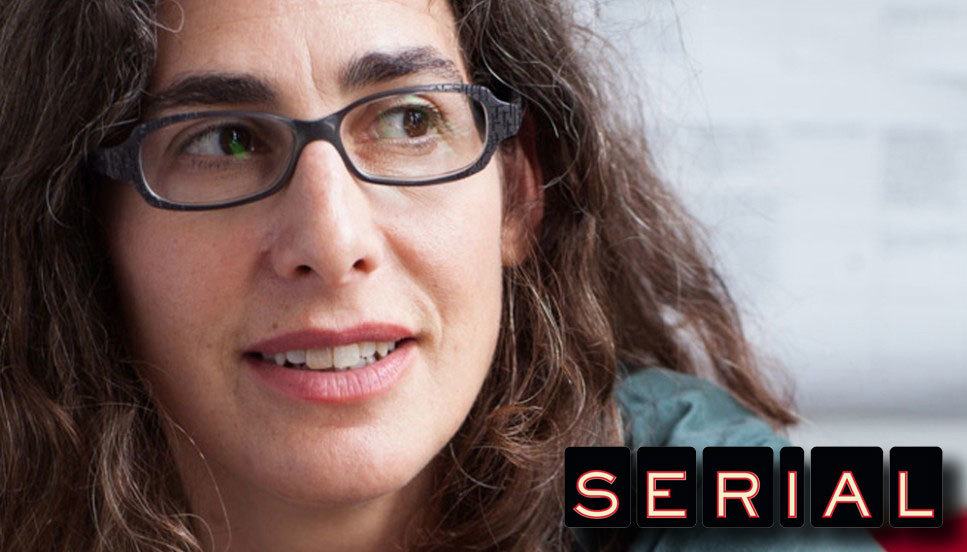
In 2014, the *Serial* podcast, hosted by Sarah Koenig, examined the case and raised questions about the evidence and Syed's defense.
It asked what the cell records really showed.
It asked what Jay Wilds's story changed.
It asked why the anonymous call was never explained.
That would require evidence the record does not contain.
In 2016, a Maryland court granted Syed a new trial.
That decision was later overturned.
In 2022, a Baltimore judge vacated Syed's conviction after prosecutors acknowledged problems with the evidence.
Syed was released from prison in September 2022.
In 2023, the Baltimore State's Attorney's Office moved to dismiss the charges entirely, citing new evidence and the unreliability of the original case.
The motion was granted, and Syed was formally cleared.
The specific "new evidence" cited in 2023 is not detailed in the record.
It is named.
It is not described.
The reversal was legal, not factual.
A conviction was undone.
A verdict was not replaced.
The Lee family has expressed frustration with the legal proceedings, maintaining their belief in Syed's guilt.
The case remains a subject of public debate and scrutiny.
The anonymous call that first pointed to Syed remains unexplained.
…AND THE STORY STILL ISN'T OVER
The Lee family has expressed frustration with the legal proceedings, maintaining their belief in Syed's guilt.
It is a belief the record does not settle. It is also a belief the record does not disprove.
The case remains a subject of public debate and scrutiny.
The anonymous call that first pointed to Syed remains unexplained.
Who made it? Why that day? Why him?
That would require evidence.
No further court dates or legal motions are mentioned in the record.
The caller's identity is not in the record. Any future legal steps are not in the record.
The story holds where it began: with a voice that was never named.
Syed was cleared in 2023, formally and fully, when the motion to dismiss was granted.
The Lee family still calls him guilty.
The public still asks what the call was.
The call itself is a fact. The meaning of the call is not.
It is a loose thread in a case that was stitched shut twice — once by a jury, once by prosecutors reversing themselves.
Neither stitch held.
One plain question remains, and it has no witness, no transcript, no name attached.
It is the question that started everything.
It is the question that outlived the verdict.
Advertisement
You may also like
The Army captain's intruder story that blood spatter contradicted — and the media believed it
On the night of February 17, 1970, at Fort Bragg, North Carolina, Army Captain Jeffrey MacDonald, a Green Beret physician, reported that four intruders—three…
31 days passed before Casey Anthony reported her daughter Caylee missing in July 2008
The 911 call came on July 15, 2008. Cindy Anthony, the grandmother, reported her 2-year-old granddaughter missing that day. Caylee Anthony had last been…
The cellphone video that placed Alex Murdaugh at the kennels — and shattered his alibi
The video ran for about a minute. Paul Murdaugh recorded it at the dog kennels on the family property, on the evening the killings…
The parachute jump that left an FBI agent chasing a name that never existed
The note was passed on the evening of November 24, 1971. A man bought a one-way ticket on Northwest Orient Airlines Flight 305, from…
The cell tower data that sent Adnan Syed to prison — and the call that didn't add up
The call came at 4:12 p.m. The record shows that much. After that, the record shows something argued, not something proven. On January 13,…
The jailhouse confession that cracked the Manson case open — but only after the bodies were found
On the night of August 9, 1969, five people were murdered at 10050 Cielo Drive in Benedict Canyon, Los Angeles. Among them was actress…