The Army captain's intruder story that blood spatter contradicted — and the media believed it
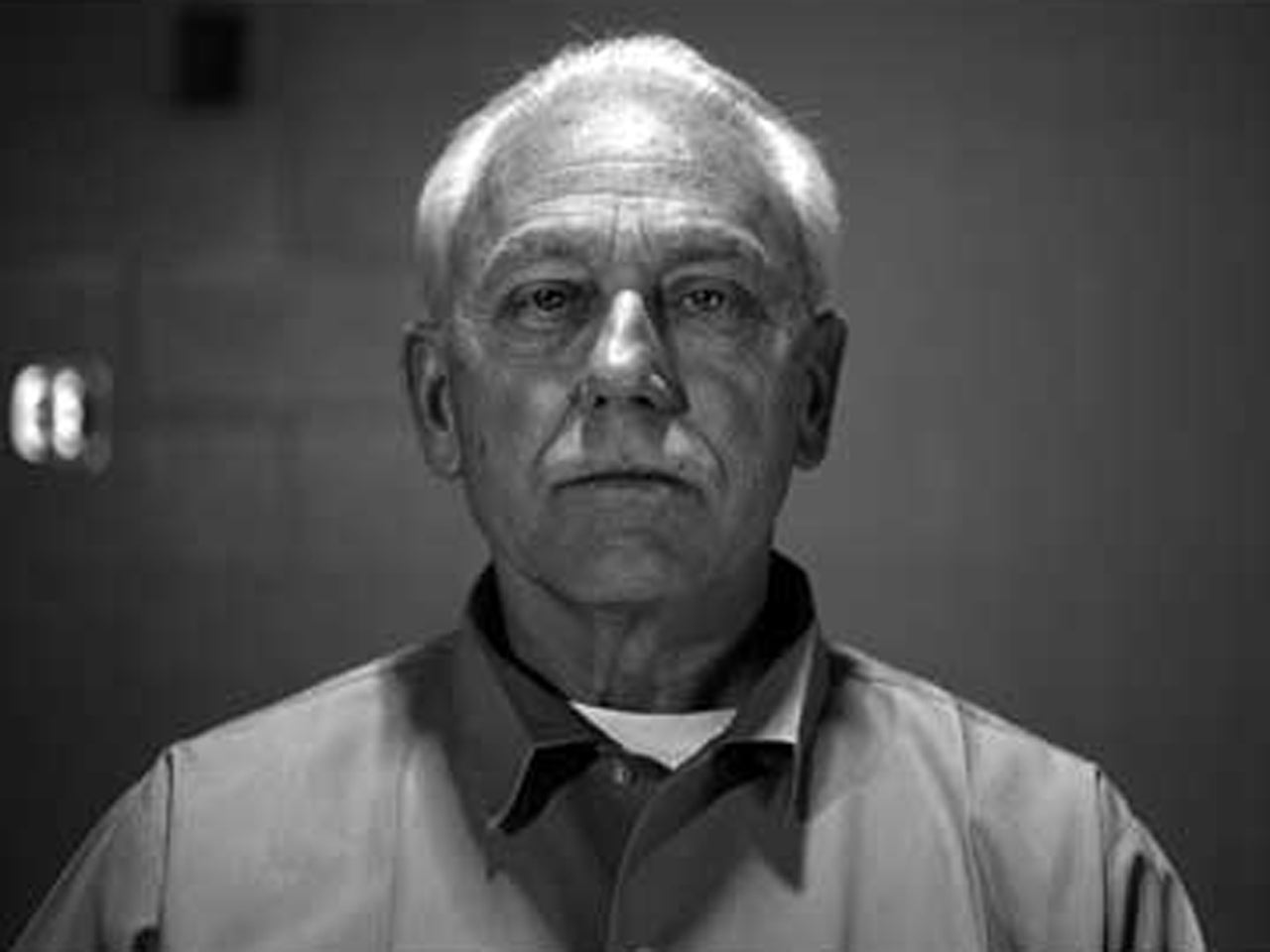
On the night of February 17, 1970, at Fort Bragg, North Carolina, Army Captain Jeffrey MacDonald, a Green Beret physician, reported that four intruders—three men and a woman—had attacked his family in their home on the base.
He said they chanted "acid is groovy."
He said they killed his wife and his two daughters while he fought them off.
He survived with minor injuries.
The story was sensational.
It was also immediate national news.
Early coverage was sympathetic.
MacDonald appeared as a grieving husband, a decorated officer, a man who had battled intruders and lost everything.
The headlines wrote themselves.
How could anyone doubt this grieving captain?
How could anyone question a decorated Green Beret?
How could anyone look at a man who lost his family and ask for proof?
That would require evidence.
The record does not establish the identity or existence of the intruders.
That is not a judgment.
It is a fact of the file.
What the record does show is that the case drew national attention from the start.
What it shows is that the media largely believed the captain's account.
What it shows is a story that fit too neatly.
The intruder narrative was compelling.
It was also, according to the physical evidence that would emerge later, deeply contradicted.
But in those first days, the cameras caught a grieving officer.
The public saw a hero.
The questions came later.
THE BLOOD AND THE CLUB
The first military police officers stepped into the home on February 17, 1970.
They found Colette MacDonald and the two daughters, Kimberley, age 5, and Kristen, age 2, dead from multiple stab wounds and bludgeoning.
MacDonald himself had minor injuries.
The officers looked for the four intruders he described.
There was no sign of forced entry.
A wooden club and an ice pick lay in the home.
The weapons belonged to the household.
Blood spatter analysis told a different story from the captain's.
The attacks appeared to have occurred in different locations across the home.
That is inconsistent with the chaotic, single-room struggle MacDonald described.
The exact sequence of the attacks is not established by the record.
The initial military investigation was flawed.
The crime scene was not properly secured.
Evidence was mishandled.

The physical evidence remained, though, and it quietly contradicted the official story.
No forced entry.
Weapons inside.
Blood in places the intruder narrative did not account for.
The cameras had caught a grieving officer.
The record caught something else.
THE SHIFTING STORY
He told the military police one version.
He told the grand jury another.
MacDonald’s own statements shifted over time, according to the record.
The specific content of those shifting statements is not in the record.
Not the words. Not the details. Just the fact that they changed.
The Army dropped charges in 1970.
The case went quiet. The cameras went home.
The victims’ parents did not go home.
Frustrated by the Army’s decision, they hired private investigators.
They pushed for a federal review.
They pushed in public, where the media had once seen a grieving officer.
In 1974, a federal grand jury indicted MacDonald.
He was not charged until 1975.
Four years between the dropped charges and the indictment.
Five years between the deaths and the courtroom.
Key evidence included microscopic blood typing.
Key evidence included MacDonald’s own statements.
The statements that shifted.
The blood that did not.
It is a slow turn, justice.
It is also a public one.
The media had believed the intruder story.
The parents asked the federal government to look again.
The federal government looked.
The grand jury looked.
The indictment meant the story had cracked.
Not because the public changed its mind overnight.
But because the physical evidence did not move.
No forced entry. Blood in places the narrative did not account for.
A wooden club and an ice pick, found in the home.
The intruder story required four strangers.
The record required evidence.
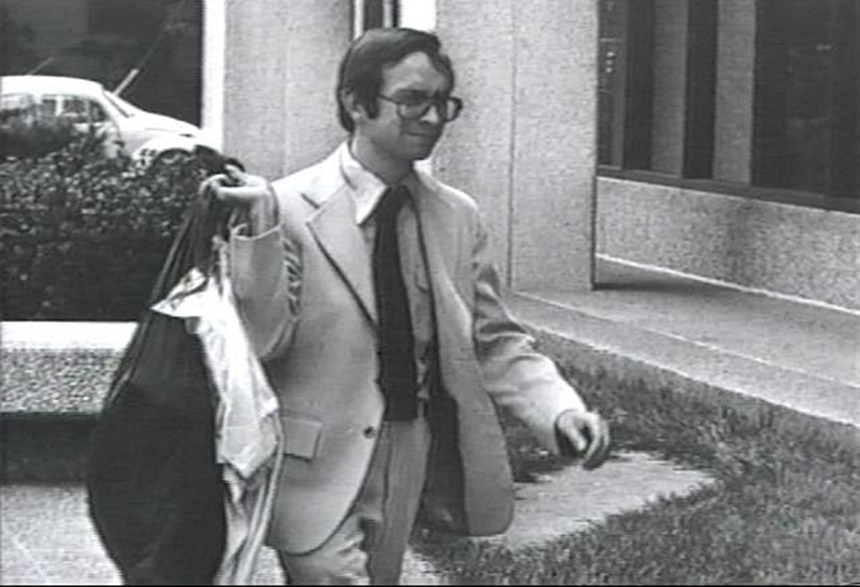
That would come later, in a courtroom in Raleigh.
But in 1975, the charge was filed.
The grieving officer became the accused.
THE TRIAL AND THE MEDIA CIRCUS
The trial opened in Raleigh in 1979.
MacDonald stood charged with three counts of first-degree murder.
The prosecution argued he killed his family in a rage, possibly triggered by marital discord.
The defense presented him as a victim of a drug-crazed cult-like group.
Two narratives, both complete, both argued in the same courtroom.
The prosecution pointed to the absence of forced entry and the blood spatter.
The defense pointed to the chanting intruders and the ice pick left behind.
Neither side could show the jury the moment itself.
What convinced the jury is not detailed in the record.
That specific evidence remains unestablished.
The courtroom became a spectacle.
MacDonald’s defense team courted the press, and so did the victims’ parents.
Cameras and reporters filled the space around the proceedings.
The grieving officer and the accused man were the same person now.
The media had once portrayed him sympathetically.
Now the coverage carried the weight of two competing stories.
The jury deliberated.
They convicted MacDonald on all three counts.
He was sentenced to three consecutive life terms.
A verdict, but not an ending.
The story would outlive the trial.
AND THE STORY STILL ISN'T OVER
He remains in federal prison, serving three consecutive life sentences.
He has filed numerous appeals. All denied.
His last major appeal was denied in 2017. The outcome of any pending motion is not in the record.
In 1984, Joe McGinniss published "Fatal Vision."
The book concluded MacDonald was guilty. It became a bestseller.
MacDonald sued McGinniss for fraud, claiming the author had promised to write a book sympathetic to him. The case went to trial in 1987. A jury found that McGinniss had indeed defrauded MacDonald. It awarded only nominal damages.
A legal victory. A symbolic one.
The book and its aftermath kept the case in the public eye for years. The media that had once portrayed a grieving officer now debated an author's broken promise.
The case continues to be cited in discussions of media ethics and true crime coverage. It is a cautionary tale. It is also a question.
What did the early coverage get wrong? What did the blood spatter show that the headlines did not? What does a conviction settle, and what does it leave open?
The story would outlive the trial. It would outlive the book. It would outlive the advocates who pushed for justice.
MacDonald maintains his innocence. The physical evidence contradicted his account. The jury believed the prosecution.
He remains incarcerated. The case refuses to close.
Advertisement
You may also like
The Zodiac letter that carried a piece of Paul Stine's bloody shirt
The cab driver was 29 years old. He picked up a fare in the heart of San Francisco's Presidio Heights on October 11, 1969.…
The 12:10 a.m. dog-walk discovery that turned a Brentwood street into a media siege
She was just walking her dog. It was approximately 12:10 a.m. on June 12, 1994, and the neighbor was out on Bundy Drive in…
The Green River Killer's truck painter confession that left detectives with 49 names
He painted trucks for a living, a trade that kept his hands steady and his cover plain. Gary Leon Ridgway was a truck painter…
The phone card call that cracked the DC Sniper case — and the white van that led police astray
A tip came from a phone card. A caller used it, and the call led police to a witness who had seen the Chevrolet…
The Missing Christmas Eve Walk That Split a Family
She was twenty-seven years old and eight months pregnant. Laci Peterson went for a walk with her dog on Christmas Eve, 2002, from her…
The 51 days between the ATF raid and the fire that ended the Waco siege
The warrant was for the Mount Carmel Center ranch near Waco, Texas. February 28, 1993. Agents of the Bureau of Alcohol, Tobacco, and Firearms…