The Green River Killer's truck painter confession that left detectives with 49 names
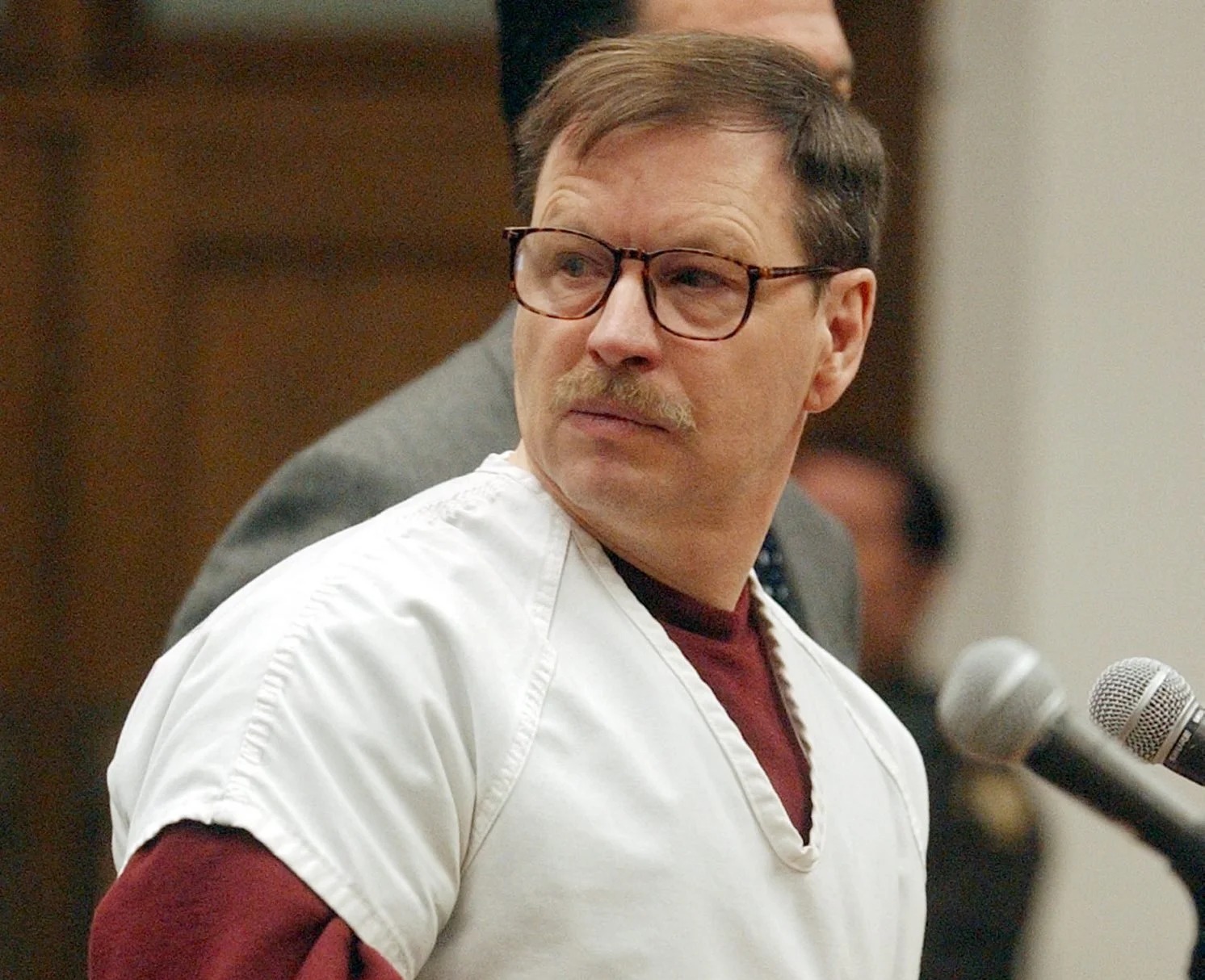
He painted trucks for a living, a trade that kept his hands steady and his cover plain.
Gary Leon Ridgway was a truck painter from Auburn, Washington, a suburb of Seattle that looked like any other cluster of strip malls and quiet streets.
He was married multiple times. He had a son.
In 2001, police arrested him.
The arrest came after DNA technology linked him to the murders of several women, a breakthrough that ended nearly two decades of searching.
During interrogation, Ridgway confessed to dozens of murders.
Dozens.
The confession led investigators to remote ground where they recovered the remains of additional victims.
The exact number of murders he confessed to during that interrogation is not specified in the record.
That would require evidence.
The confession came with a deal: he would talk, and he would not face the death penalty.
He told investigators where to look. He told them what he had done.
A truck painter from Auburn, a man who clocked in and out, who married and fathered a son, sat in a room and spoke the names of the dead.
How long had he been doing this?
How many years had he driven those roads with paint under his nails?
The record does not say when it started. It does not say why he stopped.
It only says he confessed, and that the confession kept him alive.
THE GREEN RIVER
The first bodies were found in 1982, near the water that gave the case its name.
More remains turned up across King County in the years that followed.
The women were young. Many were sex workers, runaways, drug users.
They were typically strangled, their bodies left in remote places.
The record does not specify who the first victims were. Their names are not established in the source material.
What the record does say is that the case ran from 1982 to 1998.
That is sixteen years. That is a generation of women.
It is a list that grew one discovery at a time, each find a person with a life before the river.
The case remained unsolved for nearly two decades.
Detectives formed a task force in 1982. Hundreds of suspects were investigated and cleared.
The lead detective had worked the Ted Bundy case before this one. He applied what he had learned.
In the 1980s, a truck painter from Auburn was interviewed. He gave a DNA sample. He was not arrested.
The years passed. The river kept its evidence.
Not because nobody looked. But because the looking did not yet have the tools to find him.
Advances in DNA technology in the late 1990s changed that.
The sample he gave in the 1980s finally matched.
He was arrested in 2001. The confession followed, and with it, more remains recovered.
But this section is the time before that. The long stretch of unsolved.
Sixteen years of families waiting. Sixteen years of names on a list that kept growing.
The record does not say when it started. It does not say why it stopped.
It only says the women were there, and that the river kept them for a long time.
THE DNA SAMPLE
The task force formed in 1982.
Hundreds of suspects were investigated and cleared over the years.
The lead detective had worked the Ted Bundy case before this one.
He applied the same techniques he had learned there, including geographic profiling.
In the 1980s, Ridgway was interviewed.
He gave a DNA sample.
He was not initially arrested.
The record does not state why he was not arrested after that interview.
That reason is not established.
What is established is the near-miss.
He was in their hands.
He gave them his DNA.
And then he walked out.
The river kept the women.
The case went cold.
Families kept waiting.
Then the technology changed.
In the late 1990s, advances in DNA testing linked Ridgway to the murders of several victims.
The sample he had given years earlier matched.
He was arrested in 2001.
Not because of a confession.
Not because of a witness.
Because the science caught up with the man who had slipped through.
It is a relief.
It is also a frustration.
How many years did the technology save?
How many did it cost?
The record does not say.
It only says he gave the sample, and that the sample waited, and that the match finally came.
THE PLEA DEAL
The charge sheet listed forty-eight counts of aggravated first-degree murder.
Gary Ridgway did not contest a single one.
In 2003, he pleaded guilty to all counts as part of a plea agreement that spared him the death penalty.
In exchange, he agreed to cooperate.
He would help investigators locate the remains of victims.
He would provide details about his crimes.
The specifics of that cooperation, how many remains were recovered, are not specified in the record.
The judge sentenced Ridgway to forty-eight consecutive life sentences without the possibility of parole.
He would never leave prison.
Eight years later, Ridgway pleaded guilty to one more murder.
That made forty-nine.
The families were left with the arithmetic.
Some were grateful.
Grateful for the convictions, for the names, for the end of decades of not knowing.
Others were angered.
Angered that the man who took their daughters, their sisters, their mothers, would not face the ultimate punishment.
The plea deal traded certainty for finality.
It traded the death penalty for the truth.
Was it justice?
Was it mercy?
Was it a bargain the families had no part in making?
The record does not say how they would have voted.
It only says the convictions stand, the sentences run one after another, and the total keeps climbing.
Forty-eight.
Then forty-nine.
The families count them all.
AND THE STORY STILL ISN'T OVER
Gary Ridgway is serving his life sentences at a federal prison in Colorado.
He has continued to cooperate with investigators.
In 2024, authorities announced that additional remains had been identified as belonging to a previously unidentified victim.
The identity of that victim is not disclosed in the record.
The total number of Ridgway's victims is not definitively established.
Not because the count is secret. But because the record does not settle it.
The families keep counting anyway.
Several victims' relatives have spoken publicly over the years.
They have advocated for better protection of vulnerable women.
They have pushed for continued efforts to identify all of Ridgway's victims.
One victim's mother became a vocal advocate for the missing and murdered women.
She was on the ground below.
The plea deal spared Ridgway the death penalty.
Some families were grateful for the closure of convictions.
Others were angered that he avoided execution.
The case is not closed.
New identifications continue.
Advocacy continues.
The full toll of Ridgway's crimes may never be known.
That would require evidence.
The families count them all.
Forty-eight.
Then forty-nine.
And still they ask how many more.
Advertisement
You may also like
The MGM Grand altercation that preceded Tupac's shooting — what police believed
The black BMW sedan turned onto the Las Vegas Strip, and Tupac Shakur was in the passenger seat. Marion "Suge" Knight, the CEO of…
The neighbor's camera that caught Shanann Watts' truck — and the timeline that broke the case
The neighbor's camera was pointed at the driveway, not the street. It caught a blue Ford truck pulling into the Watts home in the…
A 1969 blood-scrawled word linked to Manson — but what did it really mean?
Inside the LaBianca home, the refrigerator door carried a word written in blood: "HEALTER SKELTER." It was a misspelling of "Helter Skelter." The words…
The 1959 plane crash that ended three rock legends' lives, and the pilot's decision that still haunts
The Beechcraft Bonanza lifted off from Mason City Municipal Airport at approximately 12:55 AM on February 3, 1959. Snow fell. The sky was overcast.…
The mother who traveled to identify her daughter's severed body — and the words she said
She took the train from Massachusetts. Phoebe Short had raised her daughter in Hyde Park, a town outside Boston, after her husband left the…
The tarot card with 'Call me God' — and what it did to the hunt
The card was found at one of the crime scenes, somewhere in the region that stretched across Washington, D.C., Maryland, and Virginia. The exact…