The mother who traveled to identify her daughter's severed body — and the words she said
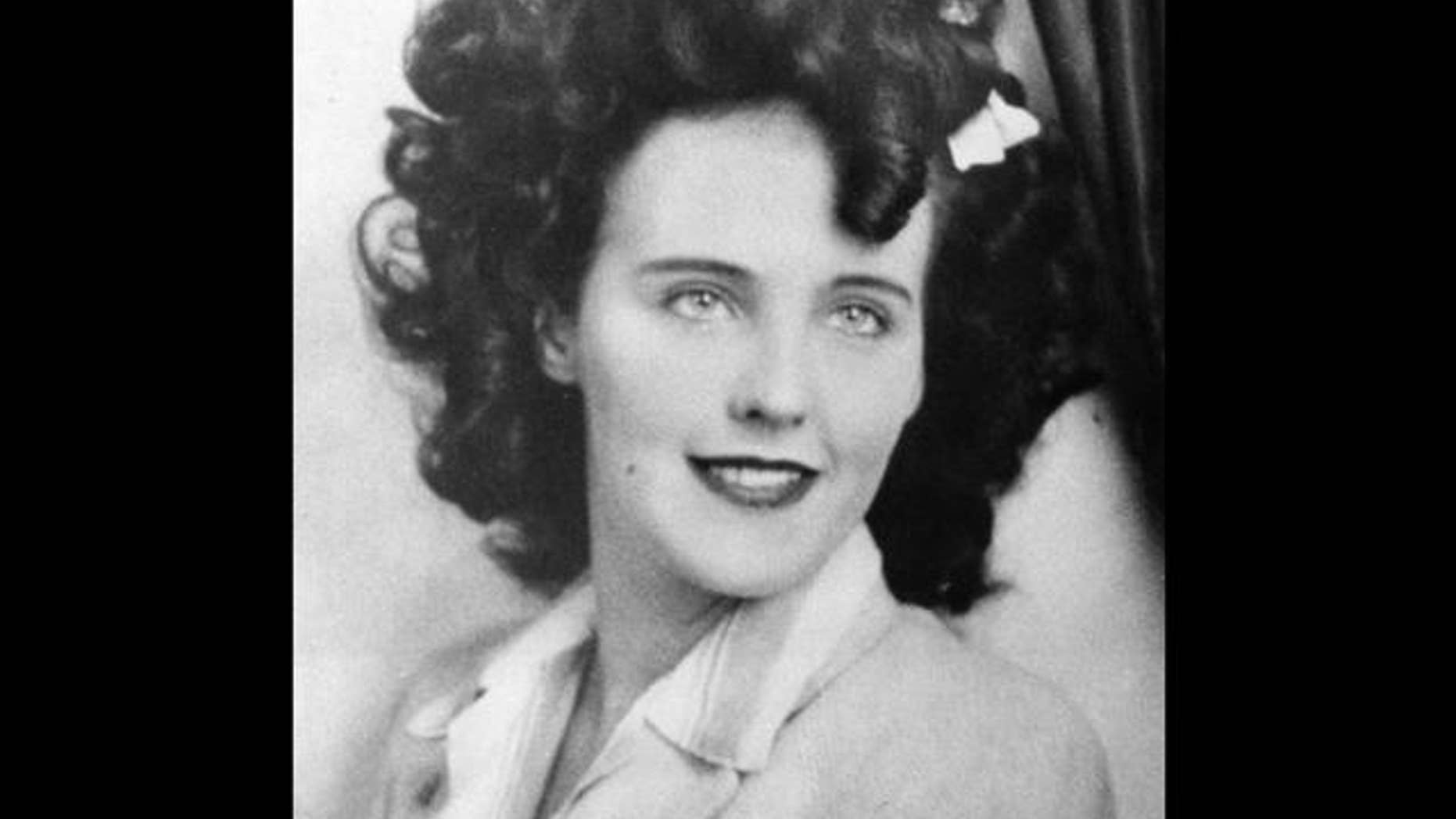
She took the train from Massachusetts.
Phoebe Short had raised her daughter in Hyde Park, a town outside Boston, after her husband left the family years before.
Now she was coming to Los Angeles to look at what remained of that daughter.
The body had been found on the morning of January 15, 1947, in a vacant lot in Leimert Park.
The young woman had been cut in half at the waist, the two sections placed neatly apart.
The body had been drained of blood.
Her face had been slashed from the corners of her mouth toward her ears, cuts that would later be called a "Glasgow smile."
Phoebe Short identified the body as her daughter, Elizabeth, 22 years old.
Then she spoke to the press.
She said Elizabeth had been a kind, trusting young woman.
She said her daughter had hoped for a better life in California.
The exact words Phoebe Short used are not in the record.
Only that she spoke publicly about her grief, and that the family emphasized Elizabeth's kindness and trust.
What does a mother say when she has traveled across the country to identify a body cut in two?
What does she say about the face her daughter was born with, now slashed ear to ear?
What does she say about the life her daughter wanted, the fresh start that ended in a vacant lot?
The papers did not record her exact words.
They recorded only that she spoke.
She was on the ground below the lot's weeds, a mother identifying her child.
The case would become famous, the victim known by a nickname she never chose.
But that morning, in the cold of a Los Angeles January, there was only a mother and her daughter's body.
And the question that would never be answered: who did this, and why.
THE DISCOVERY
She was out for a walk with her young daughter when she saw it, lying in the grass of a vacant lot in Leimert Park.
Betty Bersinger thought it was a mannequin at first, a discarded store display.
It was not a mannequin.
It was the body of a young woman, severed at the waist, drained of blood, the face slashed from the corners of the mouth toward the ears.
The morning was January 15, 1947.
The police identified her through fingerprints taken from military records.
She had worked at an Army post in California, and the prints were on file.
Her name was Elizabeth Short.
She was 22 years old.
She was born in Hyde Park, Massachusetts, in 1924.
She had moved to California in the mid-1940s, seeking work and a fresh start.
She was known to acquaintances as the “Black Dahlia,” a nickname reportedly drawn from the film *The Blue Dahlia*.
Not because she chose it.
Because someone gave it to her.
The exact time of death is not established.
The identity of the killer is not established.
What is established is the shock of the discovery, the tragedy of the life cut short.
A mother traveled from Massachusetts to Los Angeles to identify her daughter’s body.
She spoke publicly about her grief.
She said her daughter had been a kind, trusting young woman who had hoped for a better life in California.
The mother’s words were recorded.
The hope was not enough.
THE INVESTIGATION
The lead detective took the case, and another detective worked it alongside him.
They interviewed dozens of people who had known her — servicemen, bar patrons, acquaintances from a transient life.
No solid leads emerged.

Over 60 people confessed to the murder.
None of them could provide details that matched the crime scene.
The LAPD received letters from someone claiming to be the killer.
Those letters were never verified.
The authenticity of the letters is not established.
The authenticity of the confessions is not established either.
What is established is the flood itself: confession after confession, each one collapsing under the weight of the actual evidence.
The investigation was hampered by the lack of forensic technology available at the time.
There was no DNA testing.
There was no database of suspects.
There was only paper, fingerprints, and the patience of two detectives.
The case went cold.
Was it the sheer volume of false leads that buried the truth?
Was it the absence of a single witness who could place her with anyone that night?
Was it the fact that the killer, if he existed, simply left nothing behind?
That would require evidence.
The lead detective and his partner kept the file open.
The Los Angeles County District Attorney's Office reviewed the evidence.
They found insufficient grounds to prosecute anyone.
There was no trial.
There was no arrest.
There was only the open file, the unanswered letters, and the mother's words still hanging in the air.
THE SUSPECTS
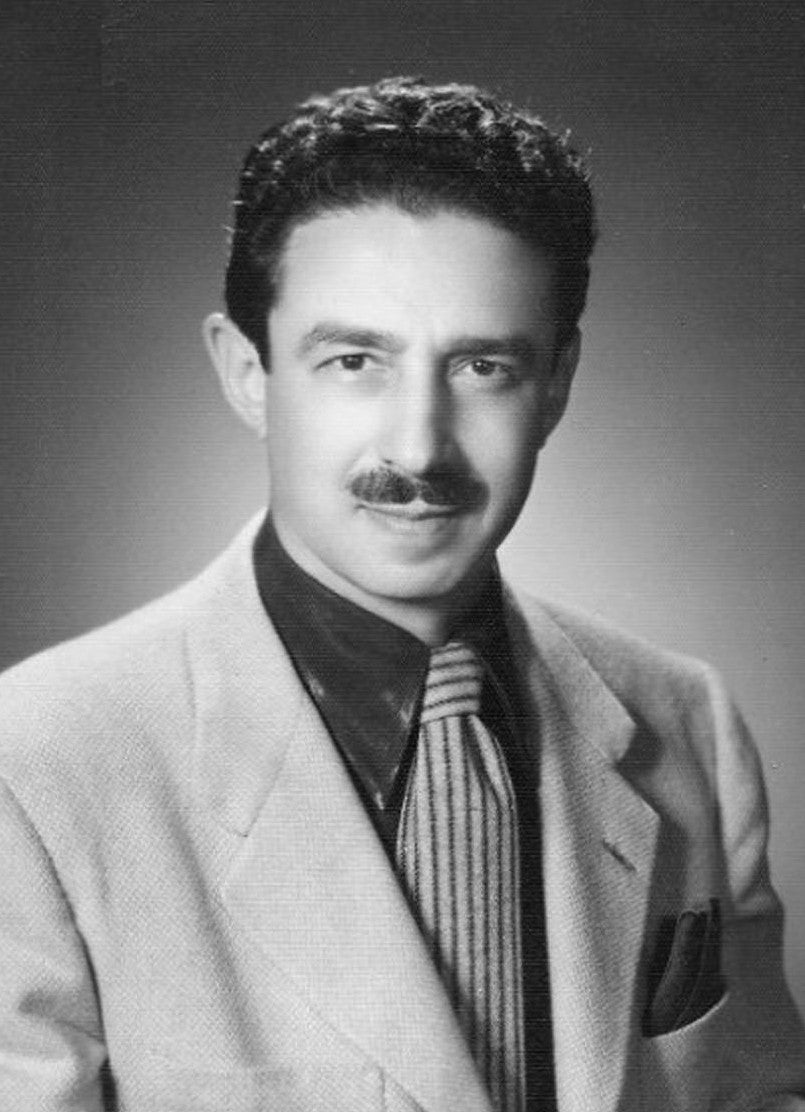
Steve Hodel was a former LAPD detective.
He spent decades investigating his own father.
In 2003, he published a book accusing Dr. George Hodel of the murder.
George Hodel was a prominent Los Angeles physician.
He was never charged.
No physical evidence ever linked him to the crime.
The accusation remains unproven.
It is a theory built on inference and family memory.
That is what the record shows.
Another man, Jack Wilson, confessed in 1982.
He was deemed mentally ill and not credible.
His confession matched nothing at the scene.
The Los Angeles County District Attorney's Office reviewed the evidence.
They found insufficient grounds to prosecute anyone.
Not one suspect. Not one charge. Not one trial.
The file lists suspects, but the file proves nothing.
Why did Steve Hodel believe it was his father?
He pointed to the victim's severed body and his father's medical skill.
He pointed to a photograph he said resembled his father.
He pointed to a diary entry.
None of it is physical evidence.
None of it placed George Hodel at the vacant lot.
That would require evidence.
The accusations are loud.
The documentation is quiet.
Sixty people confessed over the years.
Sixty stories, and none held.
Jack Wilson confessed and was dismissed.
George Hodel was accused and never charged.
The mother identified her daughter's body.
The detectives worked the open file.
The suspects are names on paper.
The killer is not among them, or is, and the record cannot say.
AND THE STORY STILL ISN'T OVER
The detective who led the file is gone.
The detectives who worked it are gone.
The case remains officially unsolved.
The murder file remains open.
The LAPD has periodically revisited the case.
No arrests have been made.
No one was ever charged.
The identity of the killer is still unknown.
That is not established.
That is the one fact the record holds.
The mother returned to Massachusetts.
She had traveled to Los Angeles to identify her daughter's body.
She spoke publicly about her grief in the years after.
She emphasized that Elizabeth had been a kind, trusting young woman.
The sister spoke about the case too.
They have since passed away.
The family is gone.
The story is not.
The case has inspired books.
It has inspired films.
It has inspired documentaries.
Each one restages the vacant lot, the severed body, the slashed face.
Each one offers a name.
None offers proof.
The suspects are names on paper.
The confessions number over sixty.
None matched the crime scene.
The letters claiming to be the killer were never verified.
The lead detective worked the file with another detective.
The district attorney's office reviewed the evidence.
It found insufficient grounds to prosecute anyone.
There was no trial.
There was no verdict.
There was only the open file.
The mother's words remain in the record.
The daughter's name remains in the record.
The killer's name does not.
That is the line.
The nickname is documented.
The Glasgow smile is documented.
The killer is not.
The file stays open.
The story is not finished.
Advertisement
You may also like
A Sledgehammer Borrowed and Never Returned: The McStay Case Timeline
He told the jury about the sledgehammer. A witness testified at trial that Charles "Chase" Merritt borrowed a sledgehammer from him. The witness said…
The parking ticket that cracked the Son of Sam case — and the mother who still waits
The ticket sat on a car near the scene of the final shooting. The final shooting, on July 31, 1977, killed a young woman…
The mothers of Atlanta's missing children kept the 28 names alive — what did they say?
Summer 1979 to spring 1981: at least 28 African American children, adolescents, and young adults disappeared or were found murdered in Atlanta, Georgia. The…
The fishing trip that put Scott Peterson at the center of a missing-pregnant-wife mystery
He said he went fishing alone that morning, off the Berkeley Marina. December 24, 2002. The same day his wife, Laci Peterson, eight months…
The red-light drive-by that ended Notorious B.I.G., and the car that vanished
12:45 a.m., March 9, 1997. A dark sedan pulls alongside a black SUV at a red light on Wilshire Boulevard in Los Angeles. The…
A notebook found beside Brian Laundrie's remains — what it said about Gabby Petito
The notebook was found beside Brian Laundrie’s remains in the Carlton Reserve in Florida, on October 20, 2021. A backpack lay nearby. The FBI…