The mothers of Atlanta's missing children kept the 28 names alive — what did they say?
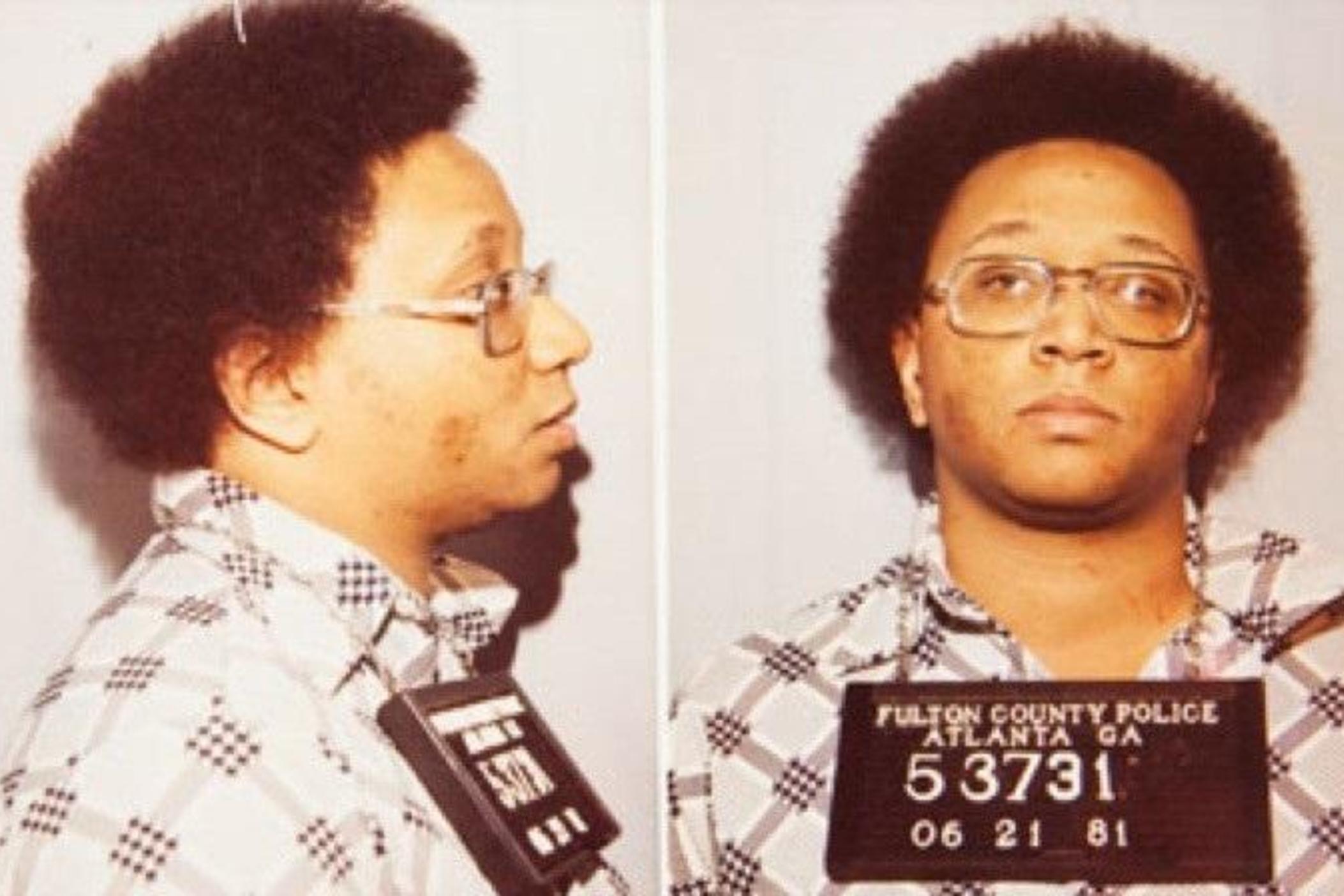
Summer 1979 to spring 1981: at least 28 African American children, adolescents, and young adults disappeared or were found murdered in Atlanta, Georgia.
The victims ranged in age from 7 to 28.
Most were boys and young men.
Camille Bell's 9-year-old son Yusuf Bell was found strangled.
She helped form the Committee to Stop Children's Murders.
Other mothers spoke publicly too.
They became vocal public figures.
They kept the names of the dead alive.
What did they say?
The record does not say.
Their public roles are documented.
Their specific words are not.
That is what the record establishes.
It is a silence at the centre of the story.
The mothers stood in front of cameras and microphones.
They demanded answers.
They named their children out loud.
Yusuf.
The other names, too.
The official record preserves the fact of their advocacy.
It does not preserve the sentences they spoke.
Not the exact pleas.
Not the exact accusations.
Not the exact grief.
This is what remains: the mothers acted.
They organised.
They insisted the city look.
Their persistence is documented.
Their testimony is not.
So the question stands.
What did they say that the official record missed?
That would require evidence.
The record does not have it.
THE DISAPPEARANCES
By the summer of 1980, the disappearances were no longer a trickle.
They came in clusters, the way dread does.
A child left for the store and never came home.
A body found in a wooded area, in a river, in a vacant lot.
The count reached 28, though the exact number and the full list of names are not specified in the record beyond that count.
It is a number. It is also a roster of grief.
The deaths and disappearances terrorized Atlanta's Black community.
Mothers kept their children inside. They walked them to bus stops. They watched.
The bodies were recovered from wooded areas, rivers, and vacant lots.
Each recovery was a confirmation. Each confirmation was a new wound.
The investigation was initially hampered by a lack of coordination among city, county, and federal agencies.
Who was in charge? Who was keeping the list?
The task force eventually compiled a list of missing and murdered children.
A list. A bureaucratic answer to an unthinkable problem.
The FBI's behavioral science unit suggested the killer might be a young Black man who would attract victims by offering money or rides.
A profile. A guess dressed as insight.
It was a theory. It was not proof.
The children kept vanishing while the agencies kept meeting.
The mothers kept speaking while the record kept no full list.
Frustration was the only coordination that worked.
THE SPLASH AND THE ARREST
On May 22, 1981, the night went quiet along the Chattahoochee.
Two officers on a stakeout heard a splash.
It was a sound, nothing more — a sound that would carry the whole case.
They stopped Wayne Williams, who was driving across the bridge.
They questioned him.
The splash was never tied to anything specific; the record does not establish what caused it.
Days later, the body of a 27-year-old man was found downstream.
His name was not confirmed as the source of the splash.
That connection remains unproven.
The officers arrested Williams in June 1981.
He was charged with two murders, both of adult men.
Not the children — the children were never part of the charges.
The prosecution linked Williams to many other deaths through fiber and hair evidence.
Fibers from his home, his car, his bedroom carpet — matched to victims.
That was the case, built strand by strand.
It was a breakthrough.
It was also circumstantial.
One sound in the dark.
One body in the water.
One man stopped on a bridge.
And a list of 28 names still waiting for answers.
The defense would argue the fibers were common.
The defense would argue the police had chosen their suspect.
The record shows the officers acted on a splash.
The record does not show what made it.
THE TRIAL AND THE VERDICT
The trial opened in Fulton County Superior Court in early 1982.
Wayne Williams stood accused of two murders.
Both victims were adult men.
The prosecution built its case on fibers.
Fibers from Williams's home, his car, and a bedroom carpet were matched to fibers found on the bodies.
FBI special agent Larry Peterson testified about the statistical significance of those matches.
Witnesses placed Williams with the two victims.
The defense answered that the fibers were common.
The defense answered that the police had chosen their suspect.
The defense answered that Williams was a scapegoat.
The jury deliberated.
On February 27, 1982, the jury found Williams guilty of both murders.
The judge sentenced him to two consecutive life terms.
Relief, then a question.
The verdict answered for two men.
It did not answer for the children.
Williams was never charged with the murders of the children.
That is not established in the record.
The trial covered only the two adult victims.
The mothers of the missing children watched the verdict from the gallery.
They had kept the names alive in the streets, in the meetings, in the press.
What did they say when the gavel fell?
The record does not show it.
What the record shows is a conviction.
What the record does not show is a closing of the larger case.
The children remained unaccounted for in the official record.
The verdict was accountability.
It was also, for the families, incomplete.
AND THE STORY STILL ISN'T OVER
Wayne Williams remains in a Georgia state prison, maintaining his innocence and filing multiple appeals.
All of those appeals were denied.
He was denied parole several times.
In 1985, the Atlanta Police Department closed the cases of the 28 victims, attributing them to Williams.
He was never tried for those deaths.
Not because the record proves otherwise. But because the official closure was a decision, not a conviction.
Some families expressed doubt that Williams was responsible for all the deaths.
Camille Bell, whose 9-year-old son Yusuf Bell was found strangled, has kept advocating for the victims' memories.
Other mothers have joined her, speaking publicly for years.
In 2019, Atlanta Mayor Keisha Lance Bottoms announced the city would re-test DNA evidence from the cases.
No new charges have been filed.
The outcome of that re-testing is not in the record.
What will the DNA reveal?
Will it name someone else?
Will it close anything?
That would require evidence.
It is a flicker of hope.
It is also a lingering ache.
The mothers kept the 28 names alive in public, in courtrooms, in interviews.
The names remain alive.
The children remain unaccounted for in the official record.
The verdict was accountability.
It was also, for the families, incomplete.
The story still isn't over.
Advertisement
You may also like
The slumber party that turned into a nightmare: What one mother found when she came home
The pillowcases were on the floor when Eve Nichol walked in. One was on the bed. One was on the carpet. The girls were…
How a sister and brother-in-law torn apart by Menendez killings still disagree
The den was a room in a Beverly Hills home, and on August 20, 1989, it held two bodies. José and Kitty Menendez were…
The pizza crust that cracked a decade-long Gilgo Beach murder case
A pizza crust, discarded in a Manhattan trash can, ended a decade of silence. In July 2023, DNA from that crust was matched to…
He said four intruders chanted 'acid is groovy' — then the blood evidence shifted
The military police arrived at 544 Castle Drive after a call on February 17, 1970. Fort Bragg, North Carolina. The off-base apartment of Captain…
The morning Gianni Versace walked to a newsstand and never came back
The morning began as an errand. On July 15, 1997, at approximately 8:45 a.m., Gianni Versace walked from his Miami Beach mansion, Casa Casuarina,…
The ex-convict's tip about a safe that sent detectives to a Kansas farmhouse
He told prison authorities that Richard Hickock had spoken of robbing the Clutter farm. Floyd Wells was a former cellmate. He had worked for…