The slumber party that turned into a nightmare: What one mother found when she came home
The pillowcases were on the floor when Eve Nichol walked in.
One was on the bed. One was on the carpet. The girls were still tied up.
Her daughter was not there.
On the night of October 1, 1993, twelve-year-old Polly Klaas was having a slumber party with two friends at her mother's home in Petaluma, California.
The house was a single-story home on a quiet street, the kind where a mother could leave three girls alone for a few hours.
She came home to the aftermath.
The intruder had come through the window, the screen cut.
A knife was used to threaten the victims, the source material states.
A pillowcase was used to cover their heads.
Polly's two friends were bound with tape and pillowcases over their faces.
They were alive. They were terrified. They could not say where she was taken.
The scene was intimate in its violence: a bedroom, a sleepover, a stranger moving through the dark.
Eve Nichol found the bindings, the gagged girls, the empty space where her daughter should have been.
She was on the ground below, an officer later said of a different moment.
That is not this moment.
This moment is the mother standing in the doorway, counting heads.
Three girls went to sleep. Two girls were on the floor.
The cause of death was strangulation, but no one knew that yet.
No one knew anything yet, except that the night had turned.
The identity of the intruder is not established in this section.
The record does not yet name him.
The record says only this: a man came through the window, tied them up, put pillowcases over their heads, and took Polly Klaas.
The mother walked into a room that smelled like a slumber party and looked like a crime scene.
What did she see first?
The rope. The tape. The two girls shaking under the cloth.
That would require evidence.
The evidence is what the two friends told police, and what the police found when they arrived.
The search would begin that night.
The search would not end for two months.
THE SEARCH
Police interviewed neighbors and processed the crime scene, recovering fingerprints and other physical evidence.
Fingerprints, lifted and logged.
It is evidence that can be held in a hand. It is evidence that cannot answer the question of where a twelve-year-old girl has been taken.
The case became one of the largest missing-child searches in California history, with over 4,000 volunteers participating.
They came to Petaluma with flyers and flashlights.
They walked fields. They walked roadsides. They checked ditches.
The exact timeline between the abduction and the search is not detailed in the source.
What is known is the hope.
What is known is the despair.
What is known is that the days passed, and the searches went on, and Polly Klaas was not found.
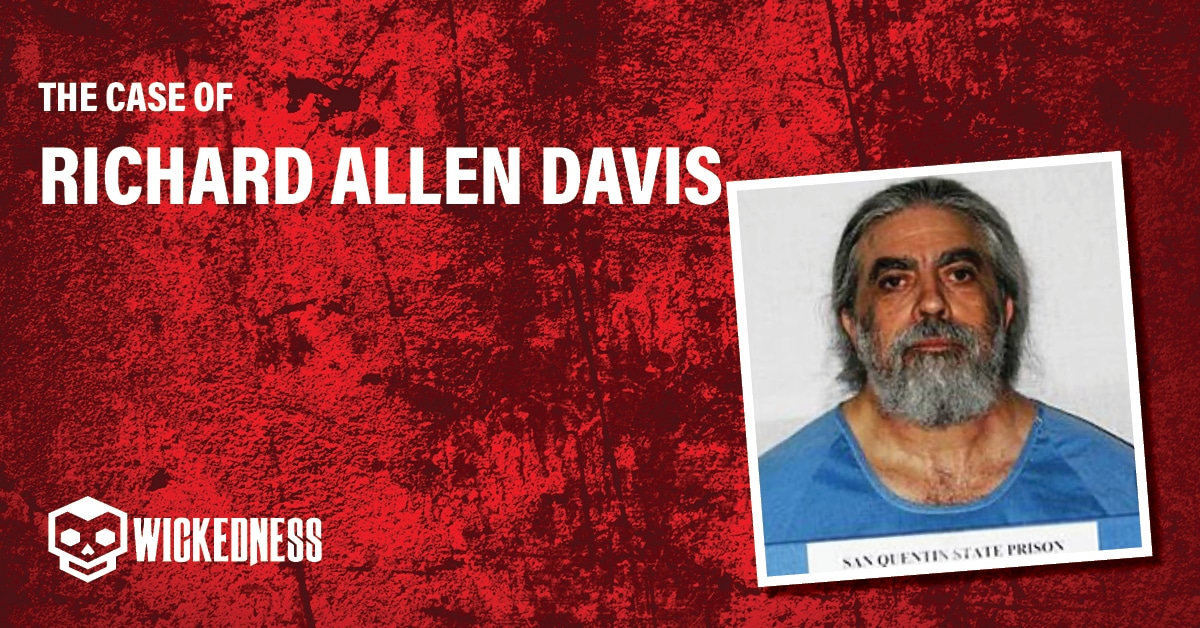
The breakthrough came when a former cellmate of Richard Allen Davis contacted authorities, leading to his arrest on November 30, 1993.
A tip from a cellmate.
After his arrest, Davis initially denied involvement but later confessed and led investigators to Polly's body on December 4, 1993, in a shallow grave in a wooded area near Cloverdale, California.
He led them there.
She had been strangled.
Two months of searching ended in a shallow grave in a wooded area near Cloverdale.
The volunteers went home.
The flyers came down.
The fingerprints were still evidence, but they were no longer a question of where.
They were a question of who, and that question belonged to the court.
THE TWO STORIES
The prosecution told the jury that Richard Allen Davis had planned the abduction.
He had a long criminal record, they said, including kidnapping and assault convictions.
He killed Polly to avoid identification, they argued.
The fingerprints matched.
The prosecution presented forensic evidence linking Davis to the scene, and the prints were his.
The defense told a different story.
They said the confession was coerced.
They said the evidence was circumstantial.
They tried to portray Davis as a drug-addled drifter who had acted impulsively, not as a man with a plan.
Which version does the evidence truly support?
Does the fingerprint prove the plan, or only the presence?
Does the confession prove the motive, or only the pressure?
The credibility of the confession is contested.
The strength of the circumstantial evidence is contested.
That is what the record does not establish.
The jury would have to weigh the two stories.
The prosecutor's story was a design: a man who knew what he was doing, who silenced a witness.
The defense's story was a collapse: a man who drifted, who acted without thought.
Both stories ended at the same shallow grave near Cloverdale.
But the road to that grave ran through two very different men.
THE VERDICT
The trial began in 1996.
Davis was charged with first-degree murder with special circumstances: kidnapping, burglary, use of a deadly weapon.
The courtroom held two stories of who Davis was. The prosecution said a planner. The defense said a drifter.
On June 18, 1996, the jury convicted Davis on all counts.
Then came the penalty phase, and the courtroom changed.
Davis made a shocking outburst in court, taunting Polly's family.
The specific content of that outburst is not described in the source. What is known is what it did: it turned a legal proceeding into a raw wound.
The jury recommended the death penalty.
On September 26, 1996, Judge Hastings sentenced Davis to death.
The sentence was a weight. It was also a beginning of another kind of wait.
In 2009, the California Supreme Court upheld the conviction and sentence.
The appeals continued. The family kept attending. The record kept its own silence on the motive.
What remains is the verdict itself. It is a fact. It is also a single moment in a longer grief.
AND THE STORY STILL ISN'T OVER
Davis remains on death row at San Quentin State Prison.
California has not executed anyone since 2006.
His appeals have continued.
The outcome of those appeals is not known.
Marc Klaas founded the KlaasKids Foundation.
It is a nonprofit dedicated to protecting children from violence and abduction.
Eve Nichol has also remained involved in advocacy work.
The case is widely credited with influencing California's "three strikes" law.
That law imposes harsher sentences on repeat offenders.
Polly's memory is honored through the foundation's work.
It is also honored through annual events in Petaluma.
The verdict stands.
The grief does not end with the verdict.
The family kept attending.
The record kept its own silence on the motive.
What remains is a father's foundation.
What remains is a mother's advocacy.
What remains is a law named for a policy, not for a girl.
That would require the appeals to resolve.
They have not.
Advertisement
You may also like
From first report to verdict: the timeline of the Simpson trial
The dog walker found Nicole Brown Simpson's body first. It was approximately 12:10 a.m. on June 13, 1994, outside her condominium on Bundy Drive…
He told police he found his family's bodies. Then he confessed to the rifle in his home.
The call came in on November 13, 1974. Police were sent to 112 Ocean Avenue in Amityville, New York, a suburban community on Long…
The floppy disk that led police to BTK — and the family left to remember
The package arrived at the television station in 2004, decades after the killings had stopped. It sat among the mail like any other parcel,…
The notebook found beside Laundrie's remains that the FBI says holds a confession
The notebook was found beside Brian Laundrie's remains on October 20, 2021, in the Carlton Reserve in Florida, according to the FBI. The FBI…
The bullet that tied a pharmacy tech to the Delphi trail — and the tip that came too late
The tip came in 2022. It pointed to Richard Allen, a local pharmacy technician who had told investigators years earlier that he had been…
A 23-year-old graduate student’s name kept out of one headline for six decades
She was 23, a graduate student, and one of thirteen women killed in their apartments around Boston between June 1962 and January 1964. Many…