A 23-year-old graduate student’s name kept out of one headline for six decades
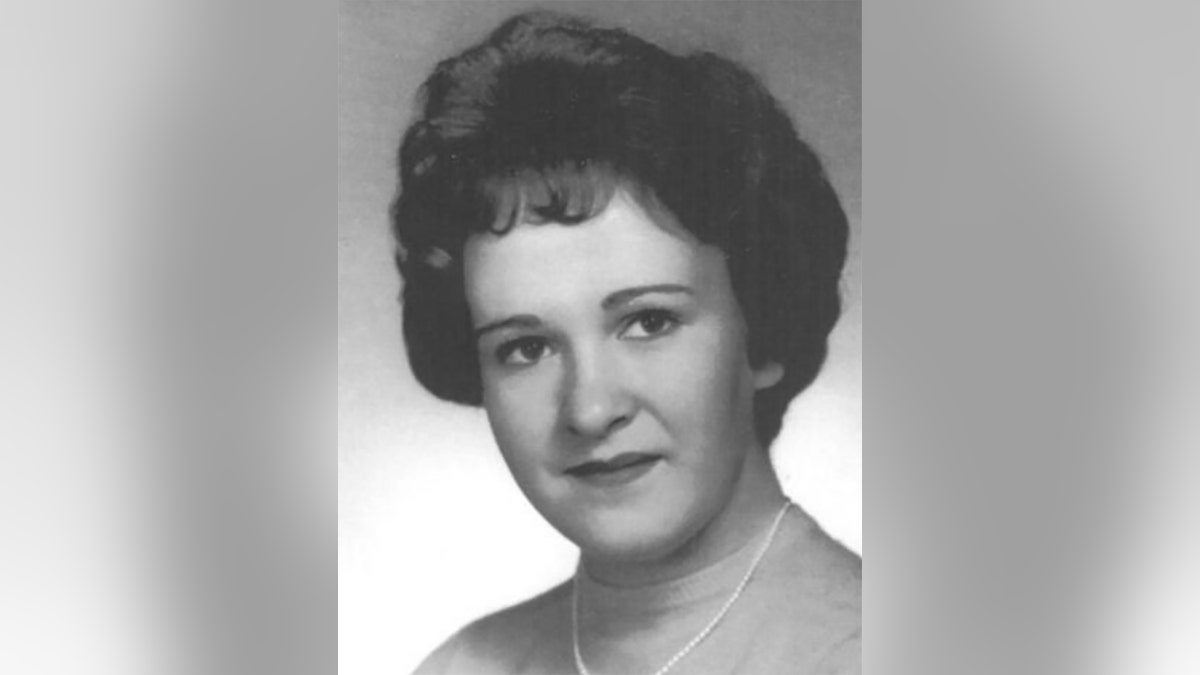
She was 23, a graduate student, and one of thirteen women killed in their apartments around Boston between June 1962 and January 1964.
Many of the women were sexually assaulted and strangled with their own clothing or stockings.
The victims ranged in age from 19 to 85.
The youngest was 19.
The oldest was 85.
One of them was 23.
Her name was left off a headline for six decades.
Why?
The exact headline is not in the record.
The reason for the omission is not in the record either.
What remains is the shape of the absence: a young woman's name, missing from the one place it should have been.
The case became known as the work of the "Boston Strangler."
Thirteen women, dead in their apartments.
One name, missing from a headline.
She was a graduate student.
She had a family.
Did anyone ask where her name went?
Did anyone notice?
The record does not say.
What the record does say: no one was ever tried for the murders.
No one was ever tried for any of them.
The name stayed missing for six decades.
That is a long time for a name to be absent.
THE TERROR AND THE CONFESSION
The crimes terrorized the Boston area.
Women barricaded their doors. They bought new locks. They checked them twice.
Then, in late 1964, Albert DeSalvo was arrested.
He was a factory worker, a former Army soldier, in custody on charges of robbery and sexual assault.
While in custody, he confessed.
He confessed to all 13 murders, according to the record.
He provided details, and investigators said those details matched the crime scenes.
The case was officially closed in 1964.
DeSalvo was never charged with the stranglings.
The exact content of that confession, and how it matched the crime scenes, is not detailed in the record.
It is not established. It was never tested in court.
Attorney General Edward Brooke oversaw the investigation.
It was hampered from the start by jurisdictional disputes between Boston police and the state Attorney General's office.
Brooke consolidated the case.
Then a confession closed it.
No physical evidence ever linked DeSalvo to the murders.
No trial. No verdict. No test of the words he spoke in custody.
The case was closed on a statement.
The terror was real. The confession was documented.
The link between them was taken on faith.
THE TRIAL THAT NEVER HAPPENED
The trial never happened.
DeSalvo was never tried for the Boston Strangler murders.
He was tried and convicted in 1967 on charges of robbery and sexual assault.
The sentence was life.
He was sent to Walpole State Prison.
In 1973, he was stabbed to death in the prison infirmary.
The assailant was unknown.
The identity of the man who killed him has never been established.
His confession to the stranglings was never tested in court.
No jury heard it.
No verdict was ever rendered on those charges.
F. Lee Bailey, his defense attorney, later published accounts of the confession.
Bailey's books told the story.
The books were not a trial.
They were not cross-examination.
They were not evidence.
The confession sat in the record, unexamined by any court.
It was a statement taken on faith.
It was a story told by a man already in custody.
The man who confessed died before anyone could ask him the hard questions.
A jury never weighed the details he gave.
A judge never ruled on their admissibility.
The state never charged him with the murders.
Not because the case was weak.
Because the case was closed.
The case was closed on a statement.
The statement was never tested.
The death ended any chance of a trial.
DeSalvo took the confession with him.
The families of the victims were left with a closed file.
They were left with a name.
They were left with no verdict.
THE DNA AND THE DOUBT
In 2013, Boston police announced that DNA evidence had linked DeSalvo to the murder of Mary Sullivan, the last confirmed victim.
The match was made from a blanket at the crime scene and from DeSalvo's exhumed remains.
That is a fact.
It is the only fact of its kind in the case.
The DNA evidence links DeSalvo to Mary Sullivan's murder.
It does not establish his guilt in the other twelve deaths.
That has not been established.
Mary Sullivan's family had pressed for DNA testing for years.
They got their answer.
Some of them accepted it.
Others doubted it.
They said so publicly, with mixed feelings.
Some experts and family members of other victims continued to question whether DeSalvo acted alone.
Could one man have done all of it?
Could the confession have covered for someone else?
Could the DNA match be the whole story?
That would require evidence.
The confession was never tested in court.
No physical evidence ever linked DeSalvo to the other murders.
The case remains one of the most studied and debated in American criminal history.
It is a closed file.
It is also an open question.
AND THE STORY STILL ISN'T OVER
After DeSalvo’s death in 1973, the case remained officially closed.
The 2013 DNA announcement did not lead to any new charges.
It did not formally re-open the other murders.
There is no next concrete step in the record.
The families of the victims spoke publicly about their grief.
The relatives of the younger victims spoke most sharply.
They described their frustration with the investigation.
They described waiting.
Mary Sullivan’s family had long pressed for DNA testing.
Some accepted the 2013 finding.
Others doubted it.
Mixed feelings, even after the match.
The case remains one of the most studied and debated in American criminal history.
It is a closed file.
It is also an open question.
No new court date is pending.
No motion is on any docket.
No decision is waiting to be read.
That would require evidence.
The confession was never tested in court.
No physical evidence ever linked DeSalvo to the murders.
Those are the documented facts.
The grief is documented too.
The ache is not in the record, but the families put it there.
They said what they lost.
They said what they were told.
They said what they were never told.
The case is officially closed.
The questions are not.
The victims remain named in the files, and the families remain in the public record.
That is where the story sits.
Still.
Advertisement
You may also like
The housekeeper who found Sharon Tate's blood-soaked front door
Winifred Chapman arrived for work at 10050 Cielo Drive on the morning of August 9, 1969. She was the housekeeper. The front door was…
Flight attendant who took the note from D.B. Cooper still haunted by his calm
She was the one who took the note. It was November 24, 1971, and the man had just handed her a folded piece of…
The last phone call from a pharmacy that changed a mother's search forever
The phone rang, and Elizabeth Piest answered. Her son Robert, 15, had gone to the pharmacy to pick up a prescription for her. A…
A 22-second video on a dead man's phone that shattered a family's alibi
On June 7, 2021, Paul Murdaugh and his mother, Maggie Murdaugh, were found shot to death at the family's hunting estate in Colleton County,…
From first report to verdict: the timeline of the Simpson trial
The dog walker found Nicole Brown Simpson's body first. It was approximately 12:10 a.m. on June 13, 1994, outside her condominium on Bundy Drive…
He told police he found his family's bodies. Then he confessed to the rifle in his home.
The call came in on November 13, 1974. Police were sent to 112 Ocean Avenue in Amityville, New York, a suburban community on Long…