He told police he found his family's bodies. Then he confessed to the rifle in his home.
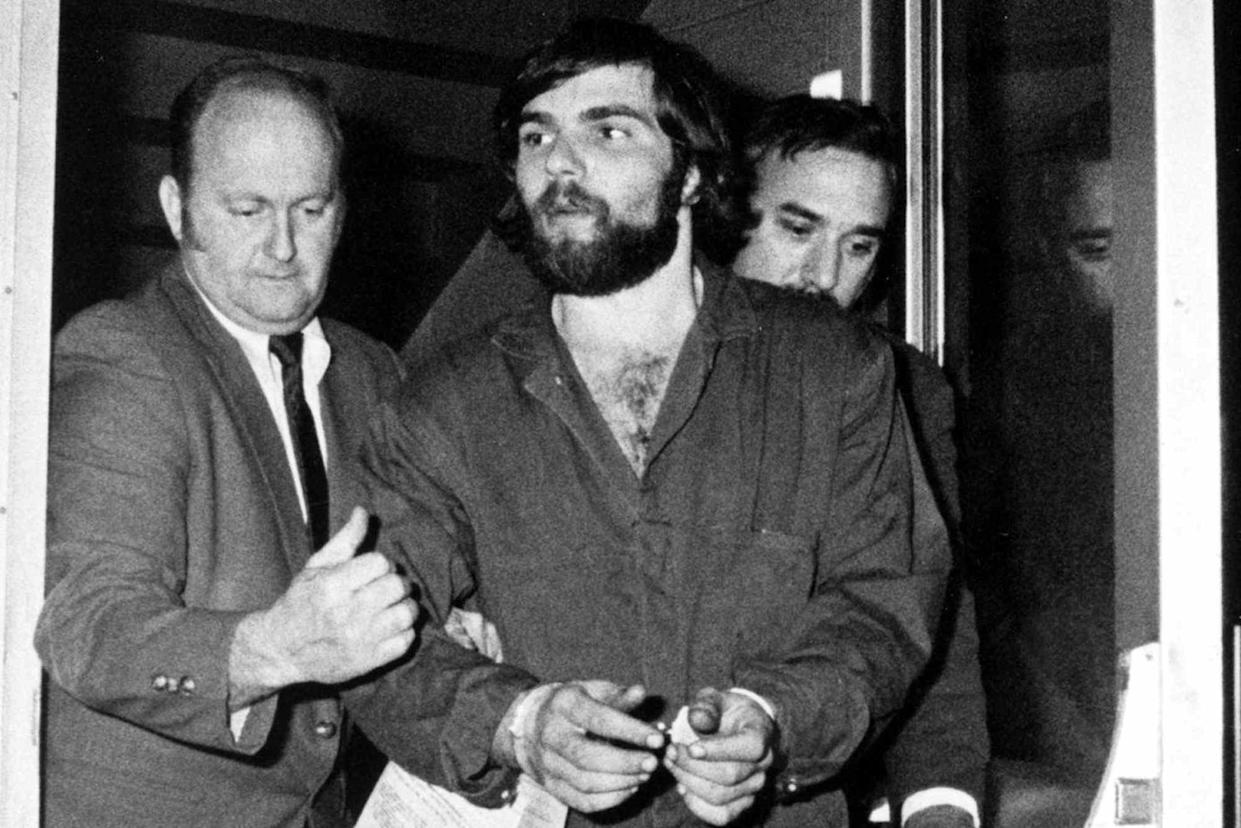
The call came in on November 13, 1974.
Police were sent to 112 Ocean Avenue in Amityville, New York, a suburban community on Long Island.
The house was a large Dutch Colonial.
Inside, responding officers found the bodies of six members of the DeFeo family.
The father. The mother. Four of their children.
All shot dead in their beds.
The weapon was a .35 caliber Marlin rifle, recovered from the scene.
The sole surviving family member was 23-year-old Ronald DeFeo Jr., the eldest son.
He told police he had come home from work and found the bodies.
That was the first story.
Under questioning at the Amityville Police Department, he confessed.
He told police he had committed the killings hours earlier.
The initial claim and the confession do not fit together.
One man said he discovered the dead.
The same man said he made them dead.
The record holds both statements.
What it does not hold, at this point, is a motive.
No reason is established in the file.
No supernatural explanation is established either.
That would require evidence.
The victims were a family known in the community.
The children had been students at local schools.
They were shot while sleeping.
There were no signs of forced entry.
The case would later inspire the book and film franchise "The Amityville Horror."
That came after.
On November 13, 1974, the story was simpler, and heavier.
Six bodies in a house on Ocean Avenue.
A son who first said he found them.
Then said he killed them.
THE FAMILY IN THE HOUSE
The family had been in the house for about a year.
The father, the mother, and four children: Dawn, Allison, Marc, and John Matthew.
Ronald DeFeo Jr. was the eldest, the one who survived.
The children were students at local schools.
The family was known in the community.
Ordinary things: school runs, neighbors, a Dutch Colonial on a suburban street.
Police first treated the scene as the work of an outside intruder.
A multiple homicide, someone who broke in.
But no signs of forced entry were found.
The victims appeared to have been shot while sleeping.
Not because the doors were broken. Because they were not.
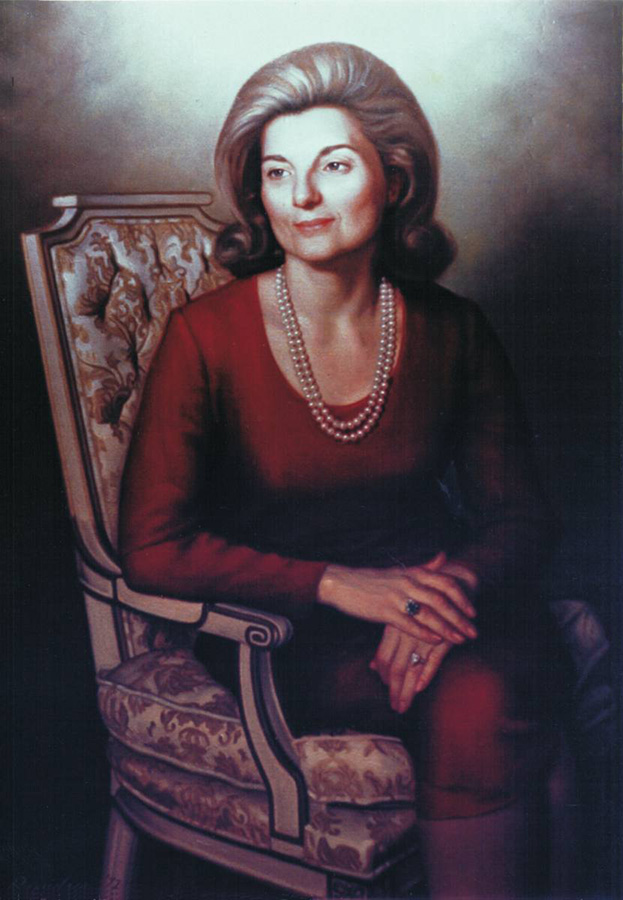
The father, the mother, the daughters, the sons — all in their beds.
The record does not detail the family's daily routines or their specific relationships.
It establishes the residence and the schooling, and little else.
What remains is the house, the beds, the rifle.
Inconsistencies in the son's account led detectives to him.
He had said he came home from work and found them.
He had said an intruder did it.
The evidence said otherwise.
The family was known. The family was ordinary.
That is what makes the violence stark.
They were asleep.
THE CONFESSION
Under questioning at the Amityville Police Department, DeFeo confessed.
He told police he had committed the killings hours earlier.
That came fast.
The investigation was conducted by the Amityville Police Department and the Suffolk County Police Department.
No other suspects were ever charged.
The case was notable for the speed of the confession.
It was also notable for the lack of physical evidence linking anyone else to the crime.
The weapon was a .35 caliber Marlin rifle.
Ballistics confirmed it was the murder weapon.
DeFeo later changed his story.
He claimed he had heard voices.
He claimed he felt compelled to commit the murders.
What did he say in that first confession?
What did the officers ask him?
What did he answer?
That would require evidence.
The exact content of the confession is not in the record.
The circumstances of the questioning are not in the record beyond the basic facts.
What remains is the confession itself.
What remains is the ballistics.
What remains is the absence of any other suspect.
They were asleep.
The rifle was in the home.
He said he found the bodies.
Then he said he made them.
THE TWO STORIES
The defense, led by attorney William Weber, argued that DeFeo was legally insane at the time of the killings.
They cited his claims of hearing voices and his history of drug use.
The prosecution, under Suffolk County District Attorney Henry Miller, argued that DeFeo had planned the murders.
He was legally responsible for his actions, they said.

The trial took place in Suffolk County Court before Judge Joseph Cattani.
The jury heard the voices. The jury heard the planning. The jury heard the rifle.
The jury rejected the insanity defense and found DeFeo guilty on all six counts.
He was sentenced to six concurrent terms of 25 years to life in prison.
Was he insane? Was he deliberate?
That would require evidence the record does not establish.
The veracity of the insanity claim is not established; it is a claim made by the defense.
DeFeo has maintained varying accounts of the murders over the years.
At times he claimed his sister Dawn was the actual shooter.
That claim was never supported by evidence and was not accepted by authorities.
It is a claim made by DeFeo Jr. alone. It is not established.
The jury weighed the two stories and chose one.
The law required a choice, and the choice was made.
AND THE STORY STILL ISN'T OVER
He remained incarcerated for decades.
He died in prison on March 15, 2021, at the age of 69, while serving his sentence at a New York correctional facility.
The house at 112 Ocean Avenue became something else entirely.
After Jay Anson's 1977 book "The Amityville Horror," the property was no longer just a crime scene.
The book claimed the house was haunted.
It sold millions of copies.
It became a film.
The supernatural claims were later disputed.
The defense attorney said the haunting story was fabricated.
That is a statement made after the trial, by a man who had reason to speak.
The truth of the haunting claims is not established.
They are disputed, including by the defense attorney.
The record does not settle it.
The house still stands.
It has changed hands multiple times.
Its address was later changed to 108 Ocean Avenue to discourage curious visitors.
The number on the door was a small attempt to quiet the noise.
The surviving DeFeo relatives have largely stayed out of the public eye.
They did not write books.
They did not give interviews.
They did not sell the story.
They were the ones left to live with what the house held.
The case was decided in a courtroom.
The story was decided in the culture.
The law required a choice, and the choice was made.
The narrative kept going anyway.
It is a house on a street in Amityville.
It is also a legend that no verdict could end.
Advertisement
You may also like
Three men, one night in Aruba, and a beach sighting that never added up
The beach was near the Kalpoe brothers' home. A witness said they saw Natalee Holloway there with the three men. The record does not…
The ice pick and club that ended a Green Beret's family — and the story he told MPs
The telephone in the bedroom was off the hook. Army Captain Jeffrey MacDonald, a Green Beret physician, was found alive in his home at…
The open letter urging prosecutors to drop a death sentence, and the family behind it
The letter arrived in the spring of 2015. Bill and Denise Richard wrote it. They were the parents of Martin Richard, the 8-year-old boy…
The kennel video that broke a dynasty lawyer's alibi — what did it show?
The video is seven seconds long, and it shows a dog. Paul Murdaugh filmed it on his phone at Moselle, the family's hunting estate…
The love letters scattered beside a choir singer and a pastor's bodies
The crabapple tree stood in De Russey's Lane, near Phillipsburg, New Jersey. Under it, on September 14, 1922, two bodies lay side by side.…
The 31-day gap between Caylee Anthony's last sighting and the 911 call that began it all
Caylee Marie Anthony was two years old. She was last seen by family members on June 16, 2008, in Orlando, Florida. No one reported…