Three men, one night in Aruba, and a beach sighting that never added up
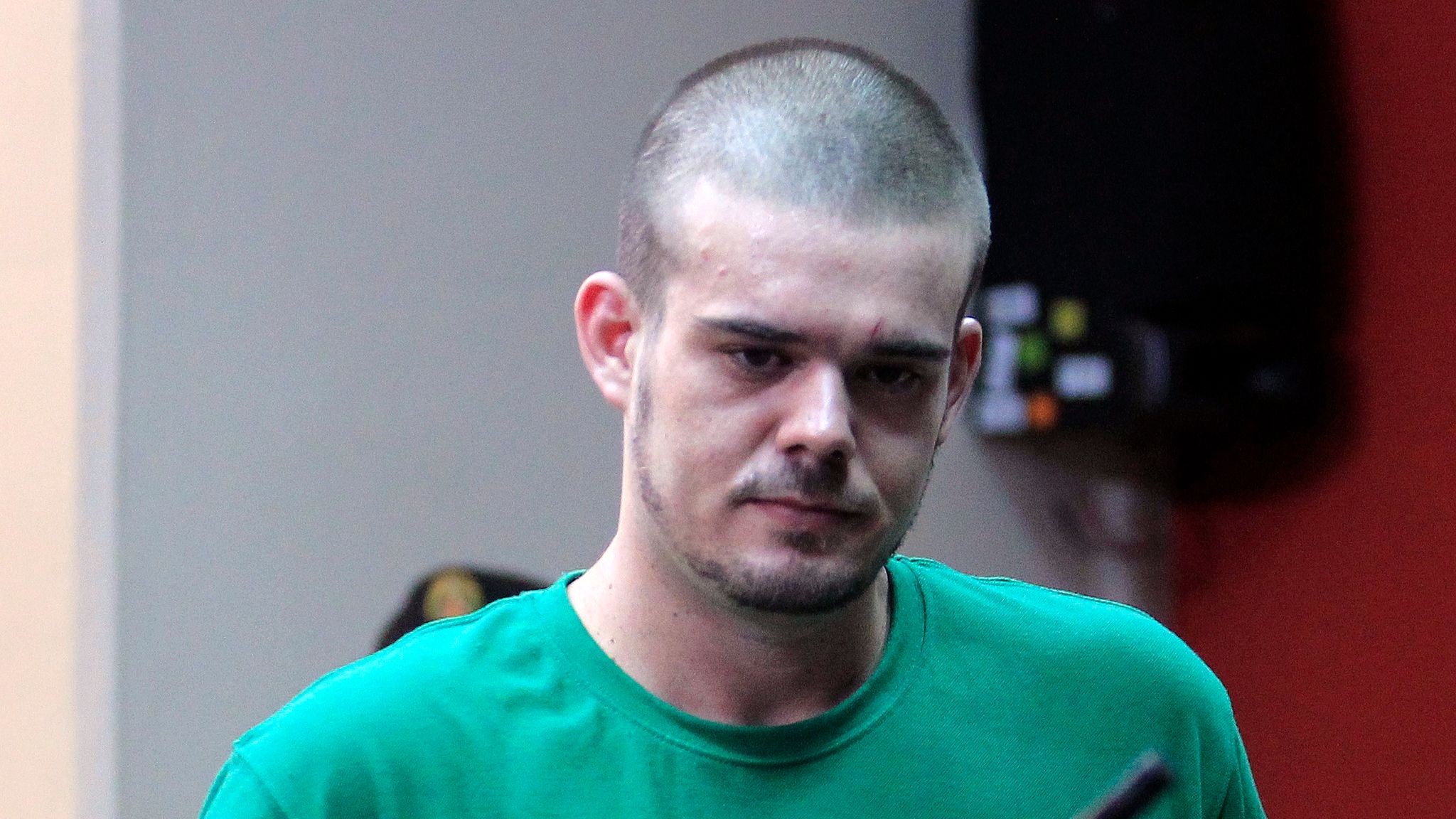
The beach was near the Kalpoe brothers' home.
A witness said they saw Natalee Holloway there with the three men.
The record does not say when, exactly, or how long they stayed.
No one else confirmed the sighting.
The investigation records note it, and then the records move on.
Why did no one else see them?
Why did the witness come forward when they did?
Why did the account never change the search?
That would require evidence the file does not contain.
The sighting's veracity is not established by the record.
Its significance is not established either.
It sits in the case file like a photograph with no date.
It is a reported account, not a fact.
Case coverage turned it into a recurring question.
Every retelling of the night returns to that beach.
Every retelling finds the same gap.
Three men. One young woman. A stretch of sand.
And a story that never fit the timeline the men gave.
The witness placed them somewhere they never mentioned.
The men's own statements placed them elsewhere.
Neither version was ever tested in a courtroom.
No one was ever charged.
The beach sighting remained what it was: a claim.
A claim with no second witness.
A claim with no physical trace.
A claim that asked more questions than it answered.
The investigation logged it, weighed it, and left it open.
Eighteen years later, it is still open.
THE NIGHT OUT
She was eighteen, from Mountain Brook, Alabama, on a senior-class trip.
The trip was a reward, a week of sun before graduation.
Natalee Holloway went out for the night in Oranjestad, Aruba, with friends from her class.
She was last seen leaving a nightclub called Carlos'n Charlie's.
She left with three men.
The three men were Joran van der Sloot, a Dutch student, and two brothers from Suriname.
What happened inside the nightclub is not in the record.
The record begins at the door of Carlos'n Charlie's, with a witness account of who walked out.
Her friends reported her missing the next morning.
She had failed to return to the Holiday Inn where the group was staying.
A missing-person report turns a vacation into a case.
It is a normal trip until it is not.
The night out was unremarkable, the kind of night a high school senior expects on an island.
The morning after, the expectation was gone.
The search began with a name, a hotel, and a last sighting.
:max_bytes(150000):strip_icc():focal(999x0:1001x2)/natalee-holloway-3-ea4ba4bf123a4a24ad9277c7f86f1b51.jpg)
That sighting has never added up.
THE CONFLICTING STORIES
Within days, Aruban police detained van der Sloot and the two brothers from Suriname.
All three gave conflicting statements about their movements that night.
They initially claimed they dropped Holloway off near her hotel.
Then the stories changed.
The men were arrested.
They were released.
They were re-arrested.
That cycle repeated over the following months.
The FBI assisted with forensic analysis and interviews.
The truth of any single statement is not established.
Not because one version sounds more plausible.
Not because the men were young and frightened.
Not because the record is thin.
But because each account shifted under the weight of the next interview.
What did they say first?
What did they say after?
What did they say when the police pushed again?
That would require evidence.
The investigation was widely criticized for missteps.
The early release of the suspects drew particular scorn.
The handling of evidence was inconsistent.
The beach sighting from the first morning remained unconfirmed.
It still does.
The men were never charged in Holloway's disappearance.
The conflicting stories became the case's center of gravity.
Each retelling pulled the timeline further from the last.
Each re-arrest suggested someone believed a version.
Each release suggested no one could prove it.
The record holds their words.
It does not hold their truth.
THE SEARCH AND THE CONFESSION
They dredged the waters near Aruba.
They combed the island on foot and from the air.
The investigation records show extensive searches of land and sea.
No trace of Natalee Holloway was ever found.
In 2007, Dutch crime reporter Peter R. de Vries recorded Joran van der Sloot on hidden camera.
According to the case summary, van der Sloot made statements suggesting he knew what happened.
He later recanted those statements.
The record holds the recording.
It does not hold a confession that stuck.
In 2010, van der Sloot was arrested in Peru.
The case summary states he was arrested for the murder of a woman in a Lima hotel room.
It was five years to the day after Holloway vanished.
He was convicted in that separate case in 2012.
The Aruban case remained open.
No one was ever charged in Holloway's disappearance.
In 2023, van der Sloot pleaded guilty in the United States to extortion and wire fraud related to Holloway's mother, according to court records.
As part of that plea, he admitted he killed Holloway.
The plea agreement records his statement: she died when he kicked her in the head after she refused his sexual advances.
He said he disposed of her body in the ocean.
That admission is a plea statement, not a trial verdict.
The body has never been found.
The record does not establish where she is.
It does not establish that his account is true.
It establishes only what he said in court, under oath, as part of a deal.
The search ended.
The admission was partial.
The wait was long, and the answer came wrapped in another crime.
AND THE STORY STILL ISN'T OVER
No one was ever charged in Natalee Holloway’s disappearance.
The Aruban case was closed and reopened multiple times, each time because the evidence ran out.
It closed in 2007 for lack of evidence.
It reopened.
It closed again.
The record does not establish where Holloway’s remains are.
That remains unknown.
In 2010, van der Sloot was arrested in Peru for a separate murder.
He confessed to that killing.
He was convicted and sentenced to 28 years in prison.
He is serving that sentence now.
In 2023, he was extradited to the United States.
He pleaded guilty to extortion and wire fraud, charges tied to offers to reveal where her body was.
As part of that plea, he admitted he killed Natalee Holloway.
He said she died after he kicked her in the head, and that he disposed of her body in the ocean.
That admission brought a measure of closure to her family.
But her body has never been recovered.
The exact location of her remains is unknown.
It is not established.
Beth Holloway has become an advocate for missing persons.
She has written about the experience.
The case remains one of the most widely covered missing-person investigations in American media history.
Closure, in this case, is partial.
The answer came wrapped in another crime.
The search ended.
The wait was long.
The story still isn’t over.
Advertisement
You may also like
The Ryder truck VIN that led FBI agents to a rental clerk — and a name
The first report came within minutes. Not as an explosion. As a gas leak, a utility accident, something breaking. At 9:02 a.m. on April…
The friend who called police because Shanann Watts missed her OB-GYN appointment
The appointment was a checkup, the kind that fills a Tuesday morning and is forgotten by lunch. Shanann Watts, 34, was fifteen weeks pregnant…
The surgical cut that pointed LAPD to a doctor's skill — but never to a name
The morning of January 15, 1947, began with a child’s walk through a vacant lot in Leimert Park, Los Angeles. The nude body of…
The Grease-Pencil Message on a Victim's Shirt That Baffled Zodiac Investigators
The cab stopped on a dark street in San Francisco, and the driver was shot. October 11, 1969. The case summary places the killing…
The nurse who ran toward the blast — and the family who told her story
The truck was a Ryder, rented, packed with ammonium nitrate and fuel oil. It exploded outside the Alfred P. Murrah Federal Building in Oklahoma…
The bloody glove found at Bundy and the one at Simpson's estate — 1994
The leather glove sat on the evidence table, and the courtroom went quiet. O.J. Simpson stepped forward and pulled on a pair of thin…