The friend who called police because Shanann Watts missed her OB-GYN appointment
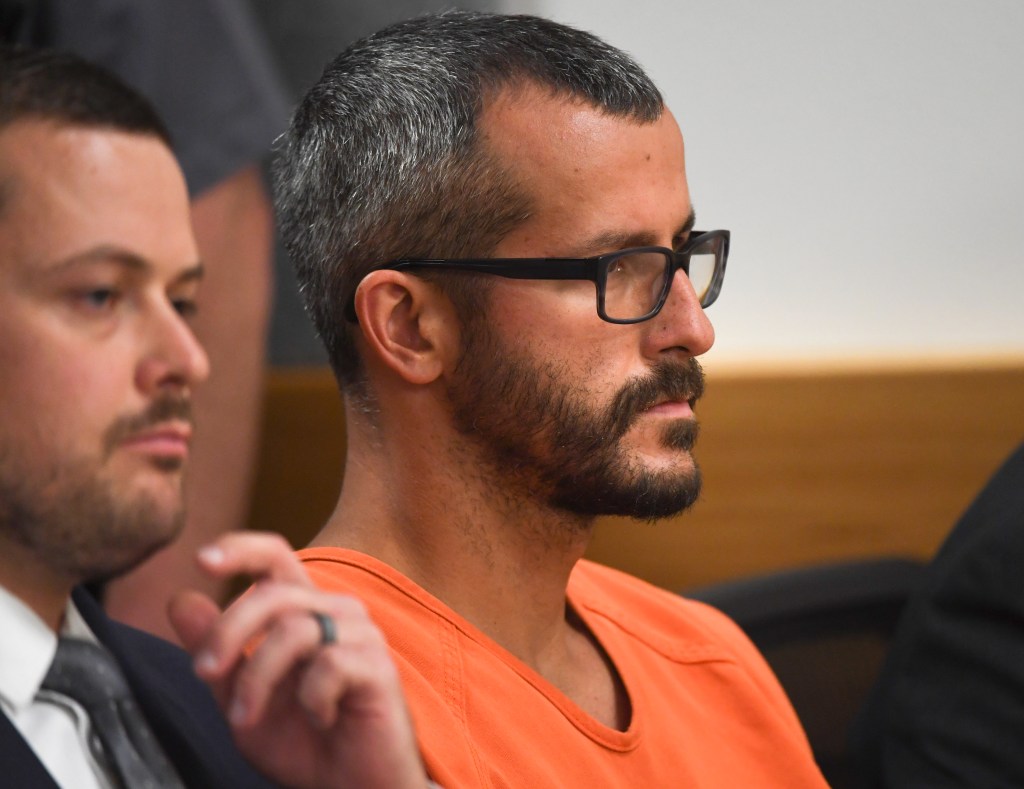
The appointment was a checkup, the kind that fills a Tuesday morning and is forgotten by lunch.
Shanann Watts, 34, was fifteen weeks pregnant with a son the family planned to name Nico.
On the morning of August 13, 2018, in Frederick, Colorado, she did not show up.
A friend, Nicole Atkinson, grew concerned when Shanann missed the scheduled OB-GYN appointment.
That same morning, Atkinson reported Shanann and her two daughters — 4-year-old Bella and 3-year-old Celeste — missing.
The report triggered a police response to the Watts home.
There, Shanann's husband, Christopher Watts, 33, said he had been away on a work trip and returned to find his family gone.
The friend's call was a routine worry over a missed checkup.
It became the documented starting point of the investigation.
What was the exact time of the appointment?
What was said between the two women before that morning?
What had happened between that missed appointment and the moment the door was opened?
The record does not establish the time of the appointment, nor any prior contact between Shanann and her friend.
The record establishes only the call, and the absence it reported.
She was gone before anyone knew to look.
The morning was ordinary, until it was not.
THE TELEVISION PLEAS
He appeared on television and pleaded for their safe return.
He was emotional. He was convincing.
The source does not specify which stations aired the interviews, nor the exact wording of his pleas.
That part of the record is not established.
Officers from the Frederick Police Department responded to the Watts home.
They found Watts, who repeated his claim: he had been away on a work trip and came home to find his family gone.
Detectives noted inconsistencies in his timeline.
A neighbor's security camera captured Shanann's truck returning to the home in the early morning hours of August 13.
Watts's account shifted under questioning.
On August 15, police confronted him with evidence that contradicted his story.
He confessed to killing Shanann and the girls.
He led officers to the Anadarko Petroleum oil field where he worked.
The bodies were recovered there.
The public pleas and the private inconsistencies did not match.
How quickly did the story unravel?
The record says days.
The record does not say what the inconsistencies were, exactly, or how the evidence was presented to him.
It is a documented sequence: the call, the interviews, the camera, the confession.
It is also a gap: the specific content of the television appearances remains unrecorded in the source.
He was on screen asking for help.
He was already the suspect.
THE OIL FIELD

He led them to the Anadarko Petroleum oil field where he worked.
Shanann's body was in a shallow grave.
The girls were inside oil tanks.
The medical examiner determined Shanann had been strangled.
The two girls had been smothered.
Watts initially claimed he had killed Shanann in a rage after she killed the children.
He later admitted to killing all three himself.
The bodies had been transported in Shanann's vehicle, a Lexus SUV.
That much is documented.
The exact timeline of the disposal is not in the record.
The identities of the officers who recovered the bodies are not in the record.
The source does not state who found them first.
It does not state the sequence of events at the oil field.
What remains is the physical evidence itself.
It is the grave.
It is the tanks.
It is the contradiction between the first story and the second.
The first story blamed a dead woman.
The second story placed the blame on the man who led officers to the site.
He was the one who knew where they were.
He was the one who had worked that ground.
He was the one who confessed.
The horror is not in the telling.
It is in the location: the place of his employment became the place of their disposal.
Shanann was 15 weeks pregnant with a son the family planned to name Nico.
That detail is also in the record.
What happened at the oil field before the officers arrived is not.
THE TWO STORIES
On November 6, 2018, Christopher Watts changed his plea to guilty on all counts.
He was charged with three counts of first-degree murder, two counts of first-degree murder of a child under 12, one count of unlawful termination of a pregnancy, and three counts of tampering with a deceased human body.
The plea agreement was with the Weld County District Attorney's Office.
In exchange, prosecutors agreed not to seek the death penalty.
Watts had initially pleaded not guilty.
He had also offered a different story.
His first claim was that he killed Shanann in a rage after she killed the children.
That version was replaced.
He later admitted to killing all three himself.
The prosecution's case rested on Watts's confession, the physical evidence at the oil site, and a timeline built from surveillance footage and phone records.
There is no defense argument in the record.

There is no alternative narrative presented at trial.
Watts pleaded guilty, and the record holds only his shifting confession.
Why did his story change?
What made him abandon the first version?
What did the physical evidence contradict?
That would require evidence.
The record does not establish why he shifted from one account to the other.
It establishes only that he did.
Shanann's family spoke after the plea.
Her father, Frank Rzucek, addressed the court.
The sentence came on November 19, 2018.
The judge handed down five consecutive life sentences without parole, plus 84 years.
Watts is incarcerated in Wisconsin.
The case is closed.
The two stories he told are not.
AND THE STORY STILL ISN'T OVER
On November 19, 2018, Judge Marcelo Kopcow sentenced Watts to five consecutive life sentences without the possibility of parole.
The judge added 84 years for the tampering charges and the unlawful termination of pregnancy.
The sentence came after victim impact statements from Shanann's family.
Her parents, Frank and Sandra Rzucek, spoke in the courtroom.
They described their daughter, their grandchildren, the life that was taken.
The judge imposed the sentence. Watts was led away.
It is a permanent sentence. It is also a public one.
Christopher Watts is incarcerated at the Dodge Correctional Institution in Wisconsin.
He serves his life sentences without the possibility of parole.
He has given interviews from prison, including a 2020 documentary interview in which he described the killings.
He has not been granted any appeals.
No appeal has succeeded. No motion has changed the outcome.
The Rzuceks have remained active.
They speak publicly about the case through interviews and social media.
They keep Shanann's name in the record. They keep the girls' names in the record.
The Watts family home in Frederick was sold.
The case has been the subject of numerous documentaries and true-crime programs.
The story is told again and again. The family tells it themselves.
What remains is the permanence of the sentence.
What remains is the ongoing presence of the victim's family.
What remains is the question of what comes next.
That would require evidence. The record does not establish any pending legal motion or hearing.
The next concrete step is not in the record.
The case is closed. The telling is not.
Advertisement
You may also like
The phone calls a mistress recorded that shattered a husband's alibi
She was eight months pregnant, and she was reported missing from her home in Modesto, California, on December 24, 2002. Her husband, Scott Peterson,…
The confession that cracked the case: What Moseley told detectives about the night Kitty Genovese died
He was arrested for burglary. Winston Moseley was a 29-year-old business machine operator when police picked him up on March 19, 1964 — six…
The memoir admission that revived a 27-year-old murder case
It starts with a book. In 2018, Duane "Keffe D" Davis — a self-described gang member — published a memoir and gave interviews describing…
The Ryder truck VIN that led FBI agents to a rental clerk — and a name
The first report came within minutes. Not as an explosion. As a gas leak, a utility accident, something breaking. At 9:02 a.m. on April…
The surgical cut that pointed LAPD to a doctor's skill — but never to a name
The morning of January 15, 1947, began with a child’s walk through a vacant lot in Leimert Park, Los Angeles. The nude body of…
The Grease-Pencil Message on a Victim's Shirt That Baffled Zodiac Investigators
The cab stopped on a dark street in San Francisco, and the driver was shot. October 11, 1969. The case summary places the killing…