The confession that cracked the case: What Moseley told detectives about the night Kitty Genovese died
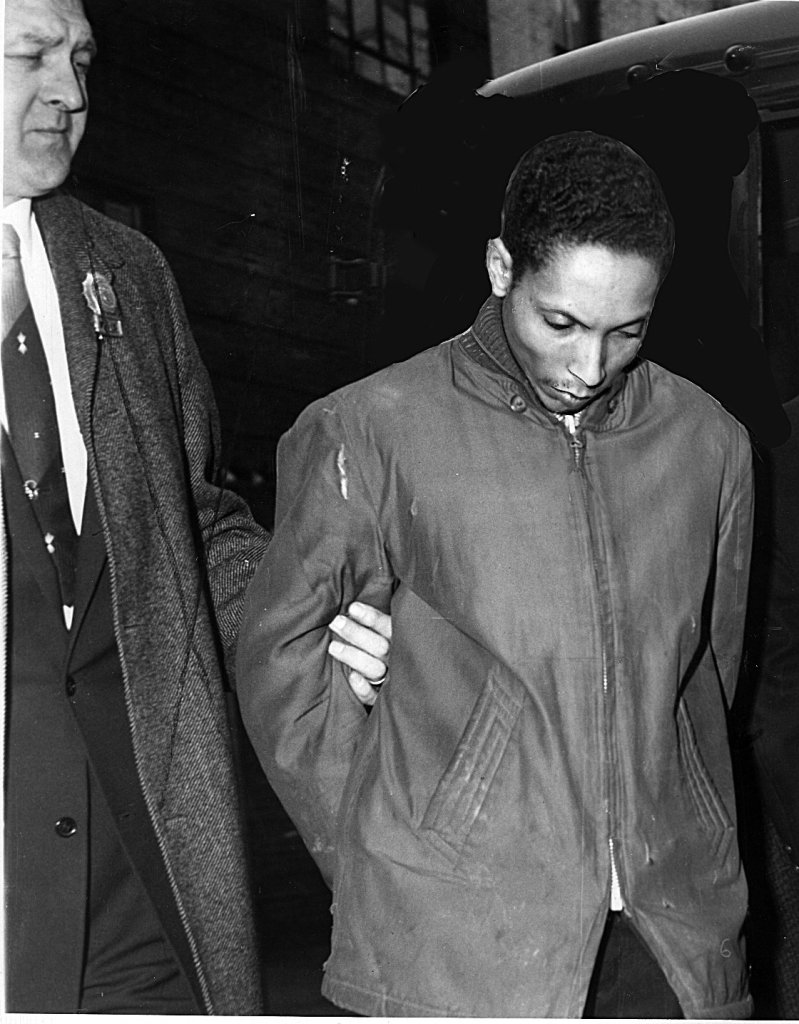
He was arrested for burglary.
Winston Moseley was a 29-year-old business machine operator when police picked him up on March 19, 1964 — six days after Kitty Genovese was murdered.
The arrest was for something else entirely, a separate burglary investigation.
Then he talked.
Moseley voluntarily confessed to the Genovese murder, according to the record of the case.
He provided details that only the killer would know — the sequence of the attack, the location of the body.
The exact words he used are not in the record.
But the details matched the scene.
He also confessed to two other murders and several burglaries.
The Genovese details were the ones that fit what investigators had found.
Then he led police to the knife.
The knife was the physical evidence that tied the confession to the crime.
A single object, recovered because the man who used it showed them where it was.
The city was still talking about the murder — the attack outside the apartment building, the two phases over half an hour, the victim found by a neighbor.
A man arrested for burglary ended up confessing to all of it.
How does that happen?
What makes a man charged with one crime start describing another?
The record does not say what prompted the confession.
It says only that he gave it, and that the details held.
The knife was the proof.
THE TWO-PHASE ATTACK
In the early hours of March 13, 1964, Kitty Genovese was returning home from her job at Ev's 11th Hour Bar.
She was 28 years old, a bar manager, walking to her apartment at 82-70 Austin Street in Kew Gardens, Queens.
A man accosted her.
He stabbed her repeatedly.
The attack came in two separate phases over approximately half an hour.
That interval is the gap the confession would later fill in.
What exactly happened between the two phases is not detailed in the source beyond the timing.
It is a hole in the record, and the record does not say more.
A neighbor, Sophie Farrar, found Genovese and went to her aid.
Genovese died in an ambulance en route to Queens General Hospital.
She was on the ground below before that.
The medical examiner testified about the nature of the wounds.
He said they were consistent with the confession.
Consistent, not conclusive.

The knife was the proof, and the knife had not yet been found.
The half-hour gap is where the horror sits.
It is also where the confession would sit, later, explaining what the record only times.
Not because the timing alone convicts.
But because the timing matched what one man said he did.
SIX DAYS AND A BURGLARY ARREST
The body was found, and the Queens Homicide Squad began its work.
The lead detective directed the canvass, and police interviewed numerous residents.
They gathered fragments of that night, but no suspect.
Six days passed.
On March 19, 1964, Winston Moseley was arrested during a separate burglary investigation.
A burglary arrest cracked a murder case.
That is the randomness of it.
Moseley voluntarily confessed to the Genovese murder.
He gave details that only the killer would know: the sequence of the attack, the location of the body.
He also confessed to two other murders and several burglaries.
He led police to the knife.
What triggered that voluntary confession during the burglary arrest is not stated in the record.
Not because the record is silent on everything.
But because it is silent on the why.
Witness testimony from two neighbors placed the defendant at the scene.
They saw part of the attack.
The knife, the confession, the witnesses — the pieces fit.
A burglary arrest, and then a man talked.
That would require evidence to explain.
The record does not provide it.
THE CONFESSION VS. THE INSANITY DEFENSE
The trial began in June 1964.
The prosecution presented Moseley’s confession, witness testimony, and forensic evidence.
The confession remained the cornerstone of the case in both trials.
It was a confession with details only the killer would know.
It was also a confession from a man whose lawyer said he was legally insane at the time of the crime.
The defense argued that Moseley could not form the intent required for murder.
The jury heard the same facts two ways.
A deliberate confession, or a mind incapable of intent.
They chose the confession.
The jury rejected the insanity defense and convicted Moseley of first-degree murder.
He was sentenced to death.
The conviction was appealed, and in 1967 the New York Court of Appeals ordered a new trial on the insanity issue.
At the retrial, Moseley was again convicted.
New York had abolished the death penalty in the interim, so he was sentenced to life imprisonment.
The specific psychiatric testimony at either trial is not detailed in the source.
So the record does not say what the experts told the juries.
It does not say how the defense framed the insanity claim beyond the argument itself.
What the record does say is that the confession was the cornerstone.
That would require evidence to explain.
The record provides the verdicts, not the reasoning.
AND THE STORY STILL ISN'T OVER
The case gained national attention after *The New York Times* reported that 38 witnesses had watched the attack without calling police.
That claim was later disputed and revised.
Some witnesses had called police.
Others had not seen the attack clearly.
The exact number of witnesses and what each saw is not established.
The 38-witness figure is a disputed newspaper report, not a settled fact of the record.
Later reporting, including a 2004 book by Kevin Cook and a 2016 *The New York Times* retrospective, corrected the record on the number of witnesses and their actions.
Moseley escaped from custody in 1968.
He was recaptured after committing a kidnapping and assault.
He was denied parole numerous times.
He died in prison on March 28, 2016, at the age of 81.
The case became a landmark in discussions of bystander psychology.
It is a landmark.
It is also a case whose central fact remains the confession and the knife Moseley led police to recover.
Not the witness count.
Not the headline.
The documented record is the confession and the knife.
Everything else keeps being revised.
The confession stands apart from the disputed witness count.
That is the one solid fact.
What remains is a story that does not close with a conviction.
It closes, if it closes at all, with a knife recovered and a confession given.
That would require evidence to explain.
The record provides the confession, not the resolution.
Advertisement
You may also like
The phone calls a mistress recorded that shattered a husband's alibi
She was eight months pregnant, and she was reported missing from her home in Modesto, California, on December 24, 2002. Her husband, Scott Peterson,…
The memoir admission that revived a 27-year-old murder case
It starts with a book. In 2018, Duane "Keffe D" Davis — a self-described gang member — published a memoir and gave interviews describing…
The Ryder truck VIN that led FBI agents to a rental clerk — and a name
The first report came within minutes. Not as an explosion. As a gas leak, a utility accident, something breaking. At 9:02 a.m. on April…
The friend who called police because Shanann Watts missed her OB-GYN appointment
The appointment was a checkup, the kind that fills a Tuesday morning and is forgotten by lunch. Shanann Watts, 34, was fifteen weeks pregnant…
The surgical cut that pointed LAPD to a doctor's skill — but never to a name
The morning of January 15, 1947, began with a child’s walk through a vacant lot in Leimert Park, Los Angeles. The nude body of…
The Grease-Pencil Message on a Victim's Shirt That Baffled Zodiac Investigators
The cab stopped on a dark street in San Francisco, and the driver was shot. October 11, 1969. The case summary places the killing…